

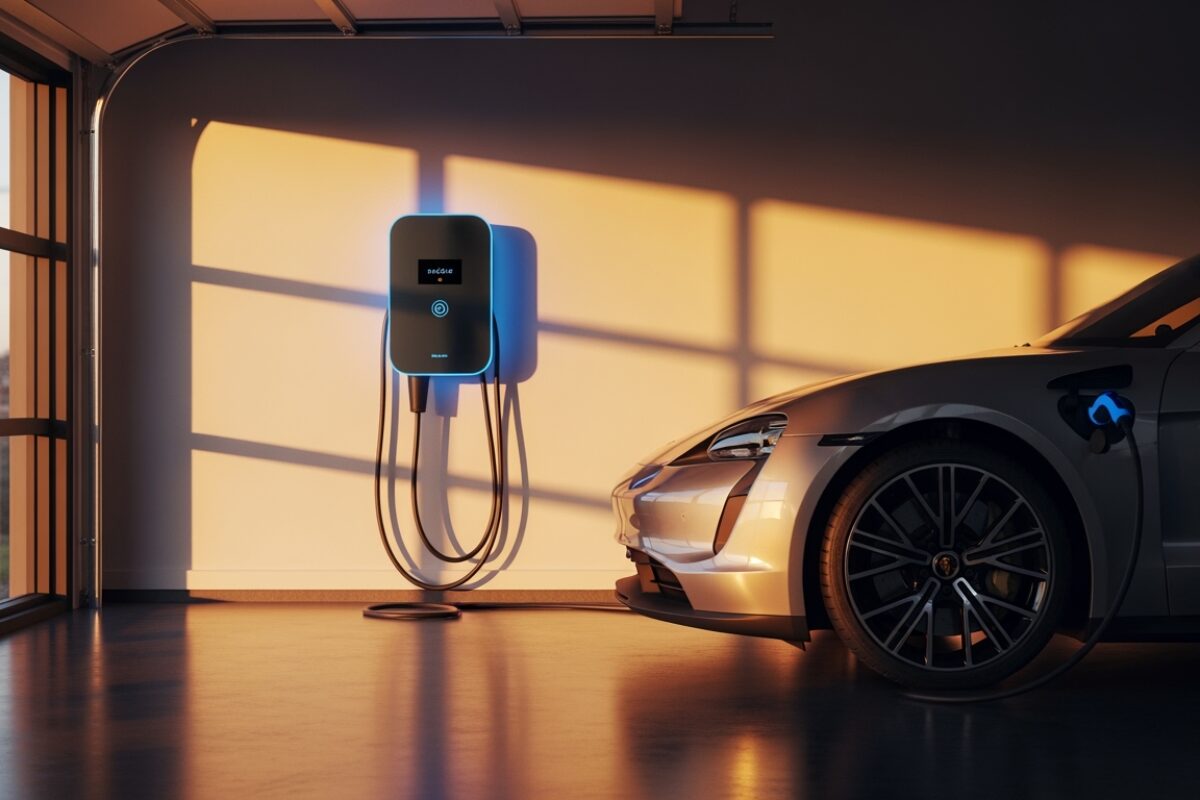

If you drive an EV regularly, a home charger usually stops feeling like a luxury pretty fast. It becomes part of the routine. You plug in at night, wake up to a full battery, and stop planning your week around public stations.
For many homeowners in Vancouver, Langley, Surrey, and the lower mainland, that convenience is the first reason to look into EV charger installation. The second reason is money. Public fast charging is useful, but it is rarely the cheapest way to keep an EV on the road.
So, is a Level 2 home charger worth the investment?
In most cases, yes. I’d say especially yes for daily commuters. But the answer depends on your driving habits, your home’s electrical setup, and whether you need wiring upgrades or a panel upgrade before installation.
Why Level 2 makes the most sense at home
Most EV owners start by asking about Level 1 versus Level 2 charging. On paper, Level 1 looks cheaper because it often uses a standard outlet. In real life, it is slow enough to become frustrating for a lot of people. If you drive often, waiting overnight and still not getting enough range back can wear thin.
Level 2 is the practical option for home use. A typical Level 2 charger costs about $500 to $1,500 CAD for the unit itself, and it can usually charge an EV in roughly 4 to 8 hours. That means overnight charging actually works for daily life.
This is why Level 2 has become one of the most common residential electrical upgrades for EV owners in the greater Vancouver area. It fits how people live. You come home, plug in, and move on with your evening.
What the upfront installation cost usually looks like
The part that gives people pause is the install cost. Fair enough. The range can be pretty wide.
A straightforward home EV charger installation often lands somewhere between $1,500 and $5,000 CAD in total. That number usually includes the charger, labour, wiring, and permit-related costs. Where your project falls inside that range depends on the condition of your electrical system and how hard the charger location is to reach.
Here’s what usually affects the price.
Charger hardware
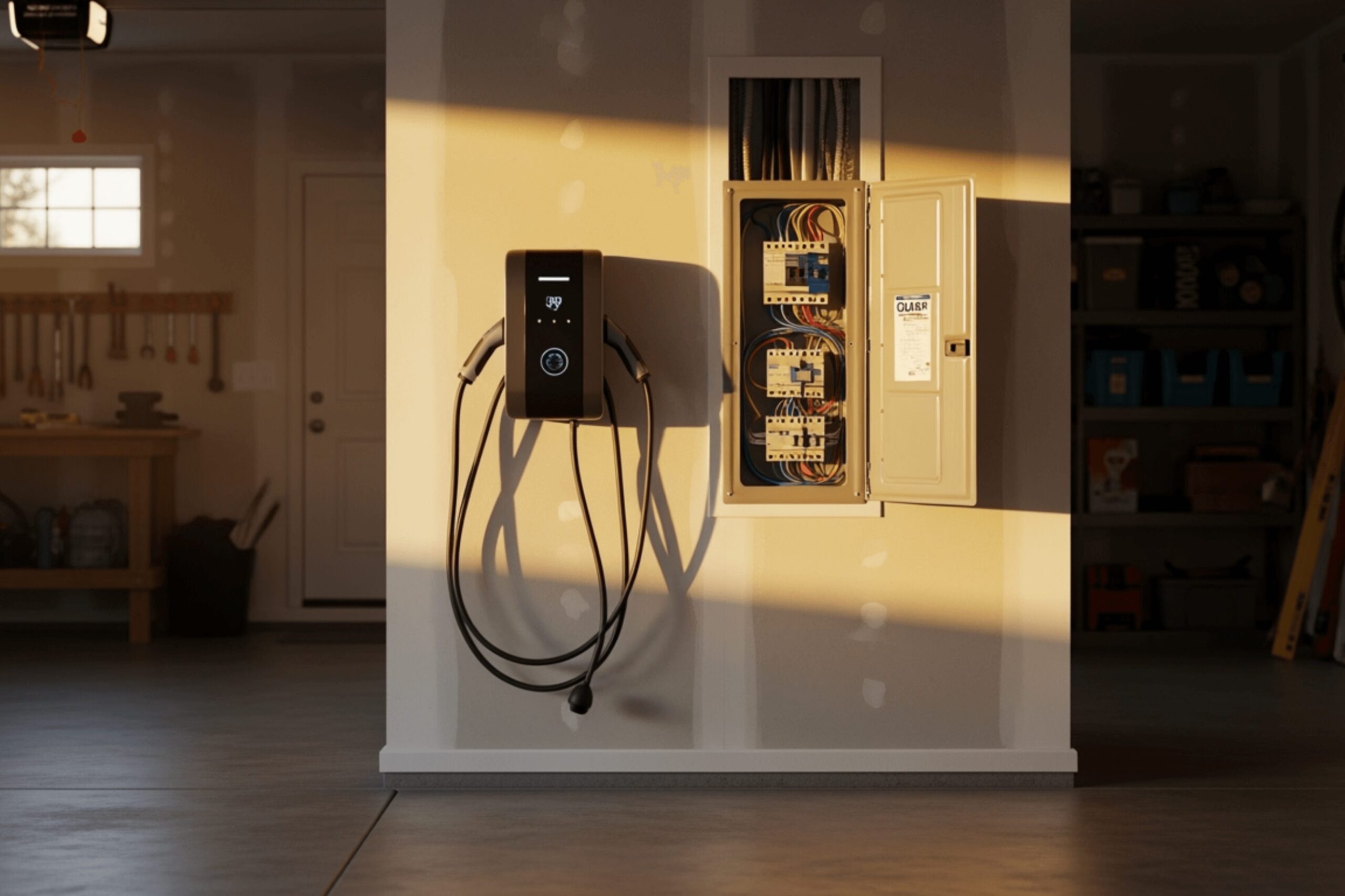
A Level 2 charger itself is often the simplest part of the quote. Expect roughly $500 to $1,500 CAD depending on brand, amperage, smart features, weather rating, and cable length.
Some homeowners buy the charger first and then call an electrician. I get why. But it can backfire if the charger you picked needs more capacity than your panel can handle.
Basic installation
If your electrical panel already has enough capacity and the charger location is close by, installation can run about $700 to $2,000 CAD. That usually covers labour, circuit installation, breaker work, and basic wiring.
This is the kind of project people hope for. And sometimes that’s exactly what it is. Clean setup, short cable run, no surprises.
Panel upgrades
This is the big variable.
If your existing panel is full or undersized, you may need a panel upgrade before the charger can be installed safely. That can add about $1,000 to $4,500 CAD, depending on the age of the panel, service capacity, and the scope of the work.
This is where good electrical services matter. A charger should never be squeezed into an already overloaded system just to save money upfront. That is the sort of shortcut that turns into nuisance breaker trips, poor charger performance, or worse.
Distance and access
Long runs cost more. If the charger needs to be mounted far from the panel, or if wiring has to go through finished walls, crawlspaces, detached garages, or trenching outside, the bill goes up.
Extra trenching or wiring can add about $15 to $25 CAD per meter. Difficult access can push it higher.
This is also why two neighbours with the same EV can get very different installation quotes.
Permits and inspections
Permits and inspections usually add about $100 to $300 CAD, depending on local requirements. That might feel like a small annoyance, but it matters. A permitted installation protects you, helps with insurance questions, and confirms the work meets code.
The part people tend to underestimate: operating savings
The upfront cost is easy to notice because it arrives all at once. The savings are quieter. They show up month after month.
Home charging is usually much cheaper than public fast charging. A 60 kWh battery might cost around $6 to $12 CAD to charge at home, depending on your electricity rate. The same amount of energy from a public fast charger can cost around $30 to $45 CAD.
That difference adds up fast.
For many households, home charging costs around $10 to $20 CAD per month, though that changes with mileage, battery size, and rate plan. Electricity rates in the area are often around $0.10 to $0.20 per kWh. If you can charge during off-peak hours, the cost can drop even further.
Compared with a gas vehicle, annual fuel savings can be around $600 to $1,200. Compared with relying heavily on public charging, the electricity-specific savings from charging at home might land around $120 to $240 per year, sometimes more if you drive a lot.
That is why the investment usually pencils out for regular drivers. The charger itself is only part of the story. The real value is in what it changes about your daily charging habits.
Maintenance is low, but it isn’t zero
One reason home chargers appeal to homeowners is that they do not need much ongoing attention.
Routine maintenance is usually simple: keep the unit clean, inspect the cable for wear, and have any unusual behaviour checked out if fault codes or breaker trips start showing up. Typical maintenance costs are often estimated at $150 to $400 per year, though many homeowners spend less in years when nothing needs service.
Repairs are not common, but they do happen. Power surges, physical damage, moisture issues, or a failing breaker can cause problems. If your charger suddenly stops working, a licensed electrician should inspect it. And if the issue affects your panel or creates a safety concern, this is where access to 24/7 emergency service can matter.
That said, a properly installed charger is generally a low-maintenance piece of equipment.
Rebates make the math better
A lot of homeowners look at the sticker price and forget to check rebates. That is a mistake.
Programs such as CleanBC Go Electric have offered rebates of up to $350 CAD in some cases, and other local utility or provincial incentives can sometimes push that total higher. Promotional rebate figures around $600 have also appeared depending on program details and timing.
These incentives can take a decent bite out of the net install cost. They won’t erase the need for a panel upgrade if your system needs one, but they can shorten the payback period enough to make the project easier to justify.
If you are comparing quotes, it helps to ask what rebates may apply before you commit. Some contractors keep up with these programs and can point you in the right direction.
So, is it worth it? For most drivers, yes
Here’s the honest version.
If you drive an EV often, install a Level 2 charger, and avoid major electrical upgrades, the investment is usually easy to defend. The mix of convenience, lower charging costs, and fuel savings tends to make the decision feel pretty obvious after a year or two.
If your total net cost after rebates is around $2,000 to $3,000, and your annual savings are somewhere in the $720 to $1,440 range, your payback period may be fairly reasonable. Not instant, but reasonable.
If your project needs a major panel replacement, long trenching, and extensive wiring upgrades, the timeline gets longer. In that case, the answer depends more on how much you drive and how long you plan to stay in the home.
There is also a resale angle. EV-ready homes are more appealing than homes that leave buyers guessing about charging. I would not promise a dramatic jump in property value from a charger alone, but I do think it makes a home easier to market as EV ownership becomes more common.
When a home charger is a strong investment
It tends to make the most sense if:
-
you drive your EV regularly
-
your panel has enough spare capacity
-
you can charge during lower-cost hours
-
you qualify for rebates
-
you want the convenience of dependable overnight charging
It makes less sense if:
-
you rarely drive the EV
-
you mostly use public charging already and do not mind it
-
your home needs expensive electrical work that you are unlikely to recover soon
That does not mean the project is a bad idea. It just means the payback is more personal than financial.
What to do before you buy a charger
Before ordering a charger online because the price looks good, get the site checked.
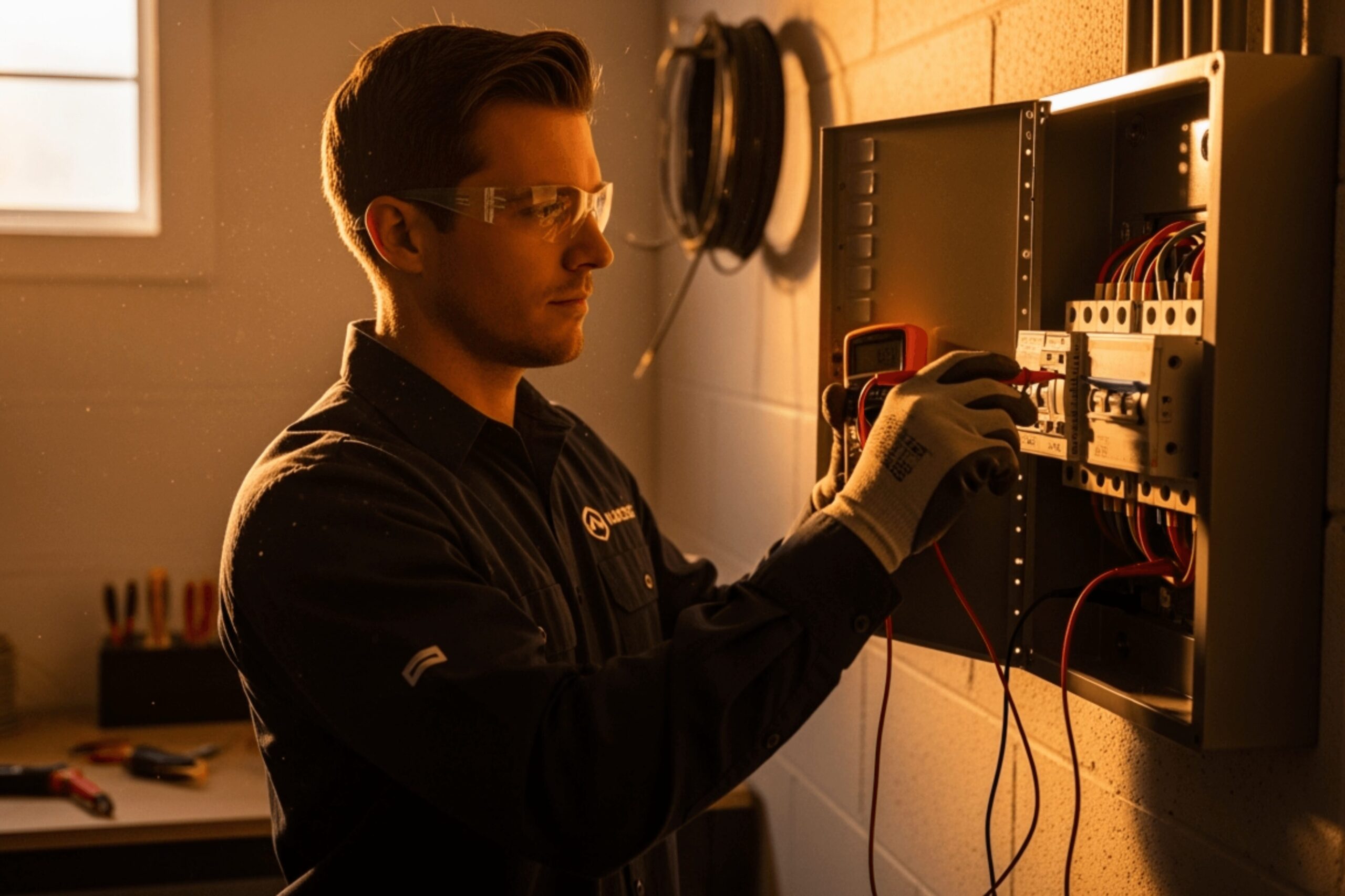
A proper assessment should look at panel capacity, breaker space, charger location, cable routing, permits, and whether future wiring upgrades might make sense at the same time. This is where licensed electricians earn their keep. A good inspection can save you from buying the wrong charger, underestimating installation costs, or missing rebate opportunities.
For homeowners, this falls under residential electrical planning. For strata properties, mixed-use buildings, and businesses thinking ahead for fleet vehicles or staff charging, the same logic carries into commercial electrical and even industrial electrical work. The load calculations just get more serious.
Final thoughts
For regular EV drivers in Vancouver and the lower mainland, a Level 2 home charger is usually worth the investment. The upfront cost can vary a lot, but the day-to-day convenience is real, the charging cost is much lower than public fast charging, and available rebates can improve the numbers.
The biggest question is not whether home charging is useful. It is whether your current electrical system is ready for it.
That is why the smartest next step is simple: have a qualified electrician assess the property, explain the permit requirements, and give you a clear picture of installation costs before you commit. Good EV charger installation starts with safe planning, not guesswork.