


Electric vehicles are getting easier to live with in the Lower Mainland. The part that still trips people up is charging at home or at work. Buying the car is often the simple part. Figuring out charger type, electrical capacity, permits, rebates, and installation, that is where people start opening ten browser tabs and getting conflicting advice.
So let’s make it simpler.
If you live in Vancouver, Langley, Surrey, Abbotsford, or nearby communities, the main decision is usually not whether you need charging. It’s what kind of charging setup makes sense for your property and your driving habits. For most people, a professionally installed Level 2 charger is the practical answer. For some, a standard outlet is enough. For a few commercial sites, DC fast charging enters the conversation, though it comes with a very different price tag and power demand.
This guide walks through the basics, the tradeoffs, and the installation process in plain language.
Why private EV charging matters more than people expect
Public charging gets a lot of attention, but daily convenience usually comes from private charging. If you can plug in at home or at work, EV ownership feels normal very quickly. You stop planning your week around charger availability. You stop waiting in line at busy stations. You stop wondering whether the charger you found on an app is actually working.
That convenience is a big deal in the greater Vancouver area, where commutes vary a lot. Someone driving short local trips in White Rock has different needs from a contractor crossing municipalities all day or a fleet manager in Surrey trying to keep several vehicles on the road.
Private charging also changes the math on cost. Charging during off-peak hours can be cheaper than relying on public stations, and EVs usually need less mechanical maintenance than gas vehicles. No oil changes. Fewer moving parts. It’s not magic, and EV ownership still has costs, but home and workplace charging makes the whole thing easier to manage.
The three main charger types
Before talking about installation, it helps to sort out the charger levels. This is where a lot of confusion starts.
Level 1 charging, slow but simple
Level 1 charging uses a standard 110V or 120V household outlet. It is the easiest starting point because it often requires no special equipment beyond the portable charging cable that comes with many EVs.
The catch is speed.
Level 1 charging adds range slowly. For drivers with very short commutes and lots of overnight parking time, it can work. For many others, it feels frustrating fast. You might get enough overnight charging to cover local errands, but not enough to comfortably recover after a longer drive. A true empty-to-full charge on many modern EVs can take much longer than a single night.
Level 1 makes sense if:
-
you drive modest daily distances
-
you can charge for long stretches
-
you are testing whether an EV fits your routine
-
you are not ready to invest in a 240V setup yet
Level 2 charging, the everyday option
Level 2 charging uses a 240V circuit, similar to what large appliances use. This is the setup most homeowners and businesses ask for, and for good reason. It is much faster and much more practical for regular use.
A typical Level 2 charger can add roughly 30 to 50 kilometres of range per hour, depending on the vehicle and charger rating. Many EVs can recharge in roughly 4 to 7 hours under ideal conditions, though actual times vary by battery size, onboard charging limits, and state of charge.
For most people, Level 2 hits the sweet spot. Plug in after dinner, wake up with a charged vehicle, and move on with your day.
Level 2 usually requires:
-
a dedicated 240V circuit
-
enough electrical capacity in the panel
-
proper breaker sizing and wiring
-
professional installation by licensed electricians
-
permits and inspection where required
DC fast charging, fast but usually commercial
DC fast charging is in a different category. These units use high-voltage power, often around 480V in commercial settings, and can charge many vehicles much faster than Level 2. This is what people think of when they picture roadside fast-charging stations.
It is also where costs rise sharply.
DC fast charging is generally best for:
-
commercial properties with high turnover
-
fleet operations
-
public charging sites
-
locations where fast charging is part of the business model
For a single-family home, DC fast charging is usually unrealistic. The equipment is expensive, the electrical requirements are heavy, and installation is much more complex.
Why Level 2 is usually the right choice
If I had to name the most common answer before even seeing the property, it would be this: Level 2 is probably what you want.
That’s because it solves the real problem. Most EV owners do not need the absolute fastest charge possible. They need dependable overnight charging that fits normal life. Level 2 does that without pushing into the cost and infrastructure demands of DC fast charging.
It also works well for a wide range of vehicle brands and models, including Tesla, Ford, Hyundai, Nissan, Chevrolet, Mercedes-Benz, and others. The charger itself matters, but the bigger issue is whether your electrical system can support it cleanly and safely.
What goes into a residential EV charger installation
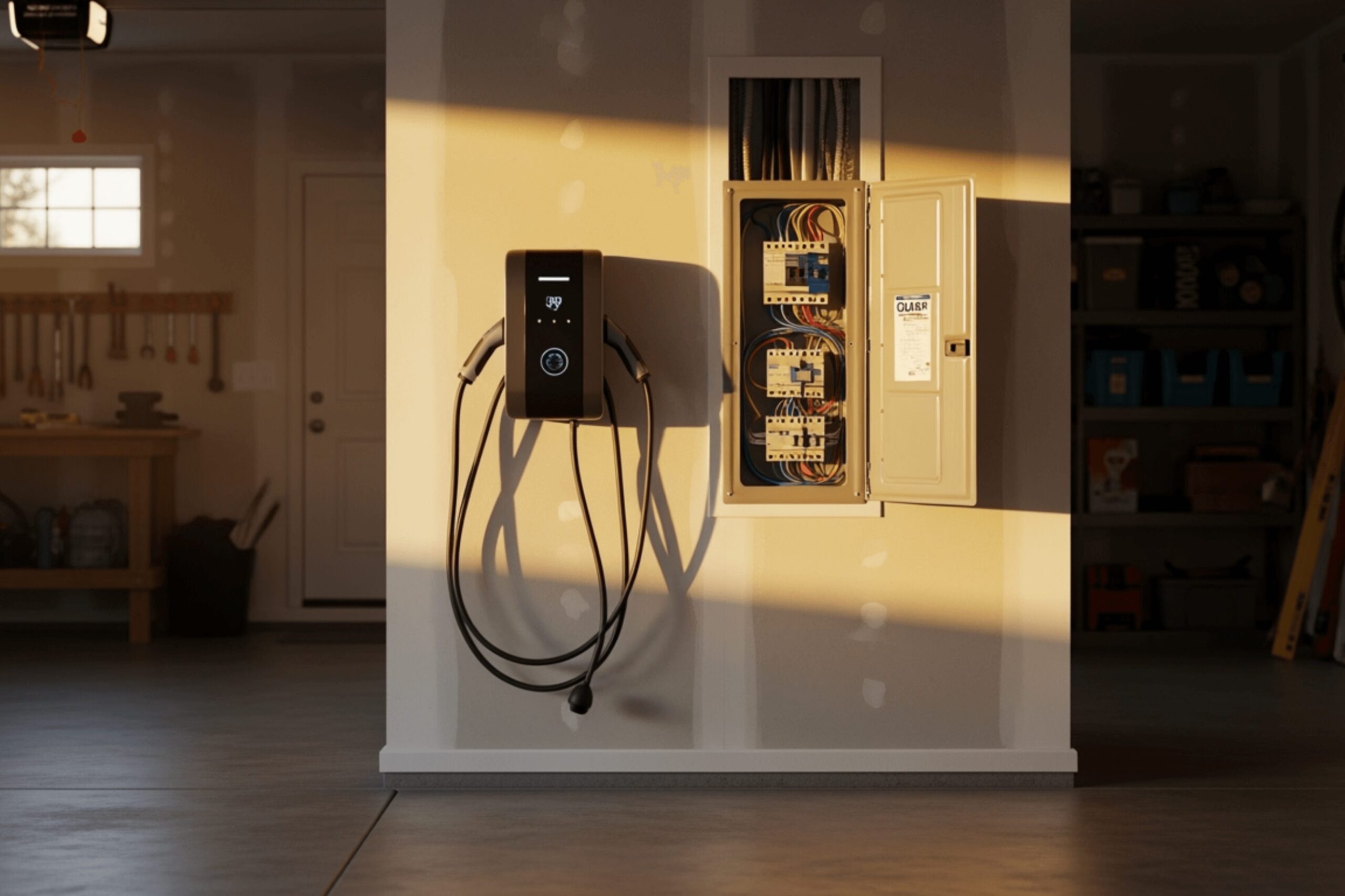
A home EV charger installation looks simple from the driveway. Mount the charger, run the wire, flip the breaker, done. Sometimes it really is fairly straightforward. Often, though, there is more going on behind the wall.
1. Electrical capacity
The first question is whether your home’s electrical panel can support a new 240V circuit. Some homes have plenty of room. Others are already tight, especially older houses with electric heat, hot tubs, air conditioning, or previous additions.
If capacity is limited, you may need:
-
a load calculation
-
a subpanel
-
a panel upgrade
-
load management equipment
This is where residential electrical work overlaps with EV charging in a very real way. The charger is one piece of the project. The panel and wiring upgrades can be the bigger one.
2. Charger location
Where the charger goes affects cost and convenience more than people expect.
A charger mounted close to the electrical panel is often simpler and less expensive. A charger across the garage, outside on a side wall, or in a detached structure may need longer wire runs, conduit, trenching, or weatherproof equipment.
Good placement usually considers:
-
where the car actually parks
-
cable reach without stretching across walkways
-
indoor or outdoor exposure
-
ease of daily use
-
future vehicle changes
3. Hardwired vs plug-in
Some Level 2 chargers are hardwired. Others plug into a 240V receptacle.
Hardwired units are often preferred for higher-amperage installations and can reduce the chance of loose plug connections over time. Plug-in units can offer flexibility if you plan to move or replace equipment later. Neither is automatically “better” in every case. The right choice depends on the charger model, amperage, local code requirements, and how permanent you want the setup to be.
4. Vehicle compatibility
Most modern Level 2 chargers work with major EV brands. Tesla owners may choose a Tesla Wall Connector, while others may use a universal charger with the right connector standard. Multi-vehicle households should think ahead here. The charger that fits one car today may not be the best fit for the second vehicle arriving next year.
What commercial EV charger installation looks like
Commercial electrical projects have a different set of questions. The issue is not just “Can one car charge here?” It’s “How many vehicles, how often, with what level of control?”
That changes everything.
Common commercial use cases
Commercial EV charger installation is often requested for:
-
office buildings
-
retail sites
-
apartment and condo properties
-
visitor parking lots
-
fleet yards
-
industrial facilities
-
mixed-use developments
Each site has different priorities. A workplace charger might focus on employee convenience. A retail charger might aim for customer dwell time. A multi-unit residential building may need fair access, billing, and future expansion. A fleet site may care most about uptime and smart scheduling.
Features that matter for commercial sites
Commercial systems often include more than a charger on a wall. They may involve:
-
multiple charging stations
-
networked chargers
-
user access controls
-
energy monitoring
-
billing or payment systems
-
smart load management
-
future-ready conduit and capacity planning
Load management deserves special attention. It allows multiple chargers to share available power instead of demanding full power at all times. That can reduce the need for major service upgrades, which can save serious money.
For apartment buildings and strata properties, this is often the difference between a realistic project and a stalled one.
The usual installation process, step by step
Whether the site is residential, commercial, or industrial, the overall process follows a similar path.
Consultation and site assessment
This is where the installer looks at the electrical service, panel capacity, parking layout, charger goals, and any property constraints. For a commercial site, the conversation often extends to scalability, networking, and user access. For a home, it may be more about daily routine and charger placement.
Quote and scope review
A clear quote should outline:
-
charger equipment cost, if supplied
-
labour
-
permit costs
-
any required wiring upgrades
-
panel work, if needed
-
trenching or surface conduit, if needed
-
possible rebate opportunities
Transparent pricing matters here because EV charger installations can range from straightforward to complicated very quickly.
Permits and approvals
This part is easy to overlook until it delays the job. Electrical permits and municipal requirements can vary across Vancouver, Surrey, Langley, Abbotsford, Burnaby, Richmond, Coquitlam, and other Lower Mainland communities. Local knowledge helps because the permitting side is not identical everywhere.
For commercial properties, approvals may also involve landlords, strata councils, property managers, or internal facilities teams.
Installation
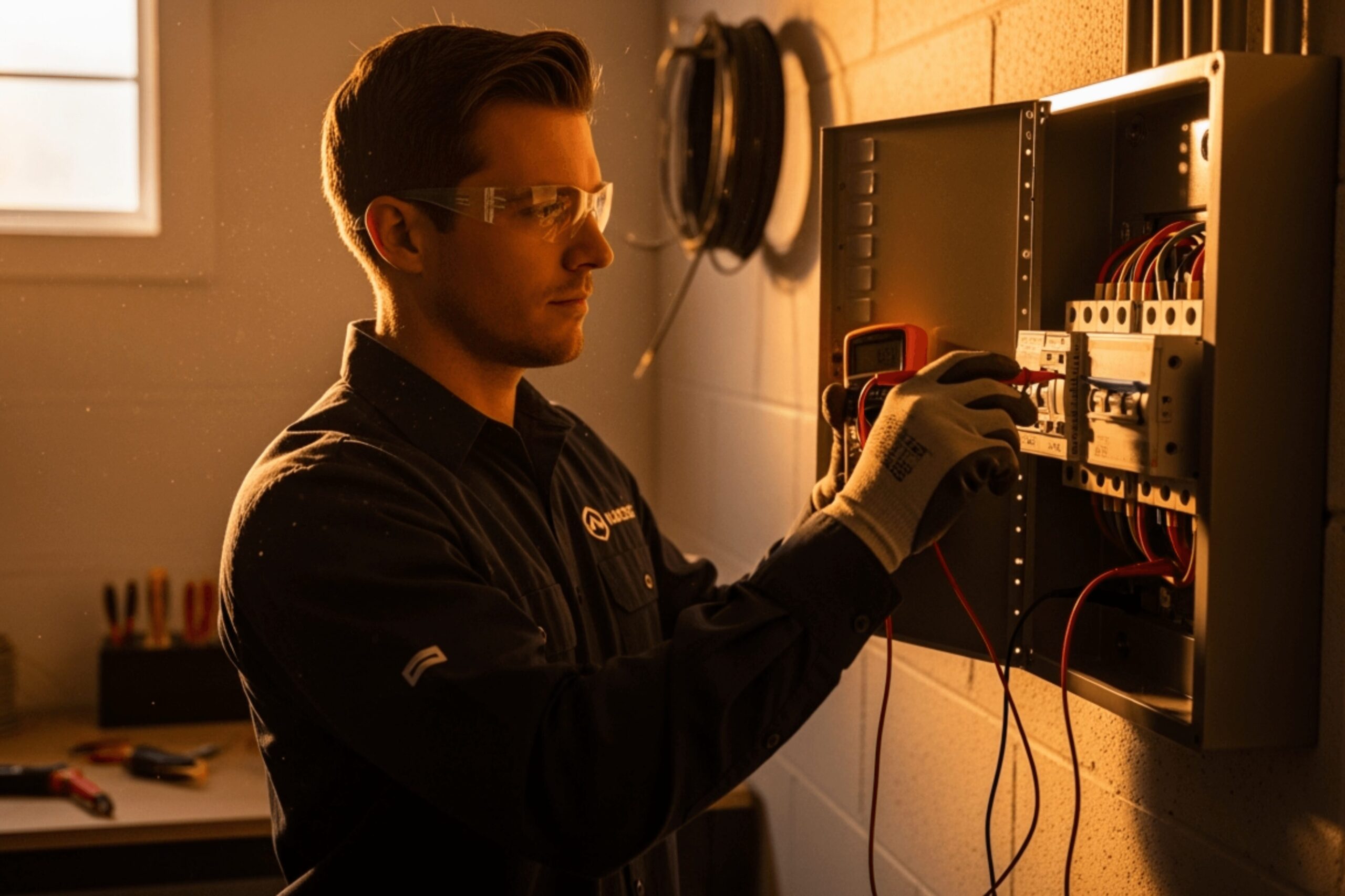
A licensed electrician installs the dedicated circuit, mounts the charger, completes the wiring, and makes any needed panel adjustments. A simple garage install may be done with minimal disruption. A larger commercial install can involve staging, multiple trades, and coordination with site operations.
Testing and user setup
After installation, the charger should be tested for safe operation and proper communication, if it is a smart unit. This is also the point where users learn how to start charging, adjust settings, connect apps, or manage access permissions.
Ongoing support
Even a good install may need follow-up. A user might need help setting schedules, a commercial site may want more chargers later, or a property owner may need maintenance after weather exposure or heavy use.
What affects EV charger installation cost
People often want a quick number. I get it. But there is no honest flat answer that fits every property.
Here are the main cost drivers:
Charger hardware
A basic Level 2 unit costs less than a premium smart charger or Tesla Wall Connector. Commercial networked chargers cost more again.
Distance from panel to charger
Shorter wire runs usually mean lower labour and material costs. Long runs, detached garages, and outdoor conduit increase cost.
Electrical capacity
If your panel has room and enough service capacity, the job is simpler. If you need a panel upgrade or load management solution, the price changes.
Site conditions
Finished walls, concrete surfaces, trenching, limited access, or weatherproofing can all add labour.
Permit and inspection requirements
Permits are part of doing the job properly, not an optional extra to dodge.
For commercial electrical projects, cost also depends on the number of chargers, networking requirements, payment systems, and power distribution planning.
Rebates and incentives in BC
Rebates are one of the better ways to lower the barrier to installing a Level 2 charger, but they can also be a little annoying to sort through. Programs have eligibility rules, approved equipment lists, and documentation requirements. Sometimes they change. Sometimes the language is less clear than it should be.
In BC, homeowners and businesses may have access to provincial or utility-related rebate programs for eligible Level 2 EV charger installations. In some cases, advertised rebate amounts reach up to $600 for qualifying home charger setups.
Eligibility often depends on things like:
-
charger type
-
approved models
-
hardwired or plug-in format
-
proof of purchase
-
installation by licensed electricians
-
permit and inspection records
-
property type
For multi-unit and commercial properties, incentives may also depend on networking features, load management, or project scale.
The practical advice is simple: check rebate rules before buying equipment. People sometimes order a charger first, then find out it does not meet the program requirements.
Why DIY is usually a bad idea
People install light fixtures on their own all the time. EV chargers are different.
A Level 2 charger pulls significant power for long periods. That means breaker sizing, conductor sizing, panel load, bonding, mounting, weather protection, and code compliance all matter. A mistake may not show up immediately. That’s part of what makes electrical mistakes so risky.
A professional install is not just about convenience. It is about:
-
fire safety
-
equipment protection
-
warranty compliance
-
permit approval
-
insurance concerns
-
reliable performance over time
If a charger needs a new circuit, panel work, or wiring upgrades, bring in licensed electricians. This is firmly in the category of electrical services that should be done properly the first time.
EV charger compatibility and who these installations suit
One nice thing about modern EV charging is that the infrastructure is getting easier to work with across brands. Residential and commercial installations can support a wide range of vehicles, including Tesla, Nissan Leaf, Chevy Bolt, Ford EV models, Hyundai Ioniq, Mercedes-Benz EVs, and more.
These projects are also not limited to one property type. EV charger installation can make sense for:
-
single-family homes
-
townhomes
-
duplexes
-
apartment buildings
-
strata developments
-
office complexes
-
retail centres
-
fleet facilities
-
industrial properties
That broad compatibility matters in the lower mainland, where many properties are planning for a mixed future. One tenant may drive a Tesla now, the next one may arrive with a different connector and different charging needs.
A few practical questions people ask
How long does a standard home installation take?
If the panel has capacity and the charger location is straightforward, the on-site work may be relatively quick. More complex jobs involving panel upgrades, long wire runs, or permit coordination take longer.
Do all homes need a panel upgrade?
No. Some do, many don’t. It depends on your existing service, major electrical loads, and the charger amperage.
Is a Tesla charger only for Teslas?
Tesla Wall Connectors are designed with Tesla use in mind, but compatibility options continue to improve. The best setup depends on your current vehicle and whether you want flexibility for future EVs.
Is workplace charging worth it?
For many employers and property owners, yes. It can help with tenant appeal, employee convenience, fleet operations, and long-term property value. The hard part is usually planning the electrical capacity and access rules, not deciding whether people would use it.
Final thoughts
A good EV charging setup should feel boring in the best way. You park, plug in, and stop thinking about it.
For most homes in Vancouver, Langley, Surrey, Abbotsford, and the surrounding lower mainland, a Level 2 charger is the practical choice. It gives you real daily convenience without drifting into the complexity of DC fast charging. For commercial and industrial electrical sites, the conversation gets bigger, but the same principle still applies: plan the power, think about future demand, and install it safely.
The charger itself is only part of the story. Electrical capacity, permits, wiring upgrades, site layout, and rebate eligibility all shape the project. That’s why it pays to treat EV charger installation as a real electrical job, not just a piece of hardware bolted to a wall.
Done properly, it makes EV ownership much easier. And honestly, that’s the whole point.