

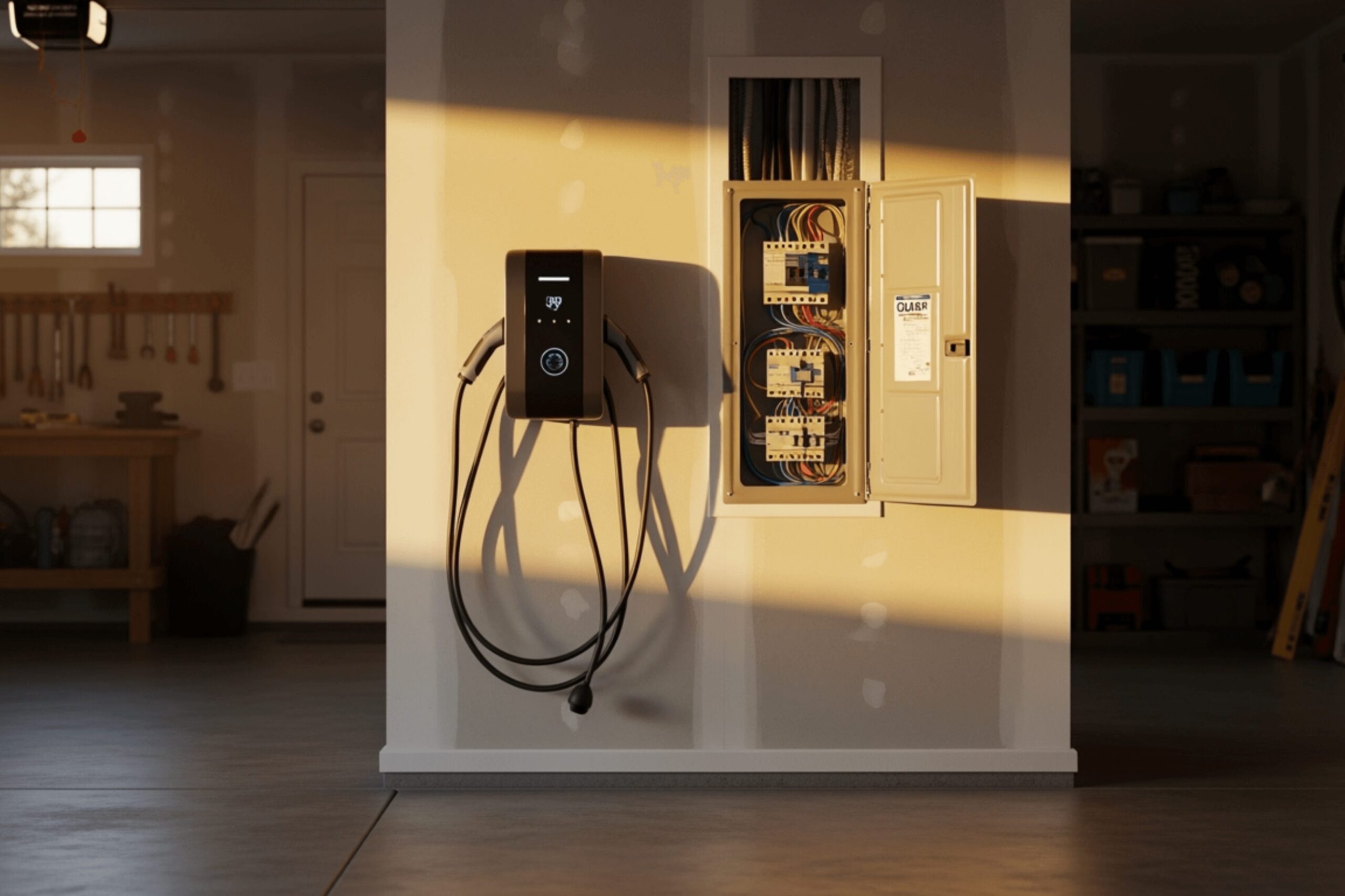

Buying an EV is the easy part to price. Installing the charger at home is where things get fuzzy.
A lot of homeowners hear “Level 2 charger” and assume the cost is mostly the charger itself. It usually isn’t. The hardware matters, sure, but the bigger variable is your house. One garage can be ready in an afternoon. Another needs panel work, a long cable run, permits, and weatherproof equipment. Same goal, very different bill.
For most homes, a Level 2 EV charger installation lands somewhere around $1,000 to $3,000, not including the charger unit. Some setups come in lower. Some go well above that. If your electrical system needs upgrades, the price can climb fast.
That sounds annoying, and honestly, it is. But once you understand what drives the cost, the estimates start making sense.
Why homeowners choose Level 2 charging
A standard wall outlet can charge an EV, but it is slow. Really slow. For some drivers, that is fine. For many, it gets old fast.
A Level 2 charger gives you:
- Faster charging at home
- More reliable overnight charging
- Less dependence on public chargers
- Better day-to-day convenience, especially if you drive often
This is the main reason people make the switch. You come home, plug in, and by morning the car is ready again. No planning your week around public charging stops.
That convenience has value, but it is not one fixed price. It depends on what your home needs to support safe continuous charging.
A realistic price range
Here’s the short version.
Typical installation cost, excluding the charger unit: about $1,000 to $3,000
That range usually covers the labor, wiring, breaker work, permit costs, and standard installation conditions. It does not always include bigger electrical upgrades.
A rough breakdown looks like this:
ScenarioApproximate CostExisting suitable outlet or very simple install$50 to $800 for verification or outlet workStandard Level 2 installation with no major upgrades$1,000 to $3,000Panel upgrade or more involved electrical changes$200 to $3,500 for panel-related work aloneExtensive rewiring in difficult casesCan exceed $9,000
That last number is not the norm. It is the “something unusual turned up in the electrical system” category. Still, it happens, especially in older homes.
The first cost question: do you already have a usable outlet?
This is where some installs get much cheaper.
If you already have a NEMA 14-50 outlet in the garage or near the parking area, you may not need a full hardwired installation. That can cut the work down quite a bit. In some homes, the electrician mainly needs to verify that the outlet, box, wiring, and breaker are appropriate for continuous EV charging.
That verification or outlet work might cost around $50 to $800, depending on whether the outlet is already there and truly suitable.
There is one catch. A dryer outlet is not automatically an EV outlet.
That matters more than people think. EV charging is a continuous load, and a receptacle that looks right may still not be the best fit. An electrician may recommend upgrading the outlet box, replacing worn components, or switching to a hardwired setup for better long-term reliability.
Hardwired vs. plug-in
If you are deciding between the two, here is the plain-English version:
- Hardwired chargers are usually preferred for stability and permanence.
- Plug-in chargers using a properly installed NEMA 14-50 can be a cost-effective option.
I tend to think of hardwiring as the cleaner long-term choice, especially if the charger will live in the same place for years. But if the outlet already exists and checks out, a plug-in setup can make good financial sense.
The big cost driver: your electrical panel
This is where estimates start spreading apart.
A Level 2 charger often needs a 50-amp circuit, and some vehicles or charging equipment may call for more. In many homes, the charger itself is not the problem. The problem is whether the panel has enough spare capacity to handle it.
If the panel can support the charger, the added cost may only be a few hundred dollars for breaker and circuit work.
If the panel is full, undersized, or already carrying a heavy load, you may be looking at a panel upgrade. That can push costs toward $200 to $3,500 for panel-related work, sometimes more depending on the service and the condition of the existing equipment.
Why breaker size matters
This part gets technical, but it affects the price directly.
For EV charging, the breaker usually must be sized at 125% of the charger’s continuous rated output.
A couple of common examples:
- A 40 A charger output usually needs a 50 A breaker
- A 48 A charger output usually needs a 60 A breaker
- A 50 A charger output may require a breaker around 70 A, depending on the equipment and local code practice
Bigger breaker means bigger wire. Bigger wire means more material cost. And if the panel cannot support that size, now you are no longer talking about a simple install.
This is why charger selection matters more than people expect.
A lower amp setting can save money
A lot of homeowners assume faster is always better. I’m not sure that’s true for every house.
If your vehicle sits overnight for 10 or 12 hours, you may not need the highest charging rate available. Choosing an adjustable-amperage charger or setting the unit to a lower output can reduce the required breaker size and wire gauge. That often lowers installation cost without making daily charging inconvenient.
For example:
- 48 A charging often needs a 60 A breaker
- 40 A charging often works with a 50 A breaker or a NEMA 14-50 setup
That difference may not sound dramatic, but it can change the wiring, the breaker, and whether the panel can handle the load without upgrades.
Future-proofing is still worth thinking about. If you plan to keep EVs for a long time, or expect a second EV later, it may be smart to choose equipment that can be turned up later if the electrical system allows it.
Distance from the panel changes everything
The farther the charger is from the electrical panel, the more expensive the job becomes.
That is simple, but it catches people off guard. A charger mounted beside the panel is one thing. A charger on the opposite side of the house, or at a detached garage, is another.
Longer runs mean more:
- Wire
- Conduit
- Labor
- Wall or ceiling routing
- Trenching, if the path goes underground
A rough estimate for wiring or trenching can be about $15 to $25 per meter, though actual costs vary with site conditions.
Indoor and outdoor installs are different
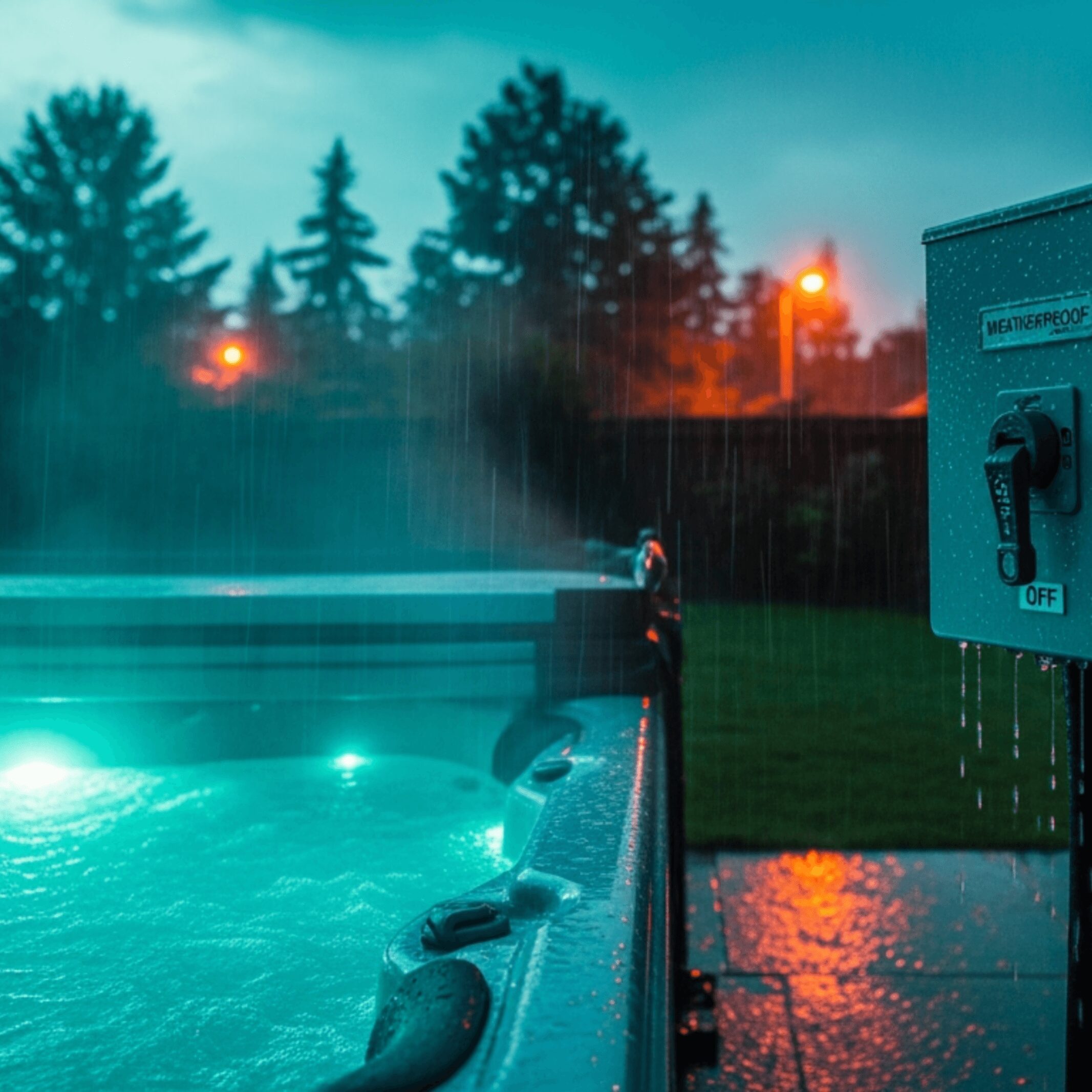
Outdoor installations tend to cost more because they need equipment rated for weather exposure. They may also require extra work for enclosure protection, mounting, and proper GFCI-related requirements depending on the setup and local code.
This is pretty common in the greater Vancouver area and across the lower mainland, where many homes have exterior parking pads, carports, or driveway-based charging instead of enclosed garages.
Rain, moisture, and temperature swings do not make a job impossible. They just make it less basic.
Permits are part of the price
Electrical permits are easy to forget when comparing quotes. They still count.
Depending on your municipality, permit costs are often around $100 to $300. Some areas are lower, some higher. Inspection requirements also vary.
You may feel tempted to treat permits as optional, especially if someone says they can “save you money” by skipping them. That is a bad bet.
Permits help confirm the work meets code. They matter for safety, insurance questions, and future home sales. If a charger installation causes trouble later, undocumented work can become a much more expensive problem than the permit ever was.
Old wiring can turn a small job into a big one
Wiring type is another factor that can swing the price.
Some homes have aluminum wiring, especially older ones, though aluminum also appears in some newer construction for certain applications. Aluminum is not automatically a dealbreaker, but it does change the conversation.
Some chargers or installation methods may require copper conductors. If that is the case, and the existing wiring is aluminum, the electrician may need to run new copper wire to the charger location. That can be manageable in some homes and painful in others.
In extreme cases, broader rewiring work can push costs beyond $9,000.
That is the ugly version of the story. The better version is that full rewiring is often not necessary.
A good electrician may be able to:
- Run a dedicated copper circuit just for the charger
- Recommend equipment compatible with a safe aluminum-based solution where permitted
- Rework the installation plan to avoid unnecessary upgrades
This is one reason a site assessment matters. The cheapest online estimate has no idea what is behind your walls.
Three example cost scenarios
These are not quotes. They are just realistic examples of how the numbers move.
1. Best-case setup
A homeowner already has a suitable NEMA 14-50 outlet in the garage, the panel has enough capacity, and the charger mounts nearby.
Possible cost:
- Outlet verification or minor updates: $50 to $800
- Minimal extra labor
This is the happy path.
2. Typical installation
The home needs a new dedicated circuit, the charger is mounted in the garage, and the wire run is moderate. No panel upgrade is required. Permit included.
Possible cost:
- Full installation: $1,000 to $3,000
This is probably the most common kind of project.
3. Higher-cost installation
The parking spot is outside, far from the panel, trenching is required, and the existing panel cannot support the new circuit. The home also needs copper run to the charger location.
Possible cost:
- Panel work: up to $3,500 or more
- Long wire run or trenching: added per-meter cost
- Permit and weatherproof equipment
- Potential specialty wiring work
This is where a “simple charger install” stops being simple.
Rebates and incentives can change the math
This part is worth checking before you approve the work.
Utilities, provinces, municipalities, and other programs sometimes offer rebates or incentives for EV charger installation. Those programs come and go, and the eligibility rules can be picky, but they can reduce the net cost in a meaningful way.
Before booking the install, check:
- Local utility rebate programs
- Provincial or municipal incentives
- Equipment eligibility rules
- Whether a permit and licensed electrician are required for the rebate
- Application deadlines and documentation needs
A lot of people remember to shop for charger prices and forget to shop for incentives. That is leaving money on the table.
What to ask before you approve the job
If you are getting quotes for EV charger installation, ask specific questions. General promises are not very useful here.
A good list includes:
Can my panel support the charger I want?
This should be answered with an actual load assessment, not a guess.
Is hardwiring better for my setup, or does a NEMA 14-50 make sense?
Both can work, but the right answer depends on your equipment and home.
What amperage do I really need?
Many drivers do fine with less than the maximum available charging speed.
Will this require a permit and inspection?
In many places, yes.
How far is the run from the panel, and how does that affect price?
Distance can quietly become a major part of the estimate.
Is my existing wiring compatible?
This is especially important in older homes.
Can the charger be set to a lower amperage now and upgraded later?
That flexibility can save money today without boxing you in later.
In residential electrical work, this kind of detail matters. The same basic principle shows up in commercial electrical and industrial electrical jobs too: the equipment cost is only one part of the project. The infrastructure decides the rest.
Why a site assessment matters more than an online estimate
I get why people want a quick number. Everyone does.
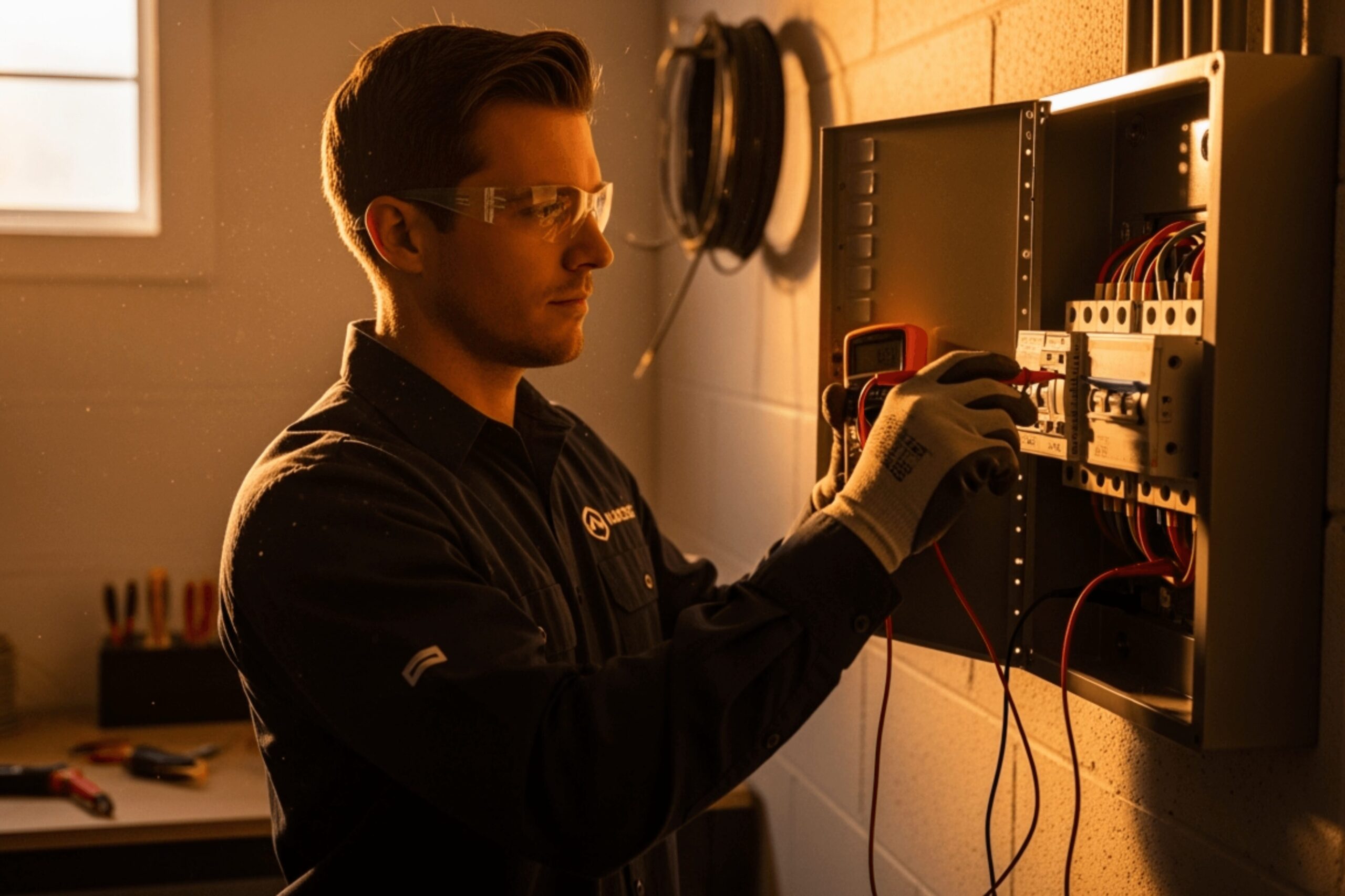
But EV charger installation is one of those jobs where the home itself decides the price. A short visit from licensed electricians can tell you more than an hour of online research.
An electrician can look at:
- Panel capacity
- Breaker availability
- Charger location
- Wiring path
- Indoor versus outdoor conditions
- Permit requirements
- Existing outlet suitability
- Copper versus aluminum issues
That is what turns a rough range into a real number.
For homeowners in Vancouver, the greater Vancouver area, and the lower mainland, it is also worth remembering that labor rates, permitting, housing age, and parking layout can vary a lot from one property to the next. A modern detached home with an attached garage is different from an older house with backyard parking.
The bottom line
A home EV charger is one of those upgrades that feels expensive right up until you use it every day.
For most homeowners, the installation cost falls around $1,000 to $3,000, excluding the charger itself. If your setup is simple, it may be lower. If your home needs panel upgrades, long wiring runs, trenching, or wiring upgrades, it can go much higher.
The biggest factors are straightforward:
- Whether a suitable outlet already exists
- Whether the panel has enough capacity
- How far the charger is from the panel
- Whether permits are required
- Whether your wiring type creates extra work
There is no universal price because there is no universal house.
The best next step is boring, but it is the right one: get a proper assessment from licensed electricians and ask for a detailed quote. In electrical services, guesswork is cheap at first and expensive later. For EV charger installation, that is especially true.