

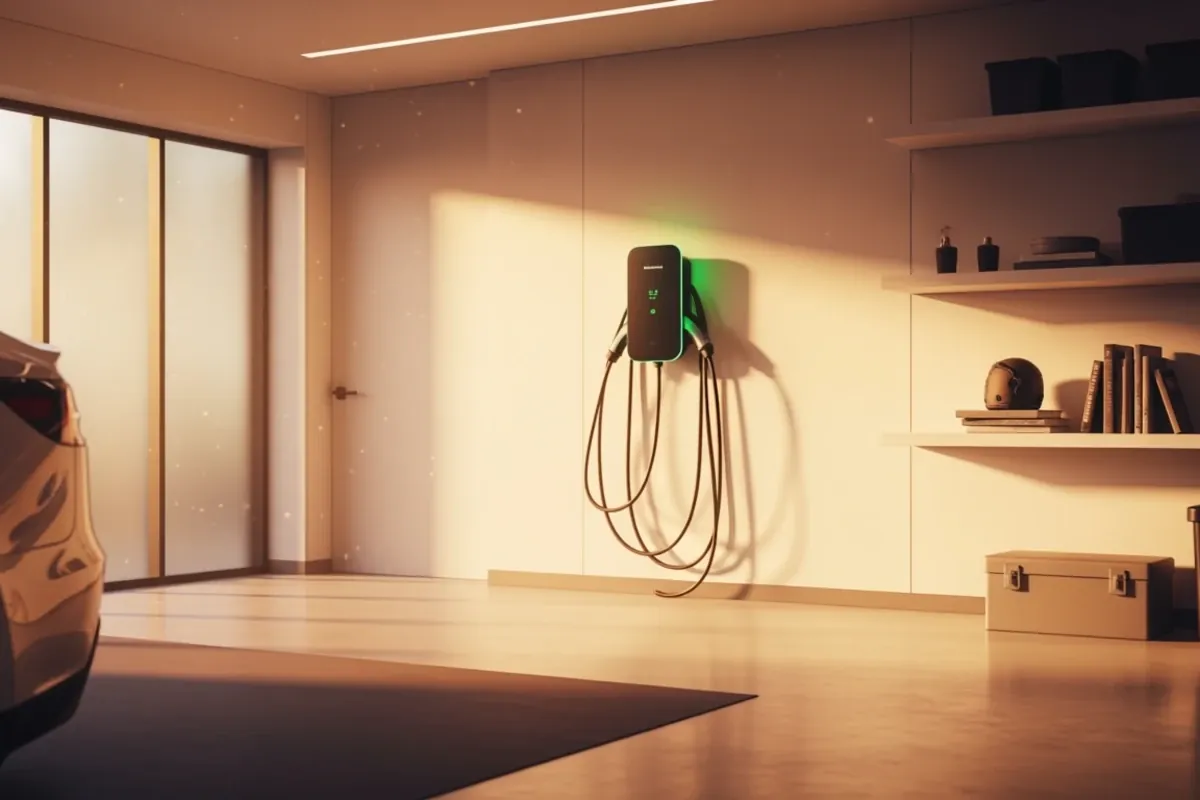

Buying an EV is the easy part. Choosing the charger is where people start second-guessing everything.
I see why. The names sound technical, the price gap is real, and a lot of homeowners are trying to sort out charging at the same time they are thinking about general renovation work, new wiring, or a panel and service upgrade. If you live in Vancouver or Burnaby, you also have the usual questions about permits, older homes, detached garages, and whether your electrical system can handle one more big load.
The short version is simple: most homeowners do best with Level 2 charging, some are perfectly fine with Level 1, and DC fast charging almost never makes sense at home.
That’s the conclusion. The rest is how to know which camp you’re in.
Start with how you actually drive
Before comparing charger types, it helps to be honest about your routine.
If you drive 20 to 40 km most days, park at home every night, and don’t mind charging slowly, your needs are pretty modest. If you commute farther, have two EVs, or want the battery topped up quickly between errands, your charger needs change fast.
People often shop for the “best” charger when what they really need is the right charger. Those are not always the same thing.
A few questions will tell you a lot:
- How many kilometres do you drive on a normal weekday?
- Do you park in a garage, driveway, lane garage, or parkade?
- Are you charging one EV or planning for two?
- Is your current panel already crowded?
- Do you want a simple setup, or are you already pairing electrical work with other projects like heat pump and AC wiring or a service upgrade?
Once you answer those, the charger decision gets much easier.
Level 1 charging: slow, simple, and sometimes enough
Level 1 charging uses a standard 120-volt outlet. In other words, the kind of outlet many people already have in a garage.
This is the cheapest way to start charging at home because there may be little or no new equipment needed, though the outlet and circuit still need to be safe and suitable for continuous use. That part matters more than people think. An older receptacle or weak wiring is not something to gamble on with overnight EV charging.
In real life, Level 1 is slow. Expect a modest amount of range added per hour. For some households, that’s perfectly fine. If your EV is parked for 10 to 12 hours every night and your daily driving is light, Level 1 can keep up.
Level 1 makes sense if:
- you drive short distances most days
- you have one EV and lots of overnight parking time
- you want the lowest upfront cost
- you’re trying EV ownership first before investing in more wiring
Where it falls short is convenience. Miss a night of charging, take an extra trip, or come home with a low battery in cold weather, and recovery is slow. That’s when Level 1 starts to feel less “simple” and more annoying.
Level 2 charging: what most Vancouver homeowners end up choosing
Level 2 charging uses 240 volts, similar to major appliances like a dryer or range, though on a dedicated circuit sized specifically for the charger. This is the setup most EV owners picture when they think of home charging.
And honestly, for many homes, it’s the sweet spot.
A Level 2 EV charger can add range much faster than Level 1, usually enough to fully cover daily driving and then some. For busy households, that speed buys back flexibility. You can come home low, plug in, and be ready again by morning without thinking about it too hard.
Level 2 usually makes the most sense if:
- you drive moderate to long distances
- your household has more than one driver or more than one EV
- you want faster overnight charging
- you’re already doing electrical work such as wiring updates or a panel and service upgrade
- you want your home to be ready for future vehicle changes
This is also where installation quality matters. A proper Level 2 setup is more than hanging a charger on the wall. The circuit has to be sized correctly, the load has to be calculated, the breaker has to match, and the wiring route has to make sense for your space. If your garage is detached or your panel is far from the parking area, the installation can be straightforward or a bit involved depending on distance and access.
That’s why two houses on the same street can get very different quotes.
DC fast charging: powerful, expensive, and usually the wrong fit for home
DC fast charging is what you see along highways and at commercial charging sites. It charges far faster than Level 1 or Level 2 because it bypasses the vehicle’s onboard charger and delivers high-power DC energy directly to the battery.
It sounds appealing until you look at what it takes.
For a home, DC fast charging is usually impractical. The equipment is expensive, the electrical demand is high, and the installation requirements are far beyond what most residential systems are built for. In many cases, it would trigger major infrastructure work that makes no financial sense for a single-family home.
For most BC homeowners, DC fast charging is not a home option. It’s a public charging solution.
If you want quick charging at home, Level 2 is almost always the right ceiling.
What your home’s electrical system has to do with the decision
This is the part people sometimes skip, then regret later.
Your EV charger choice is tied directly to your home’s electrical capacity. A newer home with a modern panel may have room for a Level 2 charger with minimal changes. An older Vancouver house might not. Some homes need a load calculation only. Others need a panel and service upgrade before an EV charger can be installed safely.
That doesn’t mean “old house equals impossible.” It just means the charger decision should be based on the actual system, not a guess.
A few common issues come up again and again:
Limited panel space
If your panel is full, there may be no room for a new dedicated EV circuit. Sometimes there’s a clean solution. Sometimes the panel itself needs replacing.
Service capacity
A 100-amp service can work in some homes, but once you add an EV charger, heat pump and AC equipment, and other major loads, the numbers can get tight. This is especially true if the house has seen piecemeal upgrades over the years.
Detached garages and long wire runs
A charger in a detached garage or lane building can mean trenching, conduit work, or more complex wiring. It’s doable, but it changes the scope.
Existing wiring condition
If you’re already planning general renovation work, it can be smart to think about EV charging at the same time. Opening walls once is better than doing it twice.
Vancouver-specific reality: your charger should fit your routine, not a fantasy
There’s a very Vancouver habit of trying to future-proof everything to the maximum. I get it. Nobody wants to install something and then outgrow it in a year.
Still, bigger is not always better.
If you work from home, drive locally, and have one EV, a basic Level 2 setup may be all you ever need. If your family is moving toward two electric vehicles and adding a heat pump, then it’s worth planning more carefully now. That might mean choosing a charger with smart load management, or bundling the work with a service upgrade and other wiring improvements.
The best setup is the one you can use easily every day, without overloading your system or overspending on power you’ll never use.
So which charger should you choose?
Here’s the practical answer.
Choose Level 1 if your driving is light, your parking is consistent, and you want the cheapest way to charge at home. It’s a reasonable starting point, especially if you want to live with the EV for a while before committing to more work.
Choose Level 2 if you want convenience, faster charging, and a setup that suits most households long term. For many Vancouver homeowners, this is the best balance of cost, speed, and usability.
Skip DC fast charging for home use unless you have a very unusual property and a very unusual budget.
That’s the basic decision. Then the real next step is checking whether your electrical system supports the charger you want.
Don’t treat EV charger installation like a plug-and-play accessory
This part matters more than the charger brand.
An EV charger is a continuous electrical load. That means the installation has to be done properly, with the right circuit design, breaker sizing, permits where required, and attention to code. A bad install can lead to nuisance tripping, overheated wiring, charger failure, or worse.
A licensed electrician should look at:
- your panel capacity
- available breaker space
- wire routing
- parking location
- future electrical plans for the home
That last point gets missed a lot. If you’re planning lighting upgrades, a suite renovation, backup generator work, or heat pump and AC installation, those loads should be considered together. Good planning now can save you from rework later.
A smart home charging setup should feel boring
That may sound odd, but it’s true.
The best EV charger setup is one you barely think about. You pull in, plug in, and move on with your life. No extension cords, no overloaded garage outlets, no wondering if the panel is straining every time the dryer runs.
Reliable electrical work is like that. When it’s done right, it disappears into the background.
If you’re choosing an EV charger for your Vancouver home, start with your driving habits, then look honestly at your electrical system. For most people, that points to Level 2. For some, Level 1 is enough. For almost nobody, DC fast charging at home is worth it.
And if you’re not sure what your house can handle, it’s worth getting that checked before buying hardware. A quick assessment can tell you whether you need a simple charger install, new wiring, or a panel and service upgrade, and that answer is a lot more useful than guessing in the aisle or scrolling through charger reviews at midnight.