

Most people do not think about their electrical panel until something starts acting strange. A breaker trips again. Lights dip when the dryer starts. The panel is full, but you want an EV charger installation. At that point the big question shows up: do you really need a panel upgrade, or is this a smaller repair?
That distinction matters. A panel upgrade is not a default fix for every electrical annoyance, and it is not a cosmetic improvement either. It is a safety and capacity decision. In older homes and busy commercial spaces across Vancouver and the lower mainland, the panel often ends up doing a job it was never designed to handle. More appliances, more electronics, more electric heating, more charging. Same old panel.
This guide walks through the signs that a panel is undersized, unsafe, or simply outdated, and what those signs usually mean in real life.
What the electrical panel actually does
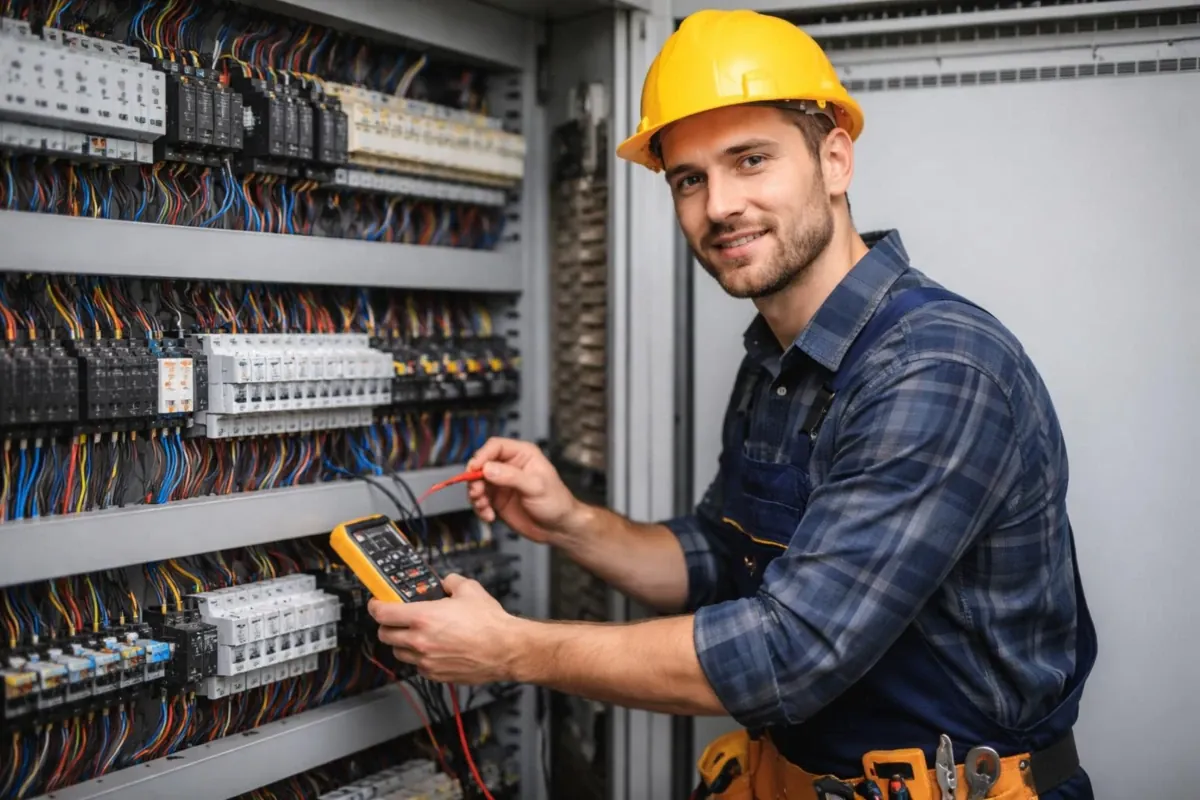
Your panel is the traffic controller for the whole building. Power comes in from the utility, passes through the main service, and gets split into individual circuits. The breakers are there to protect the wiring by shutting power off when a circuit draws too much current or a fault occurs.
When the panel is in good shape and properly sized, most people never notice it. When it is not, the symptoms show up in annoying ways first and dangerous ways later.
A panel upgrade usually means one of two things. Either the service capacity is increased, for example from 100 amps to 200 amps, or the existing panel is replaced with a safer, newer one that has enough room and proper breaker protection. Sometimes both happen together.
The first sign: breakers trip often
An occasional trip is not shocking. Breakers are supposed to trip when a circuit is overloaded or faulted. If a bathroom heater and hair dryer trip the same breaker once, that tells you the breaker did its job.
Frequent tripping is different.
If you are resetting breakers every week, or every day, the system is telling you something. In residential electrical systems, this often means too many high-draw devices are sharing circuits. Kitchens, laundry rooms, garage circuits, and basement suites are common trouble spots. In commercial electrical settings, nuisance tripping may show up when equipment starts up, when HVAC cycles on, or when a tenant adds new loads without reworking the panel.
What it may mean:
- A branch circuit is overloaded
- The panel is undersized for current demand
- A breaker is worn out or failing
- There is a loose connection or developing fault
- New equipment was added without proper wiring upgrades
One trip is a data point. A pattern is a warning.
Lights that flicker, dim, or hesitate
If lights flicker because of a faulty bulb, that is annoying but simple. If lights dim whenever the microwave, air conditioner, compressor, or table saw starts, pay attention.
Momentary dimming can happen during motor startup, but it should not be dramatic or constant. In homes, it often points to circuits that are heavily loaded or to service equipment that is struggling to keep voltage steady under demand. In businesses, especially those running refrigeration, tools, or production equipment, it may point to larger distribution issues.
This symptom does not always mean “upgrade the whole panel now.” Sometimes the fix is a dedicated circuit, a connection repair, or a load rebalance. But when dimming is widespread, or when several areas of the building are affected at once, the panel and service should be evaluated.
I take this sign seriously because people tend to normalize it. They live with the light dip for years. It feels small until it is not.
You have a fuse box or an obsolete panel
A fuse box is not automatically dangerous because it is old. Age alone is not the whole story. But old electrical equipment raises a few practical problems fast.
First, older systems were built for a different kind of living and working. They were not planned around EV charger installation, induction ranges, heat pumps, home offices full of electronics, server closets, or commercial tenant improvements.
Second, some older panels are hard to service properly because replacement parts are limited, compatibility is unclear, or the equipment has a history of poor breaker performance. If a licensed electrician flags a panel as obsolete, unsupported, or known for reliability issues, that is worth listening to.
Third, fuse boxes invite bad decisions. People replace fuses with the wrong size. They keep spares around and “just get power back on.” Breakers are not perfect, but modern panels are easier to manage safely.
In many older properties around Vancouver and the greater Vancouver area, the question is not whether the panel still turns on the lights. It is whether it is still a sensible thing to rely on.
The panel feels warm, smells hot, or makes noise
This is where the conversation stops being theoretical.
A panel should not smell like hot plastic or burning insulation. It should not crackle, buzz loudly, or feel hot to the touch. A faint transformer hum somewhere nearby is one thing. Heat, arcing sounds, smoke, scorch marks, or a sharp electrical smell are another.
These symptoms can point to:
- Loose or deteriorated connections
- Overheating breakers
- Damaged bus bars
- Moisture intrusion
- Arcing inside the panel
That is not a “watch and wait” situation. If it is safe to do so, reduce load, leave the panel closed, and call licensed electricians or a 24/7 emergency service right away. Do not keep resetting breakers to see if the smell goes away. Do not remove the panel cover to investigate on your own.
There is no room for new circuits
Sometimes the panel is not failing. It is simply full.
That matters more now than it used to. A lot of buildings in the lower mainland are being asked to do more electrically than they were ten or twenty years ago. A few common examples:
- EV charger installation in a garage or parking area
- Heat pump additions
- Basement suite or secondary unit work
- Hot tubs, saunas, or workshops
- Commercial kitchen equipment
- Office expansions and added IT equipment
- Industrial machines with dedicated power needs
If there are no spare breaker spaces, or the panel already has awkward workarounds inside it, that is a sign the system may need more capacity or a subpanel, at minimum. If the service size is already tight, a full panel upgrade may be the cleaner long-term answer.
This is one of the most common reasons people end up reviewing electrical services in Vancouver. They are not reacting to a failure. They are reacting to a change in how the building is used.
Your building has outgrown its service size
A 60-amp service that once handled a modest house can feel painfully undersized today. Even 100 amps, which was common for many years, may be tight in a modern all-electric home.
A few loads that change the math quickly:
- EV charging
- Electric baseboards or heat pumps with backup heat
- Electric water heaters
- Induction cooking
- Large dryers
- Workshops with compressors or welders
- Restaurant equipment
- Refrigeration
- Industrial motors or process equipment
This is where a real load calculation matters. Guessing based on square footage or breaker count is not enough. A proper assessment looks at what is actually installed, what runs at the same time, and what is planned next.
For homes, a common trigger is the combination of an EV charger, a suite, and electric heating. For commercial electrical and industrial electrical projects, the trigger is often new equipment or tenant improvements that push the service past comfortable limits.
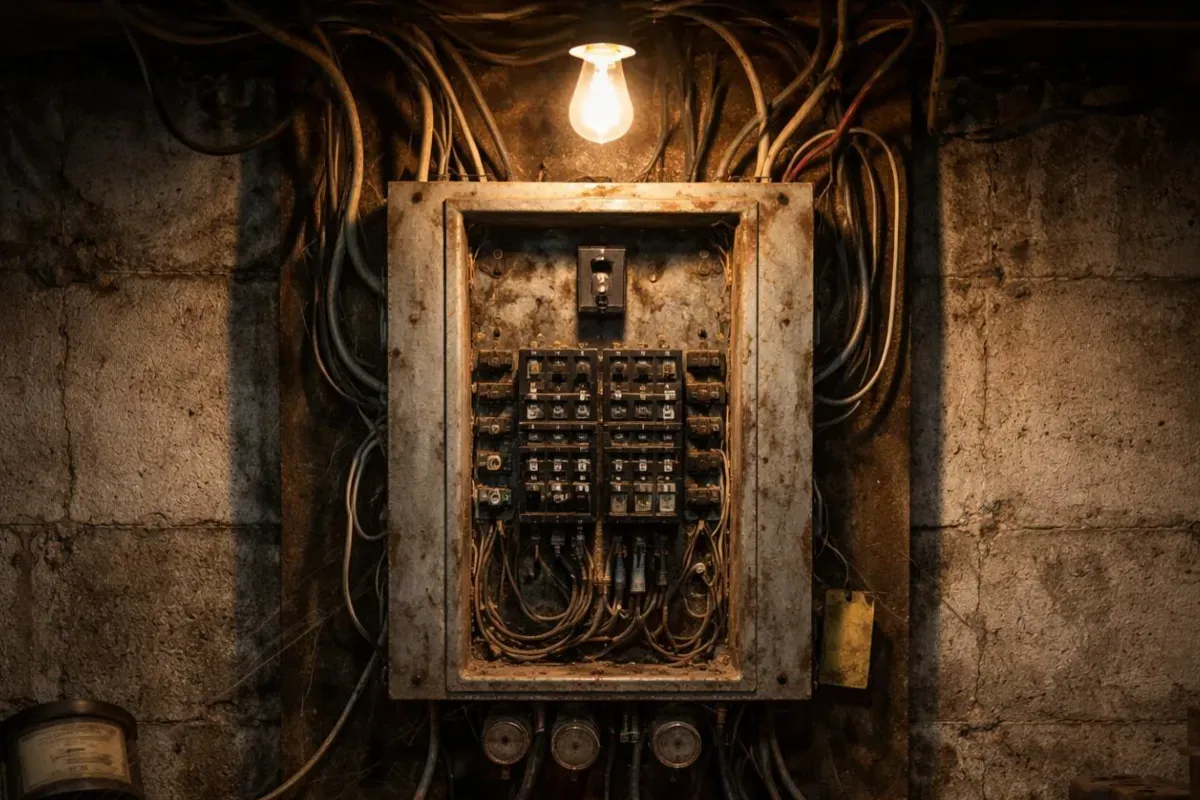
Rust, corrosion, or signs of water inside the panel
Moisture and electrical equipment do not get along. In a coastal climate like the lower mainland, this matters more than people think. Damp basements, outdoor equipment, condensation, and leaks can all shorten the life of a panel.
If you see rust on the enclosure, corrosion around breakers, staining, or evidence of water entry, the panel needs inspection. Corrosion can damage connections and reduce the reliability of breaker operation. Even if the panel is technically still working, it may no longer be safe to trust.
This kind of damage also tends to travel with other issues. A rusty panel may sit in a damp mechanical room. An old meter base may have weather exposure. Grounding and bonding may be overdue for correction. Once moisture shows up, the inspection should be broader than the panel alone.
Strange behavior in one area versus the whole building
Here is the nuance people often miss: not every electrical problem means you need a panel upgrade.
If only one bedroom circuit trips when a space heater is used, the issue may be that one overloaded circuit. If a single receptacle is dead, that might be a wiring fault or a tripped GFCI upstream. If lights flicker only in one fixture, the problem could be in the fixture itself.
A panel upgrade becomes more likely when the symptoms are widespread, repeated, and tied to overall electrical demand. Think of it this way:
If one room has a problem, the branch circuit may be the culprit.
If the whole building complains when heavy loads turn on, the panel or service may be the issue.
That is why good electricians do not jump straight to replacement. They test, inspect, calculate, and rule out simpler failures first.
What this looks like in homes around Vancouver
Older housing stock in Vancouver, Burnaby, New Westminster, and nearby areas creates a familiar pattern. A house built decades ago may have started with modest loads and no electric vehicle, no suite, and no air conditioning. Then life changed.
The owners added a basement suite. Then a heat pump. Then a dryer replacement. Then an EV. Somewhere in the middle, the panel filled up. Breakers started tripping more often. A few lights dimmed. Now the question comes up during a renovation permit or service call.
That is a pretty normal path.
A panel upgrade is often needed in these cases not because one thing is broken, but because the home has quietly become a much larger electrical user than it used to be. Wiring upgrades may also be part of the answer, especially if older branch circuits do not match how rooms are now being used.
What it looks like in commercial and industrial spaces
Commercial electrical problems often show up as interruption and downtime before they show up as obvious hazard. A panel may be technically functioning, yet still be wrong for the current operation.
Common signs include:
- Breakers trip when several pieces of equipment run together
- Tenant improvements cannot be completed without adding circuits
- Panel schedules are inaccurate or missing
- Added loads are fed through temporary-looking fixes
- Equipment startup causes building-wide dips
- Maintenance staff avoid certain circuits because they are “touchy”
In industrial electrical settings, the stakes are higher because motor loads, three-phase distribution, and fault current levels can make panel problems more serious. A panel that is undersized or poorly matched to equipment can create recurring production issues long before someone calls it a safety problem.
If a business is expanding, changing equipment, or repurposing floor space, the electrical distribution should be reviewed early. Waiting until the panel starts failing is the expensive version of the same job.
What a proper panel assessment should include
A real assessment is more than opening the door and counting breakers.
It should look at the service size, the actual connected load, the condition of breakers, available spaces, conductor sizing, grounding and bonding, and the physical condition of the enclosure. It should also consider what is planned next. If you know an EV charger installation or major renovation is coming, that should be part of the conversation now, not later.
For homes and businesses in the greater Vancouver area, code compliance and permit requirements matter too. A panel replacement or service upgrade usually involves formal steps, not casual handyman work. That is one reason licensed electricians matter here. The panel is not an area where shortcuts age well.
What to do if you suspect the panel is the problem
Start by paying attention to patterns. Which breaker trips? What was running at the time? Do lights dim only when one appliance starts, or across the whole building? Does the panel make noise when loads increase?
Then stop doing the risky stuff. Do not keep resetting a breaker over and over. Do not swap breakers around without proper evaluation. Do not install high-draw equipment on the assumption that “it will probably be fine.”
If there are hot spots, burning smells, buzzing, smoke, or visible damage, treat it as urgent and call for 24/7 emergency service.
If the issue is capacity, age, or planned expansion, book an inspection before you buy the new equipment. That order matters. It is much easier to plan panel work than to discover, after the fact, that the system cannot support what was just installed.
The bottom line
A panel upgrade is actually needed when the electrical system is no longer safe, no longer adequate for the load, or no longer practical to build on.
Frequent breaker trips, widespread dimming, obsolete equipment, hot or noisy panels, corrosion, and a lack of space for new circuits are the big signs. For residential electrical, that often happens when an older home takes on modern loads. For commercial electrical and industrial electrical properties, it often shows up when operations expand faster than the distribution system.
The honest answer is sometimes “repair the circuit, not the panel.” But when the signs point to overall capacity or safety, it is better to deal with the panel directly than keep negotiating with it month after month.
Electrical problems rarely become cheaper by being ignored. They just become more familiar, right up until they stop feeling normal.