

An older home can feel perfectly comfortable until its electrical demands change. You add an electric vehicle, plan a heat pump, or consider a basement suite. Suddenly, the 100-amp service that has supplied the house for decades raises a practical question: can it handle what comes next?
For many Vancouver homeowners, the answer is less obvious than the number on the main breaker suggests. A 100-amp service is not automatically unsafe or inadequate. Some homes operate comfortably within that capacity. Others need changes before new equipment can be installed safely.
The right decision starts with understanding your existing system, identifying warning signs, and calculating the loads you plan to add. Here is how to approach that process without assuming every electrical problem requires a 200-amp upgrade.
What Does a 100-Amp Electrical Service Actually Mean?
Your electrical service brings power into the home. In a typical residential installation, its capacity depends on several components, including the service conductors, meter equipment, main disconnect, and electrical panel.
A 100-amp service limits how much current the home can draw through that service. It does not mean every circuit can draw its full breaker rating at once.
That distinction matters. Adding up all the breaker numbers in your panel will usually produce a total greater than the main breaker rating. This is normal because household equipment does not all operate at maximum output simultaneously.
At a nominal 240 volts, 100 amps corresponds to approximately 24 kilowatts. But that simple calculation is not a substitute for a code-compliant load calculation. Equipment operating patterns, continuous loads, and applicable demand factors affect how an electrician evaluates capacity.
There is another common source of confusion: panel size and service size are not necessarily the same. A panel rated for 200 amps may be supplied by a 100-amp service. The label inside the panel alone does not establish the capacity available to your home.
Warning Signs Worth Investigating
Electrical problems deserve attention, but their cause is not always insufficient service capacity. A failing connection, damaged device, or overloaded branch circuit can create symptoms even when the home’s overall service is adequate.
Breakers trip during normal use
If the same breaker trips when you run a kettle and toaster together, the problem may be limited to that kitchen circuit. Increasing the service to 200 amps would not increase the capacity of that individual circuit.
A main breaker that trips when several major appliances operate at once raises a different concern. It may indicate excessive overall demand, although equipment defects or connection problems can also be involved.
Do not repeatedly reset a breaker without investigating the cause. Never install a larger breaker simply to stop tripping. The breaker must protect the wiring and suit the equipment it supplies.
Lights dim or flicker
A brief, slight dip when a motor starts can occur without indicating a major problem. Persistent flickering, substantial dimming, or lights becoming unusually bright need assessment.
These symptoms can come from loose connections, circuit problems, or an issue on the utility side. A service upgrade should follow a diagnosis, not replace one.
The panel feels hot, smells burned, or makes unusual sounds
Burning odors, scorch marks, crackling, or significant heat around electrical equipment are warning signs that need prompt attention. Keep away from the equipment and arrange professional help.
If there is smoke, active sparking, or fire, move to safety and call 911. Do not touch the panel or attempt to remove its cover. For urgent electrical hazards without an active fire, contact a licensed electrical contractor that provides 24/7 emergency service. Suspected utility equipment problems should also be reported to the utility.
Why New Equipment Changes the Calculation
The age of a house is only part of the story. What you ask its electrical system to do often matters more.
A home with gas space heating, gas water heating, and modest appliance use may have a very different demand profile than a similar-sized all-electric home.
EV charging adds a substantial, sustained load
EV charger installation is one of the most common reasons homeowners review their electrical service. Unlike a kettle that runs for a few minutes, an EV charger can draw power steadily for hours.
For example, a charger configured to deliver 32 amps at 240 volts draws approximately 7.7 kilowatts while charging. The circuit must be designed for the applicable continuous-load requirements, not simply matched to the charger’s output number.
Still, maximum charging speed is not always necessary. Someone with a short commute and overnight parking may be well served by a lower charging rate. An approved EV energy management system may also allow charging to adjust or pause as household demand changes.
The useful question is: how much charging do you need, and how can the home support it safely?
Heat pumps need an equipment-specific assessment
A heat pump can use far less electricity for space heating than electric resistance heating. That does not mean every heat pump installation reduces the home’s electrical demand.
If you are replacing a gas furnace, the change may add electrical heating load. If the system includes electric backup heat, that equipment can have a substantial effect on the calculation.
The outdoor unit, indoor equipment, backup heat, and other associated loads need to be considered together. Ask for the actual proposed equipment specifications rather than relying on a general statement that heat pumps are efficient.
Suites increase demand and complexity
A secondary suite can introduce another cooking appliance, laundry equipment, water heater, or heating system. It may also change the requirements for circuit distribution and electrical design.
Even when the suite does not have a separate utility meter, its loads still affect the property’s electrical supply.
Planning early helps avoid finishing walls only to discover that additional circuits, service work, or other wiring upgrades are needed. Electrical planning should be coordinated with the municipality’s suite requirements and the relevant permitting authority.
Seasonal peaks reveal limits
Across the Lower Mainland, winter can combine heating, longer lighting hours, cooking, laundry, and EV charging. Electric backup heat may also operate during colder weather.
Summer can bring a different overlap: air conditioning, an EV charger, and normal household appliances running together.
These peaks explain why a system may appear adequate most of the year but struggle during particular conditions. A proper assessment considers those foreseeable demands rather than relying only on an average electricity bill.
How Electricians Determine Whether an Upgrade Is Needed
A useful assessment goes beyond counting empty breaker spaces.
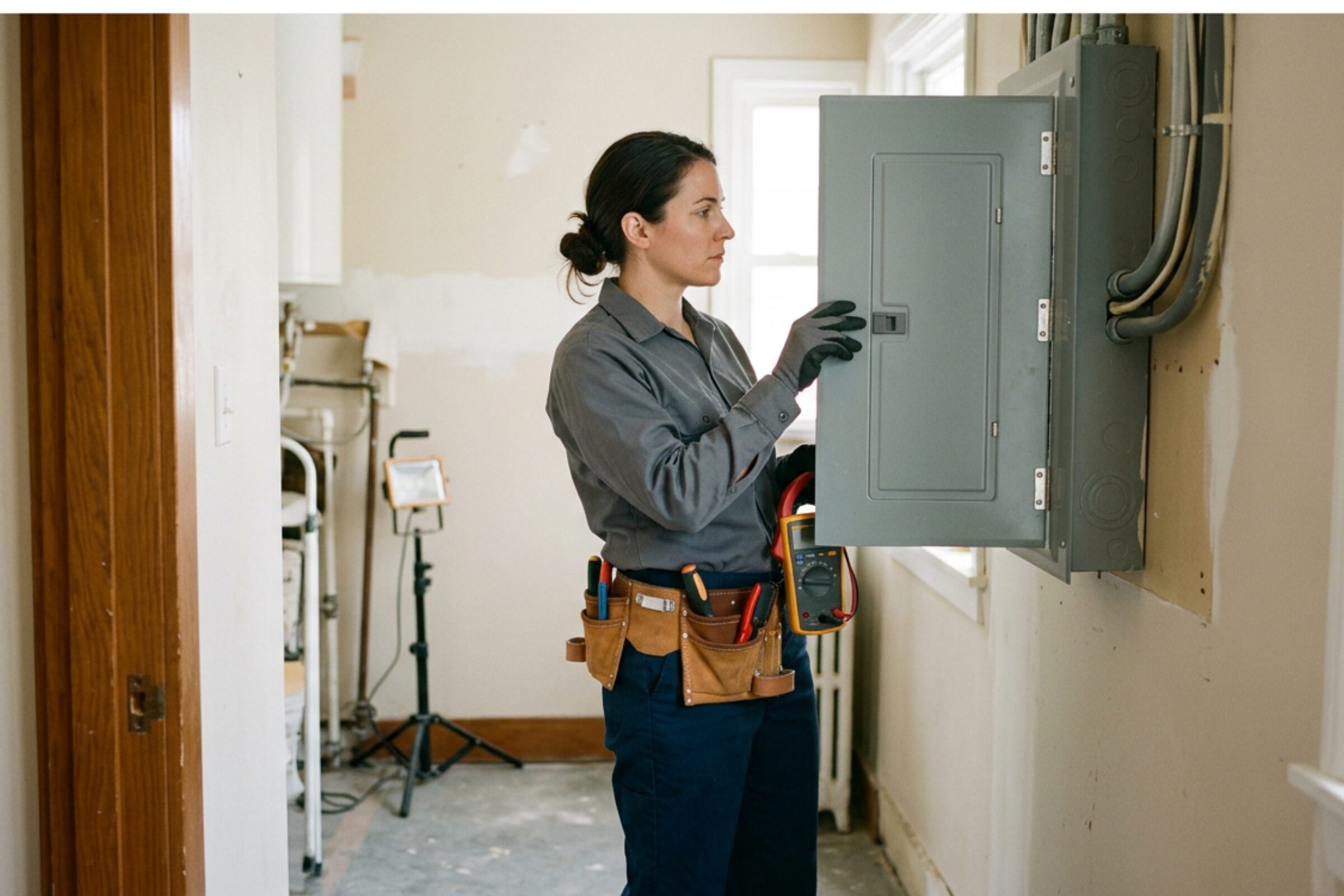
Licensed electricians review the service rating, inspect relevant equipment, identify existing loads, and ask about planned additions. They then apply the electrical code requirements relevant to the installation.
A homeowner can make that visit more productive with a little preparation:
-
List major existing appliances, including heating, cooling, water heating, cooking, laundry, and EV charging equipment.
-
Describe planned changes, even if they are a year or two away.
-
Note which breakers trip and what was running when it happened.
-
Gather equipment specifications or contractor proposals for planned installations.
-
Ask for an explanation of the load calculation and any assumptions behind it.
Utility consumption records may provide useful context, but monthly kilowatt-hour totals do not show whether your service can support a particular combination of equipment. Detailed demand data may help where available and where the applicable assessment method permits its use.
Do not remove the panel cover to collect information. Accessible labels and photographs taken with the cover closed are safer starting points.
An Upgrade Is One Option, Not the Only Option
The best solution depends on the problem being solved. More capacity can be worthwhile, but it should not be the default answer to every electrical concern.
Add or redistribute circuits
If a particular branch circuit is overloaded, a dedicated circuit or appropriate circuit changes may solve the problem.
This approach does not create more service capacity. It addresses how power is distributed within the home, which may be all that is needed when the overall service has sufficient capacity.
Use approved load management
Certain electrical loads can be controlled so they do not operate at full demand together.
For EV charging, a compatible energy management system may monitor service demand and reduce or interrupt charging when other loads are high. Depending on the installation, other approved control arrangements may also be possible.
These systems require proper design and installation. A smart plug, a household agreement to avoid simultaneous use, or a charging schedule alone should not be assumed to satisfy electrical code requirements.
Select equipment that fits the home
Equipment choices can affect the scope of electrical work. A lower EV charging rate, a different heating design, or a water-heating option with a suitable electrical demand may change the calculation.
That does not mean choosing undersized equipment. Heating systems must still meet the building’s needs. The goal is to compare complete designs before committing to purchases.
Increase the service capacity
A service upgrade may be appropriate when the calculated demand exceeds the existing supply and practical alternatives do not meet your needs.
This can be particularly sensible during a substantial renovation or a coordinated shift toward electric heating, water heating, and transportation. Planning those changes together can reduce repeated work.
What a Service Upgrade Can Involve
A 100-to-200-amp upgrade is not necessarily a panel-only replacement.
Depending on the property, the work may include the meter equipment, service conductors, main disconnect, panel, grounding and bonding, and changes required for a compliant installation. Utility-side work may also be necessary.
In the Greater Vancouver area, requirements depend on the property, utility connection, and authority responsible for permits and inspections. BC Hydro coordination may be needed where it is the electricity provider.
Underground services can involve different work than overhead services. A strata property can add another layer, since shared infrastructure and approvals may affect what an individual owner can change.
Ask for a written scope that explains what is included, who handles permits and utility coordination, and how the power interruption will be managed. Cost comparisons are much more useful when each estimate covers the same work.
Choosing the Right Electrical Help
For an occupied home, look for a contractor with relevant residential electrical experience and the licensing required for the work. Commercial electrical and industrial electrical experience can be valuable, but it does not replace familiarity with residential service upgrades, local permitting, and household load management.
When discussing electrical services in Vancouver, ask how the contractor reached the recommendation. A clear explanation should connect your existing equipment, planned loads, inspection findings, and code requirements.
Be cautious of an upgrade recommendation based only on the age of the panel or a claim that every EV requires 200 amps. The opposite promise, that any home can avoid an upgrade, is equally unhelpful. Both skip the assessment.
Start With Your Next Major Electrical Change
You do not need to replace a functioning 100-amp service simply because newer homes often have more capacity. You do need to understand its limits before adding substantial loads.
If an EV, heat pump, or suite is on your list, arrange an assessment before equipment is ordered or renovation plans are finalized. Ask whether the issue is overall service capacity, circuit capacity, equipment condition, or some combination of them.
That distinction can save unnecessary work while keeping the project safe. A well-planned electrical system should support how you actually live, including the cold evening when dinner is cooking, the heating is running, and the car needs to charge.