


A lot of people treat lighting and the electrical panel as two separate topics. Lighting feels visible and fun. The panel is the metal box you try not to think about.
That split is a mistake.
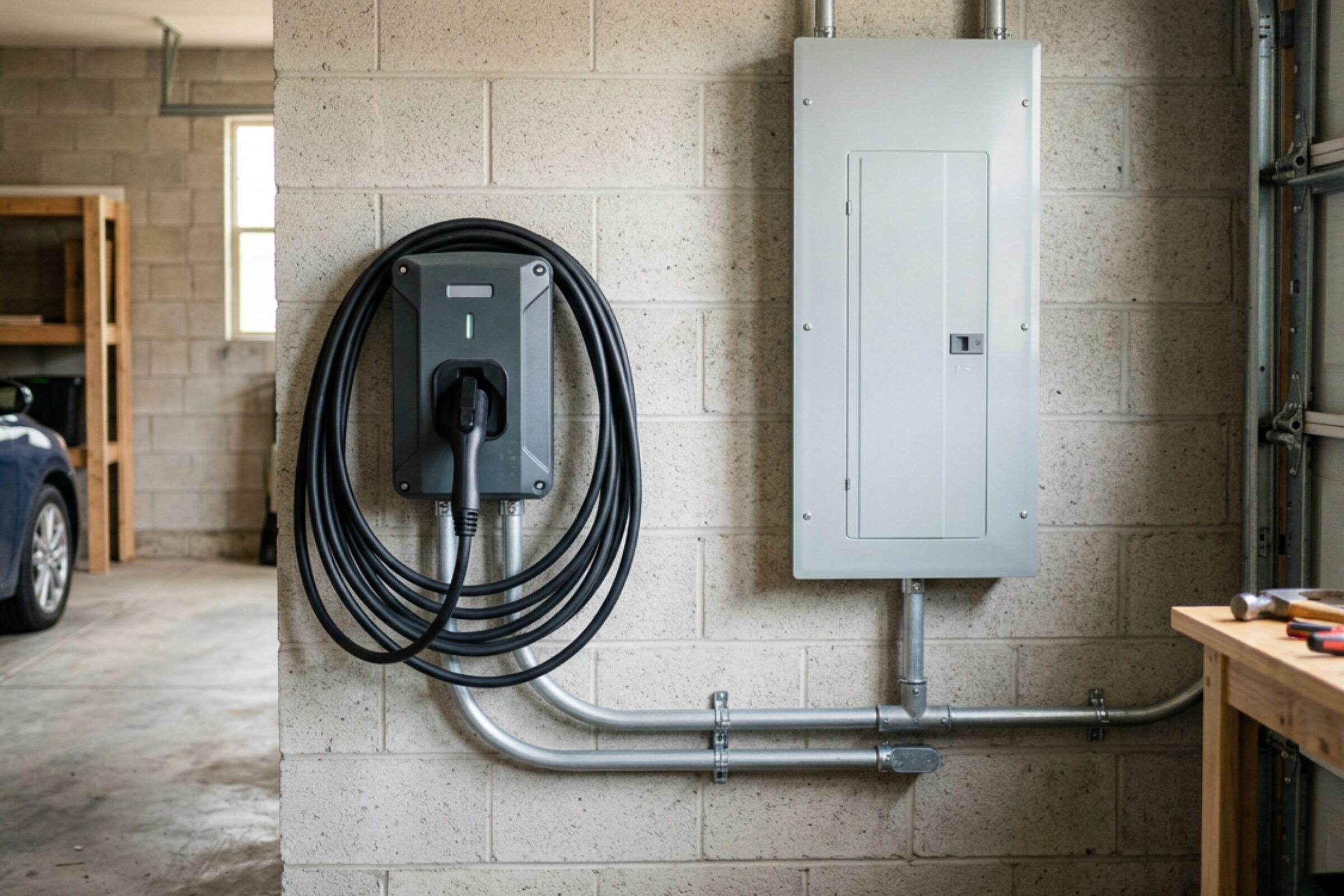
In Vancouver and across the lower mainland, these two upgrades often belong in the same conversation. Smart lighting adds convenience, energy savings, and better control. Panel upgrades make sure the system behind the walls can safely handle those changes, along with newer demands like heat pumps, home offices, kitchen renovations, and EV charger installation.
If you own a condo, house, storefront, warehouse, or mixed-use building, the same basic rule applies. Every new electrical feature depends on safe capacity, correct wiring, and proper protection. Fancy controls do not fix an overloaded panel. A larger panel alone does not make a space easier to use. The best results come when both are planned together.
Why smart lighting and panel upgrades often go hand in hand
Electrical systems in the greater Vancouver area are under more pressure than they were 20 or 30 years ago. That is especially true in older homes, tenant improvement projects, and buildings that have changed use over time.
A typical property today may need to support:
- More plug-in devices
- Stronger exterior lighting
- Security systems and cameras
- Heat pumps or electric baseboard loads
- Kitchen and laundry upgrades
- Networked lighting controls
- EV charger installation
Smart lighting usually does not draw huge amounts of power on its own. The issue is broader than wattage. Modern lighting systems may require compatible switches, dimmers, controls, relays, updated wiring, and more organized circuits. If the existing panel is full, poorly labeled, outdated, or already close to its limit, even a simple lighting project can uncover bigger electrical problems.
That can be annoying in the moment, but honestly, it is better to find out during planning than after breakers start tripping.
What smart lighting actually means
“Smart lighting” is a wide label. Sometimes it means a few app-controlled bulbs in a living room. Sometimes it means a full system with occupancy sensors, dimming schedules, daylight harvesting, and remote access across a commercial site.
At its best, smart lighting gives you control that matches real life. You can turn lights off remotely, automate exterior lights around sunset, dim task lighting, group fixtures into scenes, and reduce wasted energy in rooms that sit empty most of the day.
For residential electrical projects, smart lighting often includes:
- App or voice control for interior lights
- Motion sensors in hallways, bathrooms, and garages
- Dimmers for kitchens, dining rooms, and bedrooms
- Timers for exterior and landscape lighting
- Smart switches that work with existing fixtures
For commercial electrical spaces, common upgrades include occupancy sensors, scheduling, zoning, and centralized controls for offices, retail spaces, and common areas.
For industrial electrical sites, the goals are usually different. Reliability matters more than novelty. Smart lighting in warehouses, workshops, and service yards often focuses on motion-based control, durable fixtures, high-bay efficiency, and safer visibility in work zones.
Where smart lighting makes the biggest difference
Some rooms and buildings benefit more than others. I would not tell anyone to automate every bulb just because the technology exists. A few targeted upgrades usually deliver more value than an all-at-once shopping spree.
Entry points, stairs, and hallways
These areas are perfect for motion or vacancy sensors. The lights turn on when needed and switch off after a set period. In homes, that means fewer dark staircases. In commercial buildings, it cuts waste without making people hunt for switches.
Kitchens and work areas
Task lighting matters. Good control matters too. Under-cabinet lighting, separate dimming zones, and brighter prep areas make a kitchen easier to use. In shops, workshops, and industrial spaces, clear light placement helps people work safely and spot problems faster.
Exterior lighting
This is a big one in Vancouver. Wet weather, shorter winter days, and slippery walkways make exterior lighting more than a cosmetic choice. Smart controls can schedule pathway, parking, and entry lighting around real use patterns. That reduces waste and improves visibility when people actually need it.
Offices, retail, and shared buildings
Offices with irregular occupancy often waste a lot of power on lights left on after hours. Retail spaces may want different scenes for opening, closing, cleaning, and display emphasis. Apartment common areas, storage rooms, and parking spaces also benefit from timing and sensor-based control.
If you are looking into work on the home side specifically, it helps to understand what falls under residential electrical services before choosing switches, fixtures, or controls. The lighting idea is the easy part. The wiring, compatibility, and safe installation are where projects either go smoothly or become a headache.
What to check before installing smart lighting
This is where people sometimes get surprised. A smart switch is not always a drop-in replacement for a standard switch.
Older homes in Vancouver may have switch boxes without a neutral wire. Some smart controls need one. Some do not, but they have other limits. Multi-way switching, older dimmers, aluminum wiring, crowded boxes, and mixed generations of fixtures can all complicate the install.
A few practical questions matter early:
Does your existing wiring support the controls you want?
This is the first thing to verify. Wiring upgrades may be minor, or they may expand into larger corrections if the existing setup is outdated or unsafe.
Is your Wi-Fi or network reliable where the controls will be used?
For larger houses, detached garages, laneway homes, and concrete commercial spaces, connectivity can be a real issue. A smart system that randomly drops offline stops feeling smart very quickly.
Are the fixtures compatible with the dimmers and controls?
LED compatibility is better than it used to be, but mismatched dimmers and drivers still cause flickering, buzzing, or poor dimming range.
Will the system stay usable if the internet goes down?
This one matters more than people think. A wall switch should still act like a wall switch. Good systems keep basic local control.
Does the space need special protection?
Bathrooms, kitchens, outdoor spaces, and industrial environments may need devices and fixtures rated for moisture, temperature, dust, or impact.
Why the electrical panel matters so much
The electrical panel is the control point for the whole building. It distributes power, protects circuits, and helps isolate faults. When it is undersized, outdated, damaged, or packed beyond reason, the rest of the system suffers.
Panel problems are easy to ignore because they sit quietly until they do not.
Older panels may not have enough spaces for new circuits. Some have weak labeling, poor workmanship from past additions, corrosion, heat damage, or obsolete breaker types. In a residential electrical setting, that might show up as tripping breakers every time the microwave, toaster, and kettle run together. In commercial electrical and industrial electrical settings, the consequences can be more disruptive, especially when lighting, equipment, refrigeration, or access systems share strained circuits.
Common signs a panel may need an upgrade
- Breakers trip often without an obvious cause
- Lights flicker when larger appliances start
- The panel feels warm or smells burnt
- There is rust, corrosion, or visible damage
- The panel is full, with no room for new circuits
- The building still has very old service equipment
- Renovations, suite additions, or EV charger installation are planned
- Past wiring additions look messy, unlabeled, or improvised
Any one of these does not automatically mean full replacement is required. But they are all reasons to have the system assessed by licensed electricians.
What a panel upgrade usually includes
People hear “panel upgrade” and picture only a bigger metal box. The actual work can be broader.
Depending on the building, a proper upgrade may include load calculations, service size review, new breakers, grounding and bonding corrections, surge protection, reorganization of existing circuits, panel relocation, or coordination with the utility. In some cases, wiring upgrades are needed too, especially when new dedicated circuits are added for appliances, HVAC equipment, workshops, or EV charging.
For example, if a homeowner wants smart exterior lighting, a hot tub circuit, and EV charger installation in the same year, those projects should not be evaluated one by one in isolation. The smarter approach is to look at the whole load picture first.
That same logic applies in commercial tenant improvements. A lighting retrofit may seem simple, but if the electrical room is already maxed out, the project needs a different plan.
Vancouver and lower mainland factors that affect these upgrades
Electrical work is always local in a practical sense. The same upgrade can look different depending on the building stock, climate, and permitting environment.
In Vancouver and the lower mainland, a few realities come up a lot.
Older housing stock
Many homes still carry legacy wiring decisions from previous decades. Some have had piece-by-piece renovations over time. You may find newer lighting in one room, older circuits in another, and a panel that has been stretched well past its original purpose.
Added suites and accessory spaces
Basement suites, laneway homes, garage conversions, and home offices all add demand. Even when each change seems modest, the cumulative effect matters.
Electrification
More buildings are shifting toward electric heating, electric hot water, induction cooking, and EV charger installation. That is good for reducing fossil fuel use, but it puts more emphasis on service capacity and careful load management.
Wet conditions
Outdoor lighting, receptacles, and controls need proper weather-rated components and installation methods. Rain is not a small detail here.
Permits and inspections
Electrical work in BC is regulated. Permit and inspection requirements depend on the job and the jurisdictional setup, but the short version is simple: legitimate electrical services should include code-compliant work and proper permitting where required. If someone offers a suspiciously fast off-the-books panel swap, walk away.
A practical way to plan both upgrades together
The cleanest projects usually follow a simple sequence.
- Start with how the building is actually used. Look at dark areas, energy waste, nuisance breaker trips, future equipment plans, and any safety concerns.
- Review the existing panel and circuit capacity before choosing controls and fixtures.
- Decide which lighting upgrades are worth doing now and which can wait.
- Add dedicated circuits where needed, especially for larger equipment or EV charger installation.
- Complete permits, installation, testing, and clear labeling.
- Learn how the controls work before the installer leaves. That sounds obvious, but it gets skipped more often than it should.
This matters for homes, but it matters just as much for commercial electrical and industrial electrical sites. Once operations are involved, downtime and callbacks become expensive fast.
Mistakes that make these projects harder than they need to be
The most common mistake is buying devices first and asking questions later. Smart bulbs, smart switches, low-voltage controls, and integrated fixture systems do not all play nicely together.
Another mistake is treating panel capacity like an afterthought. People plan the visible upgrade, then discover there is no room for the new circuit, or the existing service is already overloaded.
The third mistake is hiring based only on speed or price. Electrical work is one of those trades where shortcuts can hide for months or years. Then they show up at the worst time.
A good installer does more than “make it work.” They check compatibility, circuit loading, grounding, protection, device ratings, and code requirements. That is the difference between a tidy upgrade and a system that keeps acting strange.
When it is an emergency, not a weekend project
Some electrical issues can wait for a scheduled visit. Some should not.
If your panel is hot, sparking, buzzing loudly, giving off a burnt smell, or tripping repeatedly after being reset, stop using the affected circuits and call licensed electricians. The same goes for water intrusion near the panel, visible arcing, or partial power loss that is not clearly a utility outage. This is where 24/7 emergency service matters. Nobody wins by pretending a dangerous panel problem can sit harmlessly until Monday.
Smart lighting faults can also create confusion. If a control system suddenly stops responding, do not assume it is “just the app.” Sometimes the issue is a tripped breaker, a failed neutral, a loose connection, or another wiring problem that needs proper diagnosis.
The bottom line
Smart lighting is worth considering because it makes spaces easier to use, often safer, and usually more efficient. Panel upgrades matter because every modern electrical improvement depends on a system that can carry the load safely.
If you are in Vancouver, the greater Vancouver area, or anywhere in the lower mainland, the best electrical decisions usually come from looking at the whole system, not one gadget or one room at a time. A new switch, a better-lit walkway, a dedicated charger circuit, a cleaned-up panel, these are connected choices.
That is true in houses. It is true in offices. It is definitely true in industrial spaces.
If there is one takeaway here, it is this: treat visible upgrades and behind-the-wall capacity as part of the same plan. Smart lighting feels modern. Safe distribution is more important. When both are done well, the building works better every day, and that is what most people wanted in the first place.