


If you have started pricing a 100A to 200A panel upgrade in Burnaby, you have probably noticed something annoying right away. One quote might land near $3,800. Another comes back at $6,200. A third jumps much higher. That gap is real, and it usually has a boring explanation, not a shady one.
A panel upgrade is not just a metal box swap. Sometimes it is a straight replacement. Sometimes it also needs a new meter base, new grounding, service entrance changes, BC Hydro scheduling, inspection timing, and a bunch of work homeowners never see because it happens in permits, paperwork, and utility coordination.
For most homes in Burnaby and the greater Vancouver area, a realistic turnkey 100A to 200A upgrade usually falls between $3,500 and $6,500. That covers the majority of standard jobs. If the service has to move, or the job grows into something closer to a full service rebuild, the number climbs.
This guide breaks down those costs in plain language so you can read a quote without guessing.
Quick price reference for Burnaby panel upgrades
Here is the short version for residential electrical work in Burnaby and nearby parts of Vancouver and the lower mainland.
ScopeTypical installed priceTypical on-site timeWhat usually changesStraight 100A to 200A panel swap$3,500 to $5,0001 dayNew panel, grounding updates, permit, inspection, BC Hydro coordination200A upgrade with new meter base$5,000 to $6,5001 to 2 daysPanel plus 200A-rated meter base and related service equipment200A upgrade with service relocation$6,500 to $9,0002 to 3 daysMeter or service entrance moves, extra labour, materials, and access work400A residential service$9,000 to $15,000+2 to 4 daysLarger equipment, more labour, more planning, more utility involvement
These are turnkey numbers. In other words, they usually include labour, permit handling, inspection coordination, and BC Hydro disconnect and reconnect scheduling.
That last part matters. A quote that looks cheap can stop looking cheap fast if it leaves out permit fees, meter base work, or utility coordination.
What a complete 200A upgrade usually includes
A proper 200A upgrade is bigger than “replace the breaker panel.” A compliant job often includes several pieces working together.
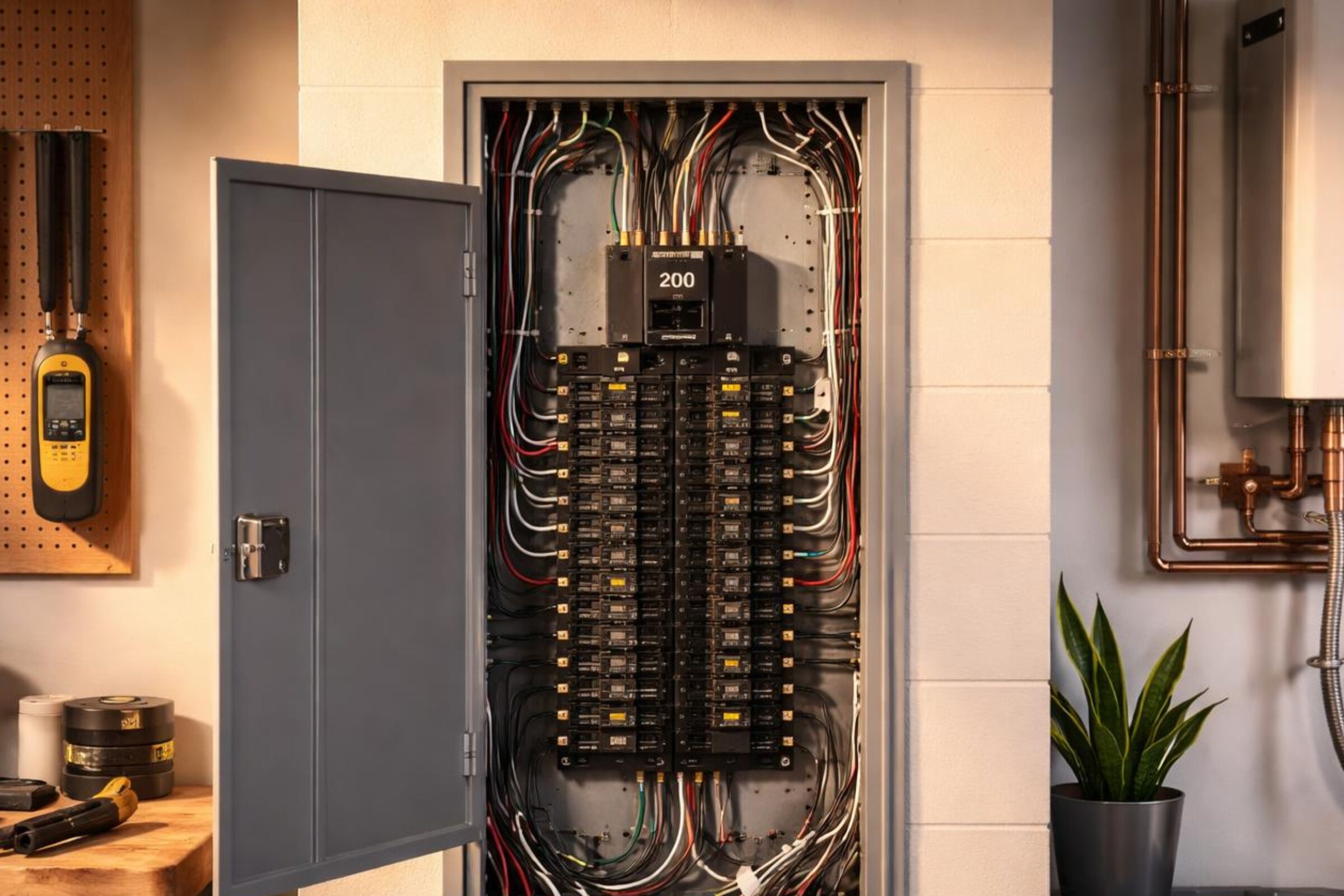
The new 200A panel
This is the part most people picture first. The electrician removes the old 100A panel and installs a new 200A CSA-approved panel. Common residential brands in this category include Eaton CH and Square D.
The panel itself is only one line in the project, though. The real work is moving circuits safely, labeling them properly, testing them, and making sure the new setup matches code.
A 200A-rated meter base, if required
Some homes can keep the existing meter base. Some cannot. If the existing equipment is undersized, outdated, or not acceptable for the upgraded service, it gets replaced.
This is one of the biggest reasons two 200A quotes can land far apart. A panel-only change is one price. A panel plus meter base and service equipment change is another.
Grounding and bonding upgrades
This part is easy to miss because it is not flashy. It is also not optional.
A compliant service upgrade usually includes grounding electrode work, bonding, and whatever updates are needed to bring the service equipment into line with current requirements. That can mean ground rods, bonding jumpers, conductor changes, and cleanup of old connections.
If your quote says “panel upgrade” but says nothing about grounding, ask.
Permit and inspection
For work like this, the permit is not a side detail. It is part of the job.
In BC, the contractor typically pulls the permit with Technical Safety BC, handles the inspection process, and closes the permit after the work passes. That inspection fee is usually baked into turnkey pricing.
This matters later for insurance, resale records, and basic peace of mind. A closed permit is paperwork you want.
BC Hydro disconnect and reconnect coordination
The utility side often creates the longest delay in the whole project.
For a standard service upgrade, the contractor usually coordinates with BC Hydro for a disconnect, then arranges inspection sign-off so BC Hydro can reconnect the service. Homeowners often assume the work itself is the long part. It usually is not. The calendar delay often comes from scheduling.
A line-by-line look at where the money goes
Quotes are not standardized. One electrician may bundle everything into a single lump sum. Another may split it into materials, labour, permit, and utility coordination. Still, most of the bill comes from the same buckets.
Here is a practical way to read it.
1. Panel and breaker equipment
For a straightforward job, part of the price covers the new 200A panel, breakers, connectors, and related hardware.
On simple residential electrical upgrades, this is often a noticeable cost, but it is rarely the biggest one by itself. People tend to overestimate how much of the total is “the panel” and underestimate labour, coordination, and service equipment.
2. Meter base and service hardware
If your upgrade needs a new meter base, the price jumps into the middle tier pretty quickly.
That change usually adds equipment cost, more installation time, and sometimes more inspection attention because the service entrance gear itself is being changed. This is why many 200A upgrades land around $5,000 to $6,500 instead of staying in the low $4,000s.
3. Grounding and bonding work
This is usually folded into the total instead of broken out dramatically, but it still costs money and time.
On older homes, this part can be more involved than expected. If the existing grounding is incomplete, corroded, or no longer acceptable, the electrician has to correct it during the upgrade. That is not a fancy upsell. It is part of doing the job properly.
4. Permit, inspection, and admin handling
A lot of homeowners forget to budget for paperwork because it is invisible.
Permit submission, inspector coordination, follow-up, and permit closeout are part of the project cost. So is the time spent booking the utility disconnect and reconnect. No one sees that on the wall after the job is done, but someone still has to do it.
5. Labour on disconnect day
This is where a big chunk of the budget goes.
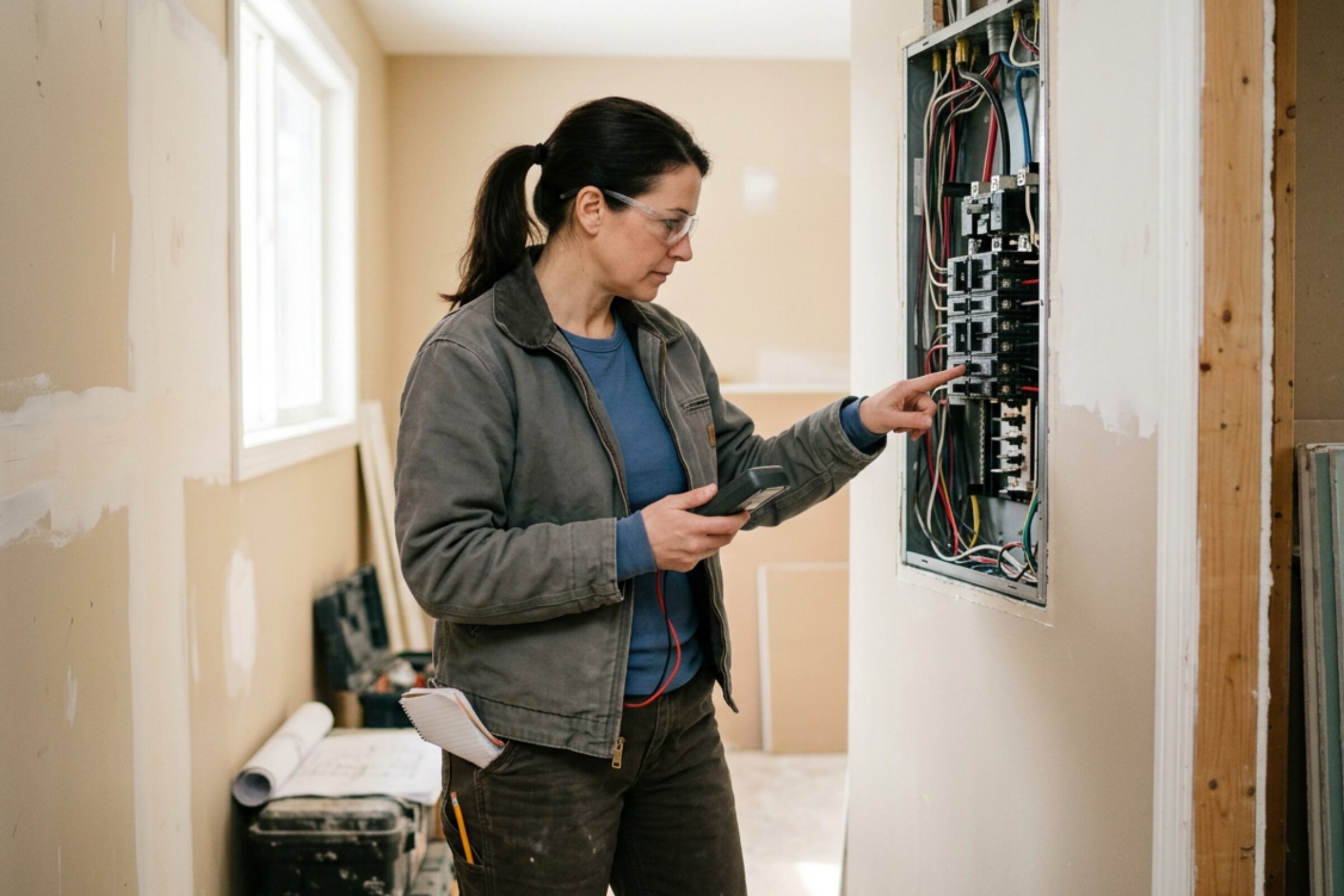
On the day of the upgrade, the old panel has to come out, circuits get transferred, grounding is updated, the service gear gets installed or modified, the system gets checked, and the site has to be ready for inspection. For a straight swap, that is often about an 8-hour install window. For anything more involved, it stretches.
6. Extras that can change everything
This is the category that turns a routine job into an expensive one.
Possible extra-cost items include:
-
moving the service entrance or meter location
-
trenching or conduit work for relocation
-
structural repairs after equipment is moved
-
rooftop or ladder-intensive access
-
major rewiring inside the house
-
additional electrical work beyond the service equipment
Those items are not always part of the base quote. Sometimes they are excluded because nobody knows whether they are needed until the site is assessed.
Why some Burnaby homes cost more than others
The biggest price swings usually come from scope, not markup.
A simple panel swap is the lowest cost tier because the core service layout stays where it is. The electrician replaces the panel, handles grounding updates, manages the permit, and coordinates the utility shutoff and return.
Once the job needs a new meter base, the price moves up. Once the service location changes, the price moves up again.
That is why “panel upgrade” can mean very different things from house to house.
One home has a usable meter location, accessible equipment, and minimal complications. Another has a bad service location, difficult access, or equipment that has to be moved to satisfy current requirements. Same phrase, very different job.
This also explains why residential electrical pricing is its own category. These numbers do not describe commercial electrical or industrial electrical upgrades, which follow different equipment rules, service sizes, and working conditions.
What is usually included, and what may not be
This is the part worth reading twice before you sign anything.
A standard turnkey 200A upgrade usually includes the new panel, meter base if required by the quoted scope, grounding upgrades, labour, permit fees, inspection coordination, and BC Hydro scheduling.
What may be excluded or treated as variable cost depends on the site. Common examples are large-scale wiring upgrades inside the home, trenching, conduit runs for service relocation, roof repairs, siding repairs, drywall patching, or substantial new loads added at the same time.
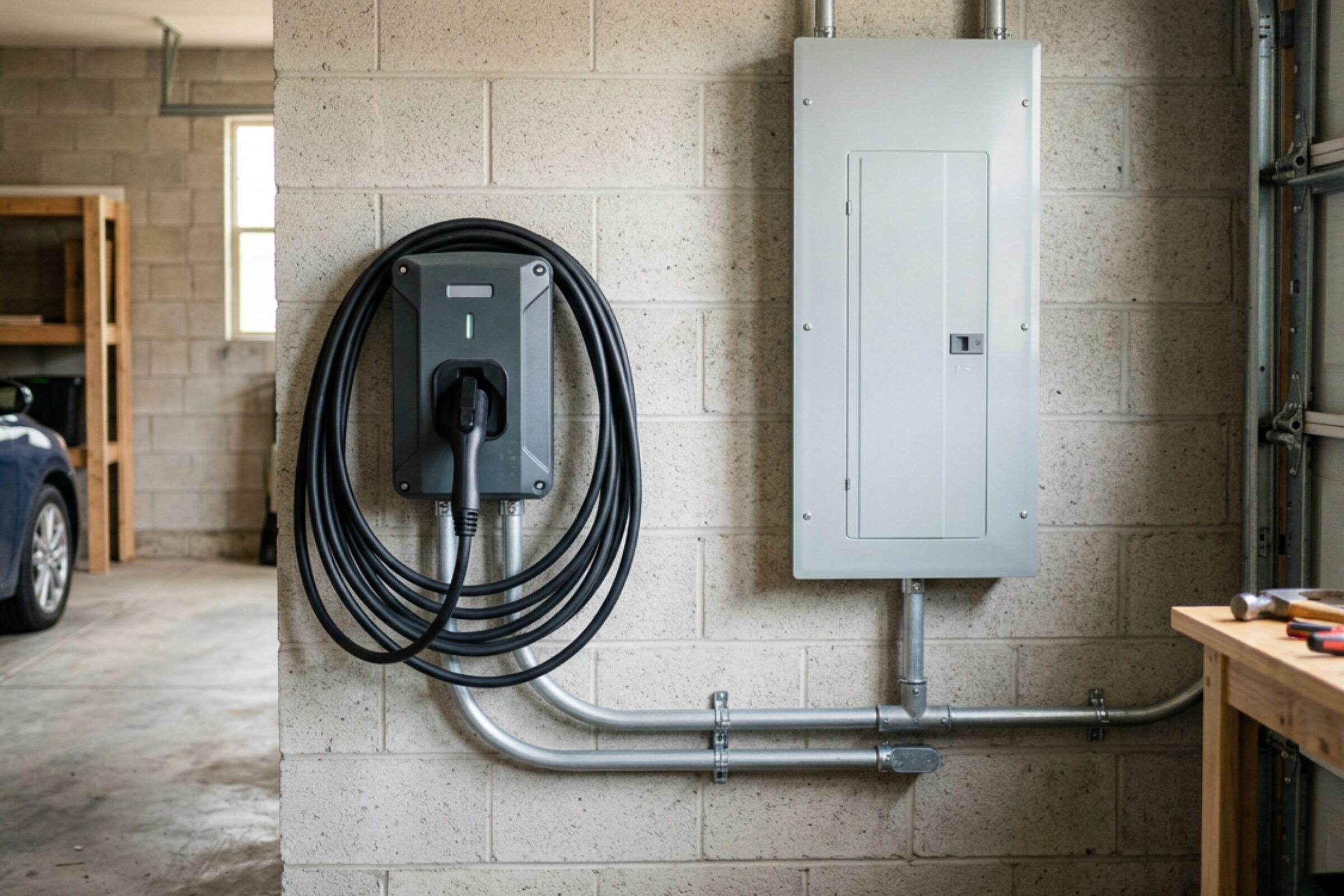
That last point catches people off guard. If you are pairing the upgrade with an EV charger installation, heat pump circuit, or major renovation, ask whether those costs are inside the service upgrade quote or priced separately. A 200A panel may support future wiring upgrades, but that does not mean those branch circuits are automatically included.
The real timeline, and why the one-day job still takes weeks
People hear “one-day panel swap” and assume the whole project will be finished by next Tuesday. Sometimes. Often not.
The on-site work is usually the fast part. The schedule around it is slower.
A typical timeline looks like this:
-
The contractor pulls the permit, usually with an internal handling window of about 3 to 5 days.
-
BC Hydro disconnect scheduling is arranged, often with a lead time of about 2 to 4 weeks.
-
On work day, BC Hydro disconnects service, often in the morning.
-
The electrical install happens. A straight swap can often be completed in about 8 hours.
-
The electrical inspector signs off on the work.
-
BC Hydro reconnects the service after approval.
-
The permit is closed and final documents are provided.
The weak link, if you want to call it that, is timing between utility, contractor, and inspector. Planned service upgrades are not like 24/7 emergency service calls where someone just shows up and restores power. This is scheduled work, and the sequence matters.
If inspection gets delayed, power restoration timing can shift. Good contractors usually coordinate that chain closely, but the process still depends on outside scheduling.
How to compare quotes without getting fooled by the lowest number
A low quote is not automatically bad. A high quote is not automatically padded. You need to see what is actually inside the number.
Ask these questions:
-
Is the permit included and pulled by the contractor?
-
Is inspection coordination included?
-
Is BC Hydro disconnect and reconnect scheduling included?
-
Is the meter base being replaced, and if so, is that already priced in?
-
Are grounding and bonding upgrades included?
-
Is same-day completion expected for a straight swap, or is the outage likely to stretch?
-
What site conditions would trigger extra charges?
-
Will you receive a closed permit for your records?
If the answer to several of those questions is vague, the quote is not really complete.
I would be especially cautious with any number that sounds suspiciously cheap for the lower mainland. Service upgrades involve too many regulated steps for bargain-basement pricing to feel comfortable.
Common homeowner questions
Can a homeowner do a 100A to 200A panel upgrade under a homeowner permit?
In some situations, homeowner permits may exist for electrical work, but a service upgrade is one of the jobs where professional handling usually makes sense.
You are dealing with a service disconnect, utility coordination, meter equipment, grounding, code compliance, inspection, and liability. That is a lot to carry on your own. Most homeowners hiring this work want licensed electricians to pull the permit and manage the process.
How long does the whole process take?
The installation itself may only take a day for a simple swap. The full process often takes a few weeks because of permit handling and BC Hydro lead times.
A good rule of thumb is this: the hands-on work is short, the scheduling window is longer.
Will the power be off all day?
Often, yes, for much of the workday on a straightforward swap. The exact outage window depends on the disconnect time, installation progress, inspection sign-off, and reconnection timing.
Do I need 400A instead of 200A?
Usually not, but it depends on the load calculation.
Many homes upgrading from 100A do well with 200A, even when adding modern loads like EV charger installation, air conditioning, or an induction range. A 400A service is a different class of project and carries a much bigger price tag. It is best reserved for homes that truly need it.
The simple takeaway
For most Burnaby homeowners, a realistic all-in 100A to 200A upgrade cost in 2026 falls between $3,500 and $6,500. Straight panel swaps sit at the lower end. Jobs with a new meter base land in the middle. Service relocations and 400A upgrades cost more, sometimes much more.
The biggest surprise is not usually the panel price. It is everything around the panel: permit handling, grounding, inspection, BC Hydro coordination, and whatever site conditions make your house different from the neat example photo on the internet.
If you remember one thing, make it this: compare scope, not just price. In electrical services, especially in Vancouver and the wider lower mainland, the cheapest quote can be the one missing the most important pieces.