
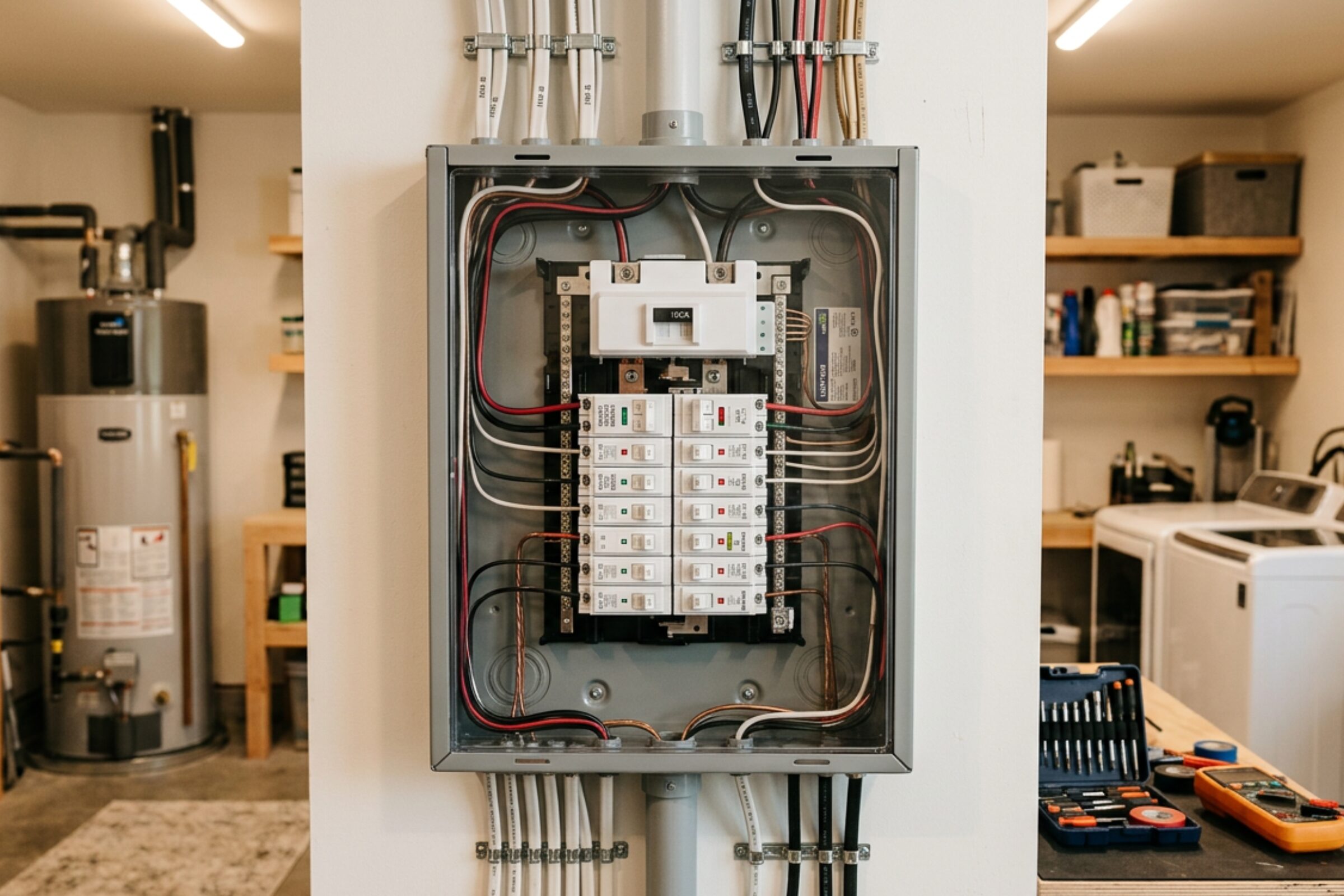

A residential electrical panel is easy to ignore until it becomes the limiting factor in a renovation, an EV charger installation, or a service upgrade. Then it suddenly matters a great deal.
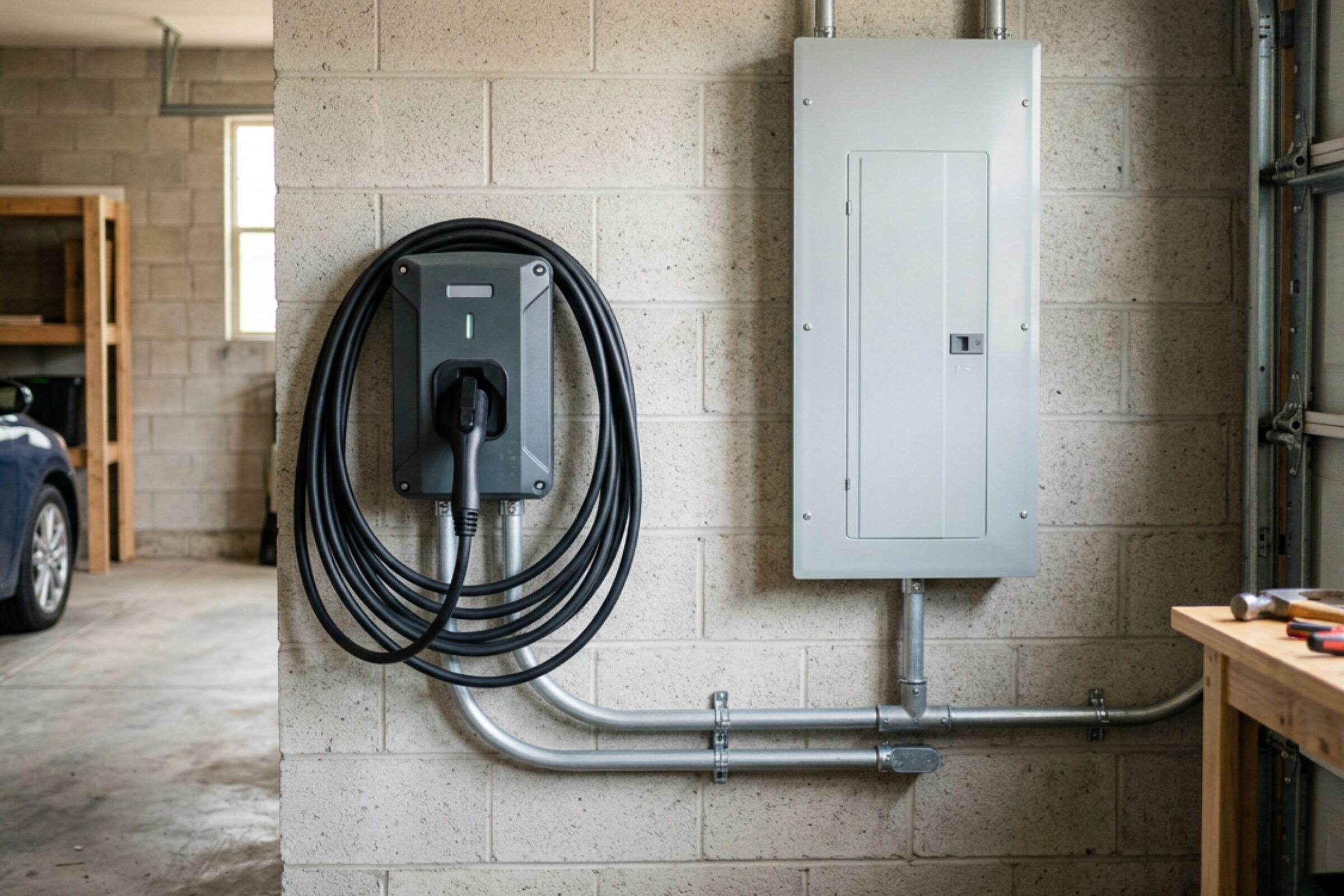
The panel, often called a load centre in homes, is where incoming electrical power is divided into the circuits that supply lighting, receptacles, appliances, heating equipment, and other loads. It needs to be safe, correctly sized, compatible with its breakers, and practical to maintain years later.
When comparing panel brands in Canada, there is no universal winner. Eaton, Schneider Electric and Square D, Siemens, ABB, GE ReliaHome, and Leviton all have products suited to particular applications. The smarter question is: which listed panel family fits this building, this electrical system, and the owner’s plans for the next decade?
That distinction matters because panels and breakers are ecosystems. A breaker that appears to fit may still be unapproved for the panel bus. An inexpensive panel with too few spaces can become an expensive problem when a homeowner later wants a heat pump or EV charger. Good residential electrical planning starts with the panel family, then works through capacity, enclosure type, breaker availability, and installation details.
What a load centre actually does
A load centre distributes power from a service or feeder to individual branch circuits. A typical residential panel includes:
- An enclosure and removable trim
- A metal bus that connects breakers to the incoming supply
- Neutral and grounding bars
- A main breaker or main lugs
- Breaker spaces for branch circuits
- Provisions for approved accessories, such as surge protective devices
In a detached home, the main panel may be the service equipment. That means it is the location where utility power enters the home and where the main disconnect is located. In other cases, the panel is a subpanel fed by a breaker or disconnect upstream.
The words can get confusing because electrical terminology changes by setting. “Load centre” is common in residential electrical work, while “panelboard” is more common in commercial electrical specifications. Both distribute electrical power, although panelboards used in larger buildings may have different construction, ratings, and accessory options.
Start with the panel’s job, not the logo on the cover
Before comparing brands, identify what the panel needs to do. This filters the choices quickly.
Main breaker panels
A main breaker panel has an integral main disconnect. In a typical home, this is the central point where the entire electrical supply can be shut off. Main breaker panels are often used for new services, service upgrades, and many full panel replacements.
The main breaker’s amp rating is important, but it does not tell the whole story. The service conductors, meter equipment, load calculation, and utility requirements also affect the final service rating.
Main lug panels
A main lug panel does not have a main disconnect built into the enclosure. It is commonly used as a downstream panel where an upstream breaker already protects the feeder. This arrangement is common for garage subpanels, additions, basement suites, workshops, and detached buildings.
A main lug panel can be a practical choice, but it must be supplied and protected correctly. The panel does not become service equipment merely because it has a large bus rating.
Indoor, outdoor, flush, and surface-mounted panels
The enclosure must suit the installation location.
Flush-mounted panels sit inside a finished wall, with the trim visible at the surface. They are common in finished hallways and utility closets. Surface-mounted panels project from the wall and are often easier to install in unfinished basements, garages, mechanical rooms, workshops, and many commercial electrical rooms.
Outdoor-rated load centres and meter-main combinations are designed for exposed locations. Choosing an indoor enclosure for an outdoor installation invites moisture problems and premature corrosion. It is one of those preventable mistakes that can create years of annoyance.
Amp rating and space count are different decisions
Homeowners often ask whether they need a 100 A or 200 A panel. That is a valid question, but it is incomplete. A panel also needs enough physical spaces for the required breakers.
A 200 A panel with limited breaker spaces can be frustratingly restrictive. A panel with many spaces but insufficient service capacity cannot support a larger load without wider upgrades. Both figures matter.
Common residential service sizes in Canada include 100 A, 125 A, 150 A, and 200 A. The right choice depends on a code-compliant load calculation and the home’s actual equipment. Factors often include:
- Electric baseboard or in-floor heating
- Electric range and dryer loads
- Air conditioning or heat pumps
- Hot tubs and pools
- Secondary suites
- Workshop equipment
- Planned EV charger installation
- Future additions or finished basement space
A modest home with gas heating may work well on a properly calculated 100 A service. A larger all-electric home with a heat pump, electric water heating, and a Level 2 vehicle charger may need considerably more capacity. Guessing based on square footage alone is not enough.
Space count deserves equal attention. A useful rule of thumb is to leave meaningful room for expansion, often around 20 to 30 percent where the project allows it. That does not mean every unused space is a future circuit. It means the panel is less likely to require replacement simply because the household adds a charger, renovation, or new mechanical equipment.
Why breaker compatibility is a safety issue
The breaker family is the heart of any panel comparison.
Breakers are not interchangeable just because they slide onto the bus and appear secure. A panel is listed and tested with specific breaker types. Its door label and manufacturer documentation identify the approved breaker families and accessories. Using an unapproved breaker can create problems with electrical performance, inspection, warranty, and insurance claims after a failure.
This is especially important when replacing a failed breaker. It can be tempting to choose the unit that looks closest or is easiest to find. That is not a reliable method.
The right process is simpler:
- Read the panel label and identify its manufacturer and series.
- Confirm the approved breaker type in the manufacturer documentation.
- Match voltage, poles, amp rating, and required protective function.
- Have a qualified professional inspect the panel if there is any evidence of heat damage, corrosion, loose connections, or damaged bus stabs.
A breaker problem is sometimes only a breaker problem. Sometimes it is evidence that the panel bus or termination has been overheating. Swapping parts without checking the underlying condition can miss the real issue.
Comparing major panel brands in Canada
Availability varies by province, distributor, and product line. In the Lower Mainland and Greater Vancouver area, local stock matters because a panel family with readily available breakers, fillers, surge devices, and replacement parts is easier to maintain.
Eaton
Eaton load centres are widely used in Canadian homes and are familiar to many licensed electricians. The brand has a broad range of residential distribution products, breakers, and accessories. It is often selected for new work when its product family is available locally, or when an existing building already uses an Eaton-compatible platform.
For homeowners, the main benefit is usually practical rather than glamorous: common products are easier to source, and electricians are likely to encounter the equipment regularly. Still, the exact series matters. “Eaton” alone is not enough information to choose replacement breakers.
Schneider Electric and Square D
Square D is closely associated with Schneider Electric in the Canadian market. It has a large installed base and is frequently specified in residential, commercial electrical, and light industrial electrical settings.
Many electricians and property managers favour Square D equipment because of its familiarity and continuity. If a building already has a supported Square D panel family in good condition, matching that family may make future maintenance straightforward.
As with every brand, check the exact label. Product naming can lead people to assume compatibility where none exists. The panel’s approved breaker list decides the question.
Siemens
Siemens is commonly cross-shopped for residential and light commercial applications. It may be the sensible choice when a property already has Siemens equipment or when a particular project calls for that breaker platform.
Consistency can matter more than brand preference. A building owner who maintains several properties may benefit from standardizing on one approved system where practical. That can simplify spare-breaker stock, labelling, and future service work.
ABB and GE ReliaHome
ABB and GE ReliaHome equipment may appear in new construction, renovations, and replacement projects, depending on regional distribution and the installer’s supply chain. These options deserve the same review as more familiar names: CSA suitability, appropriate ratings, approved breaker selection, accessory availability, and local support.
A panel is a long-term piece of equipment. The ability to obtain correctly listed replacement breakers several years later is worth considering before choosing a less common family.
Leviton
Leviton load centres attract interest in some new residential projects, particularly where homeowners want more circuit-level visibility or smart monitoring options. Those features can be useful, though they should not distract from the fundamentals: correct load calculation, approved breaker selection, sufficient space, and professional installation.
Smart features are optional. A safe, well-sized conventional panel is far more valuable than an undersized panel with an app.
Federal Pioneer and other legacy panels
Federal Pioneer panels are common in older Canadian homes. Their presence does not automatically mean a home is unsafe, but it does call for a careful assessment when electrical work is planned.
If breakers are difficult to obtain, the bus shows heat damage, the panel is overcrowded, or the home needs a service upgrade, full replacement may be more sensible than piecemeal repairs. This is especially true during major wiring upgrades, kitchen renovations, suite conversions, or EV charger installation.
Trying to keep aging equipment alive indefinitely can be false economy. A modern panel with adequate spaces and readily available listed components is easier to service and expand.
Planning for EVs, heat pumps, and surge protection
The typical home electrical load is changing. Electrification is adding larger loads that often run for long periods. Heat pumps, electric water heaters, induction ranges, hot tubs, and EV chargers can transform what was once a comfortable service into a crowded one.
An EV charger installation deserves more planning than simply finding an unused breaker space. The installation may require a load calculation, dedicated circuit, correct conductor sizing, suitable breaker type, and consideration of the available capacity of the service and panel bus.
In some homes, load management equipment may be an option. In others, a panel or service upgrade is the cleaner long-term choice. The answer depends on the home’s calculated demand, not just the panel’s printed amp rating.
Whole-home surge protective devices are another worthwhile consideration during a panel replacement or upgrade. Many modern panels support manufacturer-approved surge protection accessories. Sensitive electronics, appliances, and connected devices are now everywhere in a home, so surge protection is no longer a niche discussion.
Installation details that prevent expensive callbacks
Panel selection is only half the work. Installation quality matters just as much.
For service equipment, neutral and grounding arrangements follow the rules for the main bonding point. For downstream subpanels, neutrals are generally isolated from the enclosure while equipment grounding conductors connect to the grounding bar. Mixing up these arrangements is a serious and common error.
Other details that deserve attention include conductor routing, cable-entry locations, workspace clearance, torque values, breaker directory accuracy, and room for AFCI, GFCI, and surge protection equipment. A neat panel is not merely cosmetic. Clear routing and labelling make inspection, troubleshooting, and future changes safer.
Good circuit identification is particularly helpful in homes with secondary suites, garages, mechanical equipment, or backup-power systems. “Basement plugs” is not a useful label when someone is trying to isolate a fault at 10 p.m.
For outdoor panels, weather rating, conduit entries, sealing methods, and corrosion resistance need to match the location. Vancouver’s wet climate is unforgiving of poor enclosure choices.
A practical checklist before choosing a panel
A panel decision should be based on the whole electrical system. Before finalizing a selection, confirm:
- Whether it is service equipment or a subpanel
- Voltage, phase, amp rating, and bus rating
- Required number of breaker spaces, plus room for future circuits
- The approved breaker family and accessory options
- Indoor or outdoor enclosure requirements
- Flush or surface mounting requirements
- Feeder size, conductor routing, and available fault-current requirements where applicable
- Neutral and grounding configuration
- Canadian Electrical Code requirements as adopted locally, plus inspection authority requirements
- CSA listing or other applicable Canadian approval
- Local availability of replacement breakers, filler plates, and accessories
For larger properties, tenant spaces, retail units, farms, workshops, and mixed-use buildings, commercial electrical and industrial electrical requirements may add another layer. Three-phase supply, interrupting ratings, isolated neutrals, feed-through lugs, and specialized distribution equipment may be required. A standard residential load centre is not automatically appropriate.
The best panel is the one that remains useful
Panel brands matter, but brand loyalty should not drive the decision. Start with the approved panel and breaker family. Then confirm capacity, available spaces, enclosure type, and local parts access.
For many homes in Vancouver and the Lower Mainland, a modern 200 A panel with generous space is a sensible choice during major renovations or service upgrades. But it is not a default answer for every house. A proper calculation may support a smaller service, or it may reveal that even 200 A needs careful planning when multiple large electric loads are expected.
The durable choice is a panel that is listed for the job, installed according to its instructions, supported by readily available breakers, and sized for the way the building will actually be used. When in doubt, have licensed electricians review the existing service, planned loads, and local code requirements before buying equipment.