


A light that flickers once when the washing machine starts may feel like a minor annoyance. A room that dims every evening when the heat comes on feels different. In an older Burnaby home, flickering lights can be an early warning that the electrical system is struggling with the way the house is used today.
Many homes in Burnaby and across the Lower Mainland were built long before induction ranges, heat pumps, home offices, multiple televisions, high-capacity dryers, and electric vehicle charging became normal household loads. The wiring may still work, technically. But years of additions, renovations, aging connections, and heavier electrical demand can leave little margin for error.
The hard part is deciding what is harmless and what needs immediate attention. This guide explains common causes of flickering lights, the warning signs that should move the problem to the top of your to-do list, and the steps homeowners can take safely.
Why older homes are more prone to flickering lights
Flickering occurs when the voltage reaching a light fixture changes, even briefly. Modern LED bulbs are particularly good at making small voltage changes visible. An incandescent bulb may have simply dimmed a little. An LED can flash, pulse, or strobe in a way that is hard to ignore.
In an older home, several parts of the electrical system may contribute:
-
Original wiring and aging connections
-
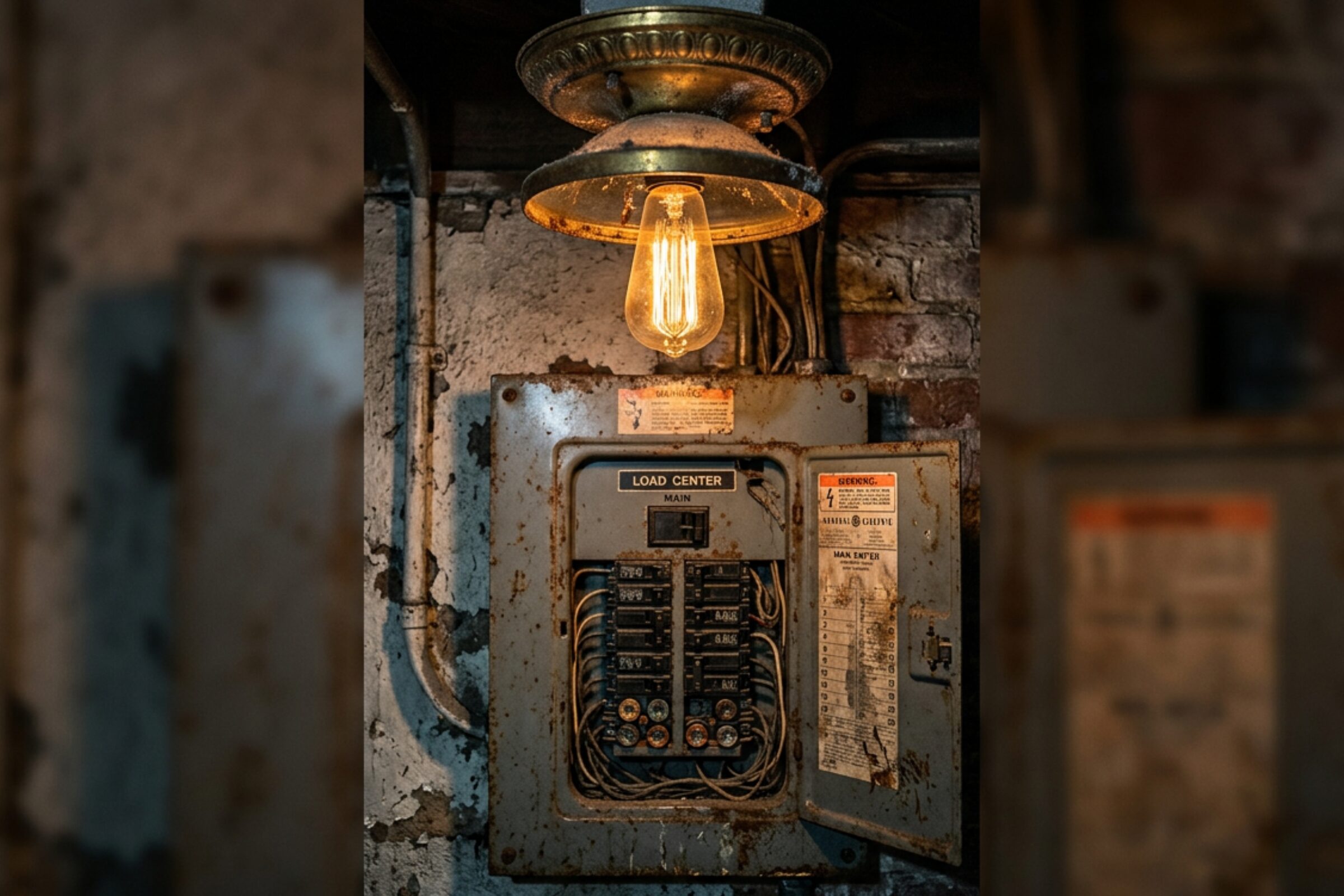
An older fuse box or electrical panel with limited capacity
-
Circuits that have been extended over time without a full redesign
-
Loose terminals in outlets, switches, fixtures, or the panel
-
Shared neutral connections or outdated wiring methods
-
New high-demand appliances added to an existing system
A flickering bulb itself is not always a danger. Sometimes the fix is as simple as replacing a loose bulb or using a dimmable LED with a compatible dimmer switch. Still, repeated flickering across multiple rooms deserves attention. Electricity is not supposed to be unpredictable inside your home.
Start with the simplest explanation
Before assuming the wiring is failing, check the fixture and bulb. Turn off the light switch, allow the bulb to cool, and make sure it is seated properly. A bulb that is not fully tightened can flicker because it loses contact in the socket.
If the problem continues, try a new bulb that is known to work elsewhere in the house. For LED bulbs, confirm that the bulb is rated for dimming if it is connected to a dimmer switch. Older dimmers were designed for incandescent bulbs, and they often cause LEDs to flicker, buzz, or remain faintly illuminated after the switch is turned off.
A fixture-specific problem usually has a narrow pattern. One pendant light flickers. One bathroom vanity light pulses. One lamp misbehaves when its cord is moved. Those situations can point to a worn socket, loose fixture wiring, a failing switch, or a damaged cord.
The concern rises when flickering is not limited to one fixture.
The pattern matters more than the flicker itself
Think of flickering lights as a clue. Where, when, and how often it happens can help identify the likely source.
One light flickers, while everything else is normal
This is often a local issue. The bulb, fixture, switch, plug, or branch circuit may be at fault. It is still worth fixing, especially if the fixture feels warm, makes a buzzing sound, or has visible discolouration around the socket.
Several lights flicker on the same circuit
If lights in a bedroom and nearby hallway flicker together, the issue may be somewhere on that circuit. A loose connection in a switch box, outlet, junction box, or circuit breaker can interrupt power. Loose electrical connections create resistance and heat. That is why an electrician should inspect recurring circuit-wide flickering rather than simply replacing bulbs.
Lights dim when a major appliance turns on
A brief, slight dimming when a refrigerator compressor, furnace blower, sump pump, or vacuum starts can happen in many homes. Motors draw extra current at startup. But a pronounced or frequent dip in brightness may mean the circuit is overloaded, the panel is undersized, or connections are deteriorating.
Watch for patterns around equipment such as:
-
Clothes dryers and electric ranges
-
Space heaters and portable air conditioners
-
Dishwashers and garbage disposals
-
Heat pumps, furnaces, and baseboard heaters
-
EV chargers
-
Workshop tools or garage equipment
If lighting noticeably dims every time one appliance runs, avoid treating that appliance as the villain. The appliance may be functioning normally. The electrical system feeding it may need assessment.
Lights flicker throughout the house
Whole-home flickering is more serious. If lights in distant rooms brighten and dim together, the problem may involve the main panel, service connections, meter base, or the utility supply.
One especially concerning pattern is lights becoming unusually bright in one part of the home while dimming in another. This may indicate a loose neutral connection. A neutral problem can cause unstable voltage and damage electronics or appliances. It requires prompt professional attention.
Red flags that call for immediate action
Some electrical symptoms should not wait for a convenient appointment. Turn off power to the affected area if it can be done safely, and contact licensed electricians. If there is smoke, fire, sparking, or an active electrical hazard, leave the area and call emergency services.
Treat the following as urgent:
-
A burning smell near an outlet, switch, panel, or fixture
-
Smoke, sparks, crackling, or sizzling sounds
-
A breaker panel that feels hot or shows scorch marks
-
Repeated breaker trips or blown fuses
-
Lights that suddenly become much brighter than normal
-
A buzzing electrical panel or outlet
-
Electric shocks or tingling from switches, appliances, or metal fixtures
-
Water entering an electrical panel, outlet, or wiring area
-
Flickering across the home after a storm, vehicle impact, or utility disruption
A 24/7 emergency service is appropriate when there is an immediate safety risk, significant power instability, or signs of overheating. It is not alarmist to act quickly here. Electrical fires often begin behind walls or inside electrical equipment, where the early signs can be subtle.
Why modern electrical loads expose old weaknesses
Older homes were built for a different daily routine. A household might once have had a few lights, a refrigerator, a range, and modest plug-in loads. Today, a typical household may add computers, gaming equipment, air purifiers, countertop appliances, smart devices, electric heating, and vehicle charging.
That does not mean every older Burnaby home is unsafe. Many have been carefully updated over the years. The issue is whether those upgrades were planned as part of a complete electrical design or added one circuit at a time.
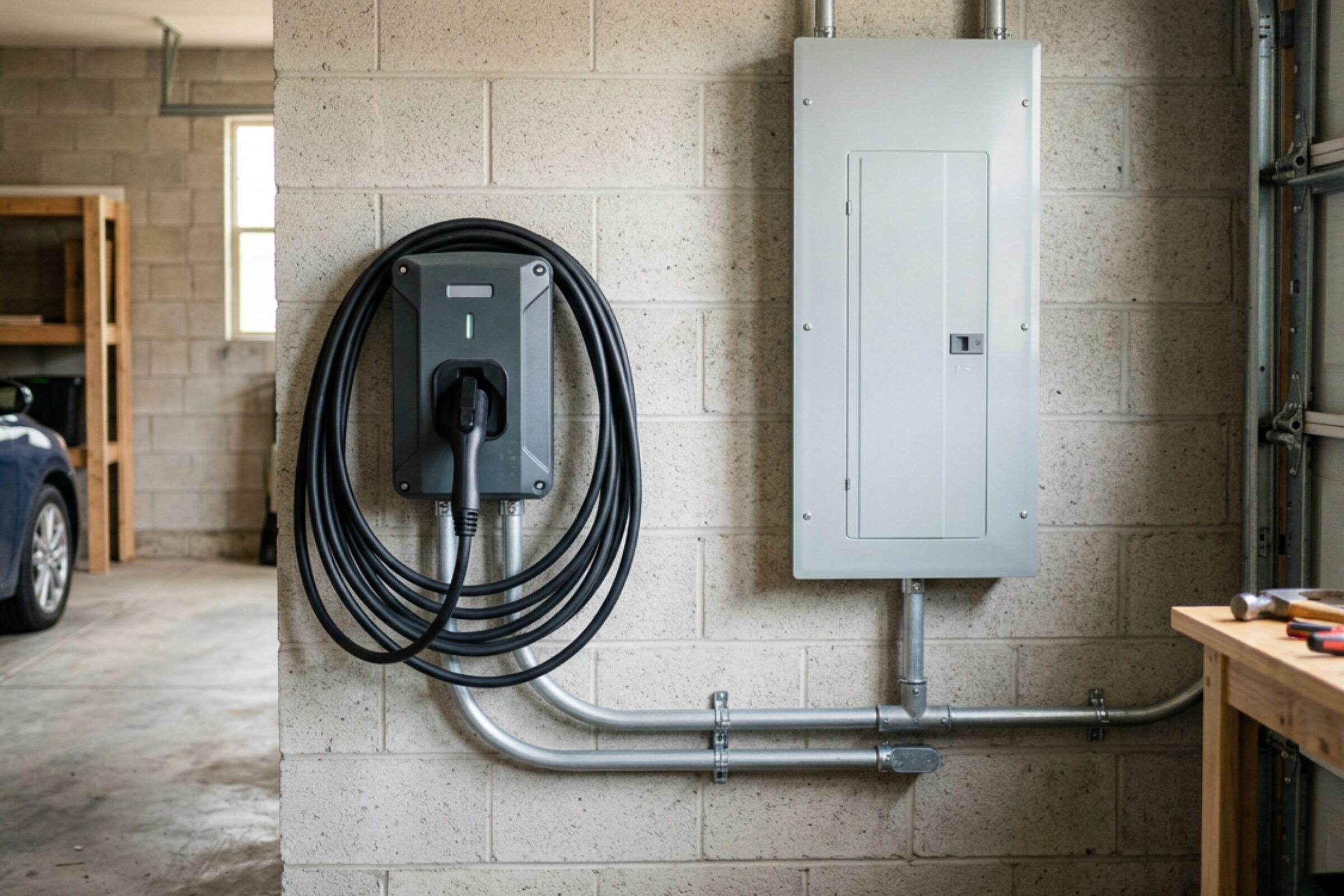
Consider an EV charger installation. Level 2 charging equipment can draw a substantial continuous load for hours. It should not simply be connected wherever there appears to be room in the panel. A proper assessment considers panel capacity, service size, load calculations, circuit routing, permits, and the condition of the existing wiring.
The same principle applies to kitchen renovations, suite conversions, heat pump installations, hot tubs, and home workshops. When electrical demand grows, wiring upgrades may be necessary to keep the system safe and reliable.
What homeowners should not do
Flickering lights can tempt people into quick fixes. A few are safe, such as changing a bulb or testing a lamp in another outlet. Beyond that, caution matters.
Do not remove the cover of an electrical panel to inspect wiring. Even when individual breakers are turned off, parts of the panel may remain energized. Do not tighten wiring terminals, replace breakers with higher-amperage models, or keep resetting a tripped breaker until it “holds.”
Avoid using extension cords and power bars as permanent solutions for overloaded rooms. They are useful temporarily, but a home office with computers, heaters, printers, and chargers may need an additional properly installed circuit. A breaker that trips is communicating something important. Forcing more power through the same wiring is not the answer.
Older homes may also contain aluminum branch-circuit wiring, knob-and-tube wiring, or ungrounded outlets. Each situation needs a specific approach. Assumptions are risky, especially when previous renovations may have concealed parts of the electrical system.
What an electrician will check
A qualified electrician investigating flickering lights does more than look at the fixture. The goal is to trace the symptom back to its source without disturbing safe, functioning parts of the system unnecessarily.
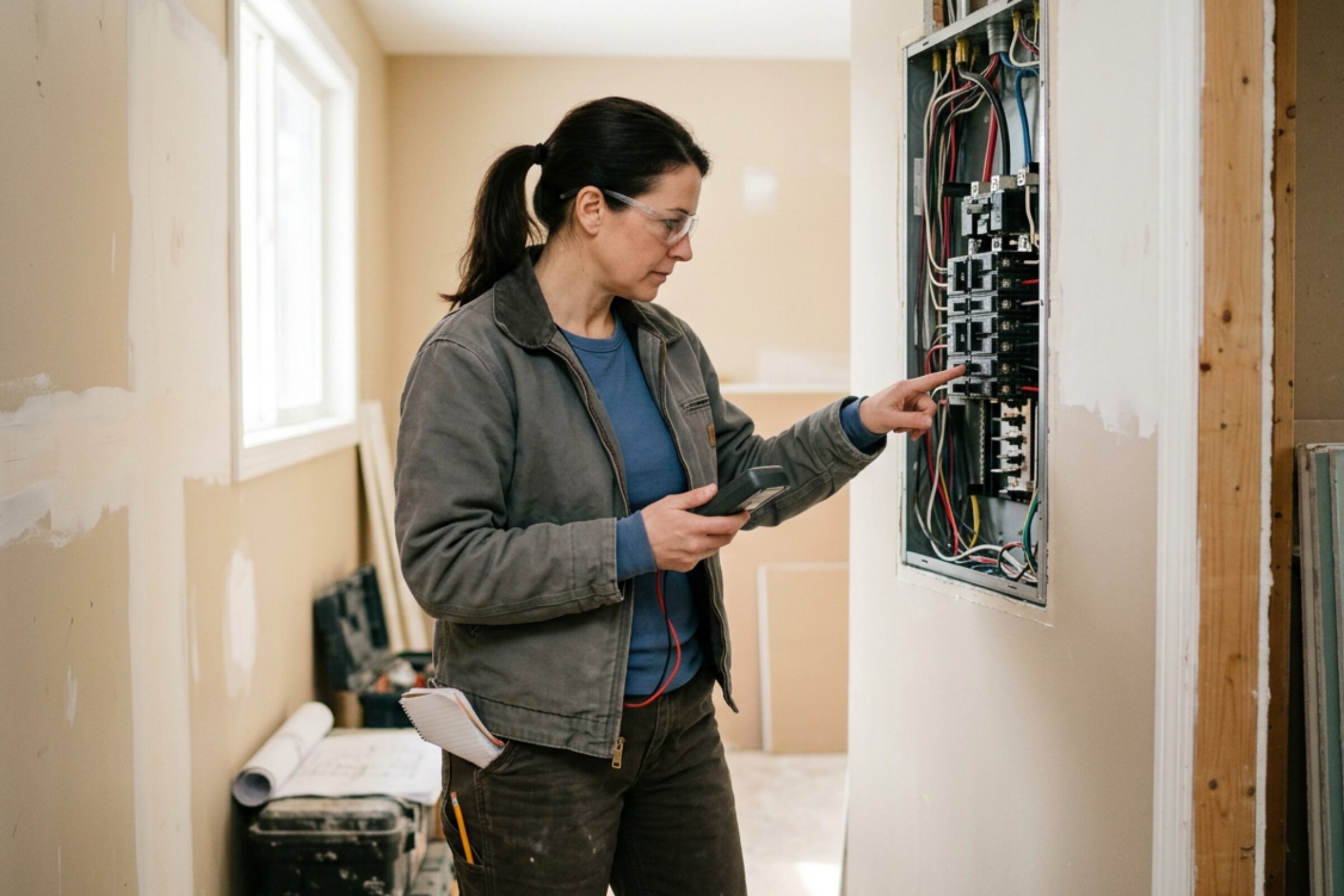
The inspection may include checking the panel for loose or damaged connections, testing voltage at circuits, examining breakers, inspecting switches and outlets, and reviewing whether circuits are overloaded. The electrician may also assess grounding and bonding, the condition of the service equipment, and whether previous work meets current safety expectations.
For a whole-home issue, the electrician may identify a problem on the utility side of the electrical service. In that case, the utility company may need to inspect its equipment. Homeowners should not attempt repairs at the meter, service conductors, or utility connection point themselves.
This is where professional electrical services make a real difference. The visible symptom might be a flickering kitchen light, but the actual cause could be a loose neutral in a panel, an overloaded circuit in the garage, or a failing connection outside the home.
A practical checklist before booking service
You do not need to diagnose the electrical system. A few observations can help explain the problem clearly and may speed up the visit.
Make a note of:
-
Which lights flicker and which rooms are affected.
-
Whether the flickering happens at a particular time or when a specific appliance starts.
-
Whether breakers trip, outlets feel warm, or buzzing occurs.
-
Whether the issue began after a renovation, storm, appliance purchase, or EV charger installation.
-
Whether lights dim, brighten, pulse, or shut off completely.
If possible, take a short video of the flickering. Do not open panels or remove outlets to get better footage. A simple video of the lights and a description of what was running at the time is enough.
Residential, commercial, and industrial settings need different responses
The cause of flickering is not limited to houses. Residential electrical systems often struggle because of aging wiring, overloaded circuits, or incompatible lighting controls. In commercial electrical settings, flickering may affect tenant comfort, employee safety, refrigeration, computers, retail lighting, or emergency systems. In industrial electrical environments, voltage instability can interfere with motors, controls, machinery, and production equipment.
The principle is the same across all three: recurring voltage changes need investigation. The stakes and equipment differ, but loose connections and overloaded systems do not become harmless because they are in a larger building.
For homes across Vancouver, Burnaby, and the greater Vancouver area, the most useful question is simple: is the flicker isolated, occasional, and clearly tied to a bulb or dimmer, or is it spreading, worsening, or linked to other electrical symptoms?
If it is spreading or worsening, make the call. A small flicker can be a small repair. It can also be the first visible sign that an older electrical system needs attention before it becomes an expensive or dangerous problem.