


Most people look at an electric bill for about ten seconds. Total due, payment date, done. That is understandable, but it also hides the useful part. Your bill is not just a charge. It is a record of how your building behaves.
If you want lower costs, the goal is not to obsess over every lamp or phone charger. The goal is to find the few things that use a lot of electricity, then decide what is worth fixing, changing, or upgrading. That applies to a condo in Vancouver, a retail unit, or an industrial facility in the lower mainland.
Some savings are easy. Some take a bit of detective work. A few require actual electrical work. The good news is that electric bills usually leave clues.
What an electric bill is really telling you
At a basic level, your bill usually includes a fixed charge and a usage charge. The fixed part is what you pay to stay connected. The usage part is based on how much electricity you consumed during the billing period, measured in kilowatt-hours, or kWh.
A kilowatt-hour is simple once you stop overthinking it. If a 1,000 watt heater runs for one hour, that is 1 kWh. A 10 watt LED bulb would need 100 hours to use the same amount.
For homes, the bill often feels straightforward. For commercial electrical and industrial electrical customers, it can get more complicated. There may be demand charges, different rate classes, or penalties connected to how power is used, not just how much.
That distinction matters. Two businesses can use the same monthly energy and still pay different amounts if one creates higher peaks. A short burst of heavy use can be expensive.
Before you try to cut costs, look for these basics on the bill:
-
Billing period length. A 35 day bill should not be compared directly with a 28 day bill.
-
Total kWh used. This tells you how much electricity actually moved through the meter.
-
Average daily use. This helps you compare month to month more fairly.
-
Rate category or tariff. This matters a lot for commercial and industrial sites.
-
Demand charges, if listed. These can quietly dominate the bill.
If you only read the total amount owing, you miss the story.
Where the money usually goes
People tend to blame lighting first because it is visible. In reality, lighting is often not the biggest problem anymore, especially after LED adoption. The real drivers are usually heating, cooling, water heating, motors, refrigeration, and anything that runs longer than you think.
For residential electrical use, the usual heavy hitters are space heating, electric hot water tanks, dryers, ovens, older fridges and freezers, and EV charging. In the greater Vancouver area, winter bills often jump because electric baseboards, portable heaters, and heat pumps work harder when outdoor temperatures drop.
For commercial electrical settings, it is usually HVAC, lighting schedules, refrigeration, kitchen equipment, servers, ventilation, and plug loads that never shut off. The biggest waste is often not broken equipment. It is equipment running when nobody needs it.
Industrial electrical use is its own world. Motors, pumps, compressors, conveyors, welders, and process equipment can drive both usage and demand. Compressed air systems are notorious for waste. A leak you can barely hear can cost real money over time.
This is why the best savings plans are boring at first. You start by finding runtime, load size, and peak periods. Fancy gadgets come later.
Start with patterns, not purchases
A lot of people buy smart plugs, power bars, or new bulbs before they know what changed on the bill. I get the instinct. Buying something feels productive. But the first step should be comparison.
Pull the last 12 months of bills if you can. Then ask a few plain questions.
Did usage jump suddenly or drift upward over time?
Did the increase begin in winter, summer, or after new equipment was installed?
Did occupancy change?
Did operating hours change?
Did someone add an EV charger installation, a portable AC unit, or electric heating in a workshop?
Did a fridge, rooftop unit, or motor start running more often?
Patterns matter because they narrow the search. A sudden spike often points to a malfunction, schedule change, or new load. A gradual rise usually means equipment wear, behavior creep, or seasonal dependence.
In older parts of Vancouver and the lower mainland, another issue shows up often in homes and mixed-use properties. The electrical system itself may not be optimized for modern loads. Panels that were fine decades ago are now feeding heat pumps, home offices, induction ranges, and EV charging. That does not automatically increase the price per kWh, but it can lead to overloaded circuits, nuisance tripping, and inefficient workarounds like extension cords and portable heaters. In those cases, residential electrical services can be part of an energy plan as much as a safety plan.
Residential savings that actually move the needle
The cheapest electricity is the electricity you never use. That sounds obvious, but in houses and condos, the biggest wins usually come from reducing heating and water heating demand, then cleaning up a few smaller habits.
Heating is often the main event
If your home uses electric baseboards or electric forced air, heating can dominate the bill. Even with a heat pump, poor insulation or constant thermostat adjustments can waste energy fast.
A few things help more than people expect. Keep temperatures steady instead of swinging them wildly. Use programmable schedules if the home is empty during the day. Close curtains at night in winter. Check door seals. Make sure furniture is not blocking baseboard heaters. That one is common.
If one room is always cold, do not assume the answer is a second space heater. It may be an airflow issue, bad sealing, or an electrical problem with the heating circuit or thermostat.
Hot water is usually second
Electric water heaters work hard and quietly. Most households do not notice them until something fails. Lowering the setpoint slightly, insulating accessible hot water lines, fixing leaks, and washing clothes in cold water can reduce waste without much discomfort.
A failing water heater can also increase consumption before it dies. If it seems to run constantly, makes odd sounds, or never quite recovers after a shower, it may be using more power than it should.
EV charging can be cheap or sloppy
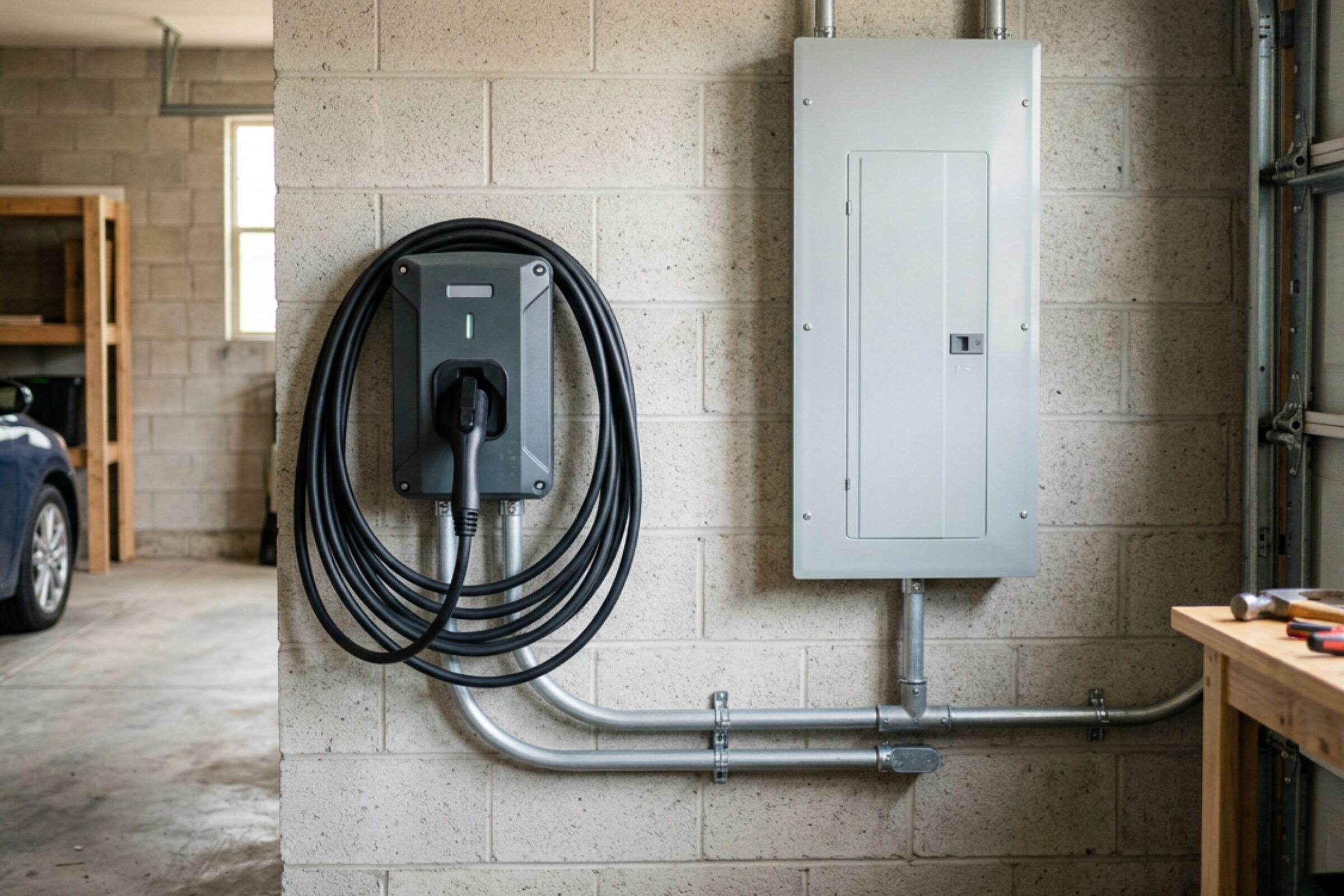
EV charger installation is one of the best upgrades for convenience, but charging habits matter. Level 2 charging is efficient and practical, yet it is still a major load. If two vehicles charge at once, or if a home adds charging on top of electric heat and other large appliances, the overall load profile changes.
This does not mean you should avoid charging at home. It means you should think about schedule, circuit capacity, and charger settings. Smart charging during off-peak periods, where available, or simply avoiding overlap with other major loads can help keep usage predictable.
Little loads add up, but slowly
Standby power is real, though it is rarely the biggest reason a bill jumps. Entertainment systems, second fridges, old freezers in garages, and always-on dehumidifiers matter more than phone chargers.
If you want quick wins, start here:
-
Unplug or smart-switch unused secondary appliances.
-
Replace old incandescent or halogen lighting with LEDs.
-
Check bathroom fans and exhaust fans that may be left running.
-
Retire old freezers that are costing more to run than they are worth.
-
Test whether portable heaters are doing more damage than good.
That last point deserves emphasis. Portable electric heat feels cheap because the device itself is cheap. The operating cost is another story.
Commercial buildings lose money through schedules
For many commercial electrical clients, the waste is not mysterious. Lights stay on too long. HVAC starts too early. Signage runs all night. Breakroom appliances multiply. Tenant improvements add loads that nobody rethinks later.
A store, office, or restaurant should have a clear answer to one question: what turns off when the space is closed?
If the answer is vague, there is savings on the table.
Lighting controls are still one of the easiest improvements. LEDs matter, yes, but scheduling matters more. An efficient fixture that runs 16 unnecessary hours is still wasteful.
HVAC is another big one. Dirty filters, bad thermostat placement, or simultaneous heating and cooling can push bills up without drawing much attention. In retail and office settings, people often fight comfort complaints by changing setpoints instead of fixing the actual issue. That becomes expensive fast.
Submetering can help in multi-tenant properties or larger operations. Once departments or tenants can see their own usage, behavior usually changes. People pay attention when the number is theirs.
If your business has a monthly demand charge, peak management becomes even more important. Starting several large loads at once can cost more than spreading them out. This is where a review by licensed electricians or facility staff can pay off. Sometimes the savings come from a scheduling change, not a capital project.
Industrial savings usually live in equipment runtime
Industrial electrical bills are often too big to solve with simple habits alone. The good news is that the savings can also be much larger.
Motors deserve attention first. If motors are oversized, poorly controlled, or running when production does not need them, they waste both energy and money. Variable frequency drives can help in the right applications, especially for pumps and fans that do not need to operate at full speed all the time.
Compressed air is another classic problem. It is useful, but it is one of the more expensive utilities inside many facilities. Leaks, bad pressure settings, and running compressors during idle periods can drain money quietly. People get used to the hiss.
Demand management matters too. If a site starts several high-load machines at once, demand charges can spike. Staggered starts, process scheduling, and load shedding strategies can make a noticeable difference without reducing output.
Then there is maintenance. Bearings, belts, alignment, airflow restrictions, and failing components all affect electrical consumption. A motor does not need to fail completely to become inefficient. It can waste money for months first.
When an electrical issue is costing you more than you realize
Not every high bill comes from normal consumption. Sometimes the problem is electrical.
A loose connection can create heat. A failing breaker can trip or perform poorly. Old wiring can limit how safely and efficiently a building handles newer loads. Circuits may be badly distributed, with a few overloaded branches and other capacity sitting unused. In commercial and industrial spaces, control issues can keep equipment running longer than intended.
Here are a few red flags worth taking seriously:
-
Breakers that trip without an obvious reason
-
Lights that flicker or dim when equipment starts
-
Warm outlets, switches, or panel spots
-
Buzzing from panels or devices
-
Motors running hotter than usual
-
Baseboard heaters that seem stuck on
-
Sudden bill increases after renovations or equipment changes
These are not just cost issues. They are safety issues. Savings and safety meet more often than people think.
This is where licensed electricians matter. Good electrical services are not only about adding circuits or fixing outages. They also help identify hidden inefficiencies, confirm whether a panel is handling load properly, and plan wiring upgrades that match how a building is actually used now.
In older Vancouver properties, especially those that have been renovated in stages, electrical systems can end up patched together around modern demand. That setup may work, but not gracefully.
A 30 day plan that is realistic
You do not need a full energy audit to make progress this month. Start with a practical plan.
Week 1, gather the last year of bills and mark the months with spikes. Note weather, occupancy, and equipment changes.
Week 2, walk the property during operating and non-operating hours. Look for loads that are running when they should not be. Take pictures. Write things down. Memory is unreliable.
Week 3, test easy fixes. Adjust schedules. Change thermostat programming. Unplug unused equipment. Clean filters. Reduce unnecessary lighting runtime. Check hot water settings.
Week 4, list what is left. If the remaining issues involve capacity, safety, recurring trips, heavy equipment, or old panels, bring in qualified help. That may mean assessing wiring upgrades, load balancing, panel condition, controls, or whether 24/7 emergency service is needed for unstable or unsafe faults.
That is a much better approach than buying random gadgets and hoping.
The point is not perfection
You do not have to become obsessed with every kilowatt-hour. Most people should not. The goal is to catch the few things that matter.
For a home, that might mean heating smarter, managing EV charging, and dealing with old equipment honestly. For a business, it usually means tightening schedules and watching peaks. For industrial operations, it often comes down to motors, compressors, and maintenance discipline.
An electric bill is not exciting reading. Still, it is useful. It tells you where to look. Once you read it that way, savings stop feeling mysterious. They become a series of practical decisions.