
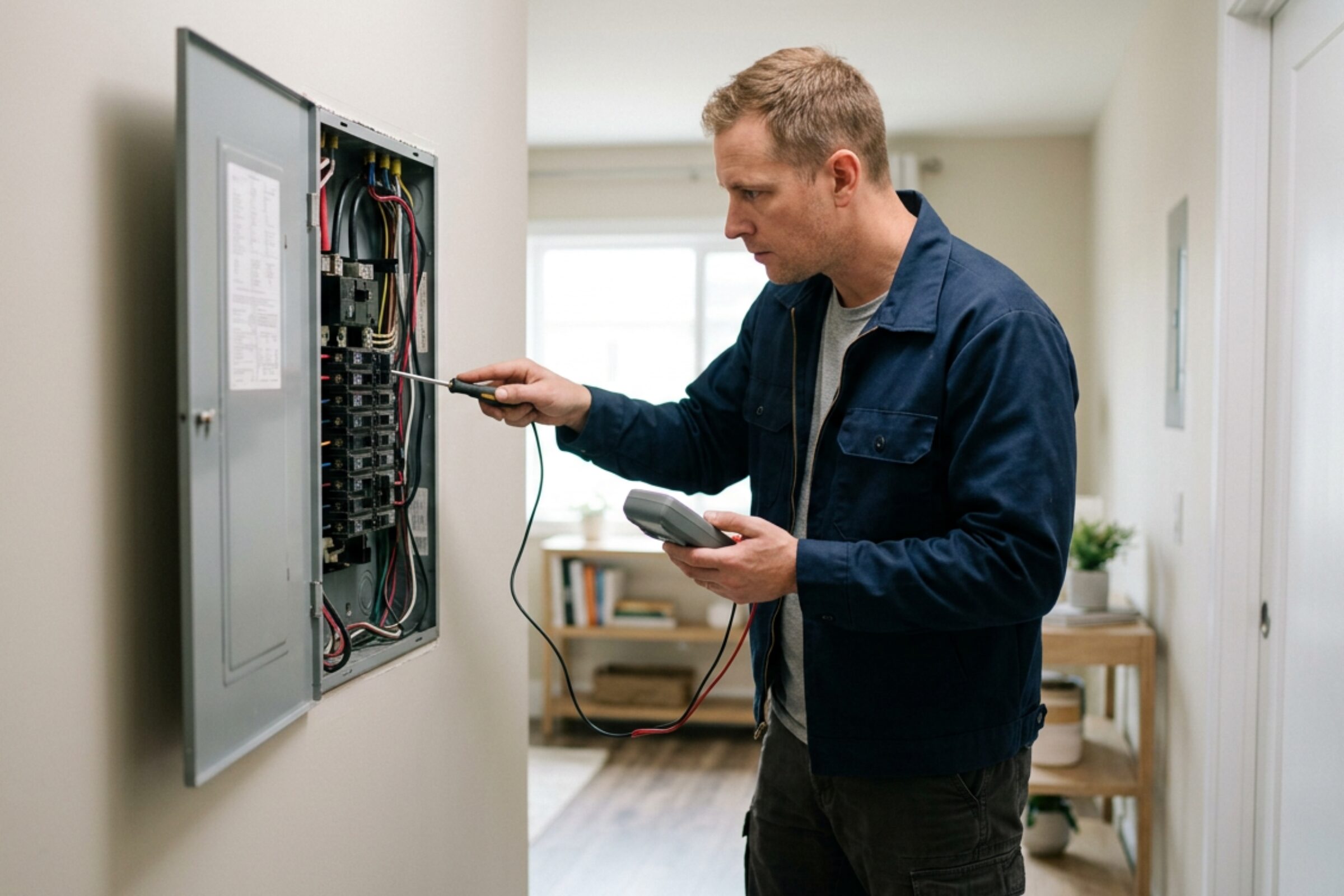

Two electricians look at the same house. One recommends a panel upgrade. The other recommends a service upgrade. Both proposals mention 200 amps, but the prices are very different.
That does not necessarily mean either recommendation is wrong. They may describe different work, use different assumptions, or leave different costs outside the quote.
For homeowners in Vancouver and across the Lower Mainland, the distinction matters. Replacing an electrical panel can address safety, condition, or circuit-space problems. Increasing electrical service capacity changes how much power the home can receive through its service equipment. Sometimes a project requires both. Sometimes it does not.
Before comparing prices, make sure you are comparing the same scope.
The Basic Difference: Distribution vs. Supply Capacity
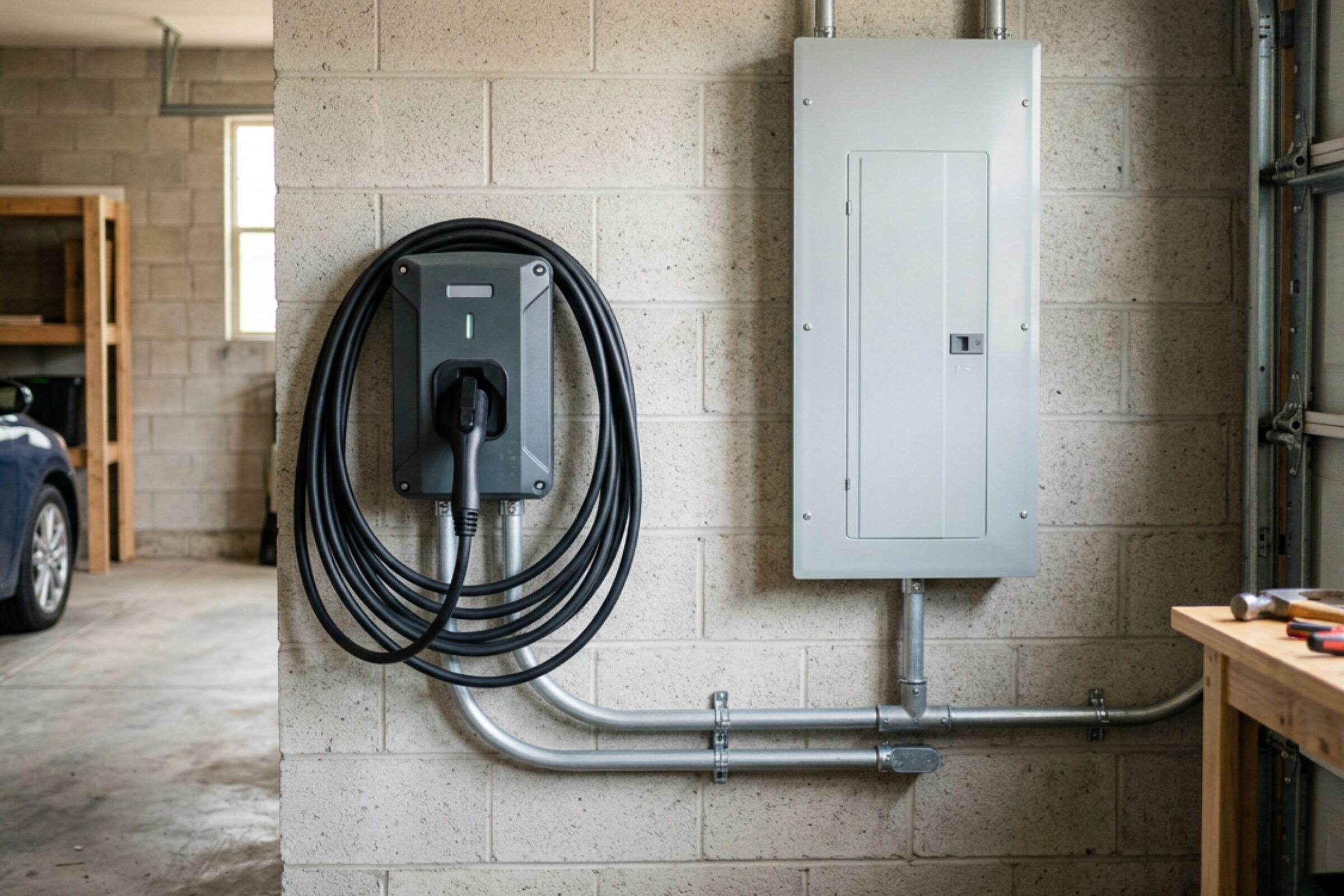
Your electrical panel distributes electricity to individual circuits throughout your home. Those circuits supply lighting, receptacles, appliances, and other equipment. Circuit breakers protect the associated wiring against overcurrent.
Your electrical service is the arrangement that brings utility power into the home through the service connection and associated equipment. Depending on the property, that includes service conductors, metering equipment, and the main service disconnect.
A panel upgrade changes the equipment that distributes power. A service upgrade increases or otherwise changes the incoming electrical service and requires the affected components to be suitable for that service.
The terminology becomes confusing because contractors sometimes use “panel upgrade” as shorthand for a larger project that includes a service upgrade. Other contractors use it to mean a panel replacement with no increase in available capacity.
Neither label is detailed enough on its own. The written scope is what counts.
A 200-Amp Panel Does Not Automatically Mean 200-Amp Service
The rating printed on a panel is not proof that the home has that much available service capacity.
For example, equipment with a 200-amp bus rating may be installed as part of a properly designed system with a lower-rated main breaker and service. The equipment rating identifies what that component can accommodate under its specified installation conditions. It does not increase the capacity of the upstream wiring or utility connection.
Likewise, installing a larger main breaker without verifying the rest of the system is unsafe. The service rating must be supported by the applicable conductors, equipment, installation conditions, and utility requirements.
Ask the electrician to identify both the existing service capacity and the proposed capacity, rather than relying on the number printed inside the panel door.
When a Panel Replacement May Be Enough
A panel replacement may be appropriate when the existing electrical supply is adequate but the distribution equipment needs attention.
Reasons can include deteriorated equipment, damage, unsuitable previous alterations, or difficulty obtaining appropriate replacement breakers. A homeowner may also need more usable circuit positions for a renovation.
In these cases, replacing the panel does not necessarily require increasing the service capacity. A home could retain its existing service rating while receiving a new panel and properly coordinated protective devices.
The decision should follow an assessment, though. Age alone does not tell the whole story, and a crowded panel is not automatically an overloaded service.
Circuit Space and Electrical Capacity Are Different Problems
Imagine a home with no empty breaker positions. The owner wants to add a dedicated circuit for a home office.
That is a circuit-space issue. Whether it is also a capacity issue depends on the calculated electrical load and the existing installation.
A suitable panel replacement or, in some circumstances, a subpanel may provide additional circuit positions. Neither option creates more incoming electrical capacity.
The opposite situation is possible too. A panel may have several empty spaces while the service has little capacity available for new loads.
Counting spare breaker positions cannot answer the service-upgrade question.
When a Service Upgrade May Be Needed
A service upgrade becomes relevant when the existing service cannot support the proposed electrical load under the applicable code requirements, or when other conditions require changes to the service.
Common triggers include electrification projects, substantial renovations, and added equipment. A home that previously used gas for space heating, water heating, and cooking may need a different electrical assessment when several of those systems become electric.
An EV charger installation can also prompt the discussion, especially when combined with other planned loads.
A service upgrade may involve replacing or modifying the panel, meter base, service conductors, overhead service mast, or underground service infrastructure. The exact scope depends on the property and the utility’s requirements.
It is not safe to assume that every upgrade includes every component. Nor should you assume the existing meter base or service wiring can remain. Those are design and assessment questions.
The Utility Connection Can Affect the Project
In much of the Greater Vancouver area, BC Hydro is the electricity distributor. Some BC properties are served by other utilities, so the relevant provider must be confirmed.
A service-capacity increase can require utility review, connection arrangements, and scheduled disconnection and reconnection. Underground work, shared infrastructure, or constraints in the local distribution system can make the project more involved.
An electrician can assess the customer-owned installation, but that does not replace utility approval where it is required.
This is one reason a service upgrade can cost substantially more than a panel-only replacement, even when the finished panel looks similar.
The Load Calculation Should Explain the Recommendation
A recommendation to increase service capacity should have a clear technical basis.
For residential electrical work, an electrician assesses the existing service and applies the load-calculation requirements relevant to the project. The calculation considers the home and its electrical equipment using applicable demand rules. It is not simply the sum of every breaker handle in the panel.
That distinction matters. A panel containing breakers whose ratings add up to more than the main breaker rating is not, by itself, evidence of an overloaded service. Individual circuits are not all expected to draw their maximum current simultaneously.
Ask what loads were included in the assessment. A calculation that considers only today’s equipment may produce a different recommendation than one that also includes a planned heat pump, electric water heater, or future EV charger.
Future plans should be specific. “We might electrify everything someday” is less useful than identifying the equipment you realistically expect to install and its electrical requirements.
Can Load Management Avoid a Service Upgrade?
Sometimes, yes. It depends on the proposed equipment, the existing installation, and whether the design meets the applicable requirements.
For EV charging, an approved and appropriately designed energy management system may control charging so the installation stays within permitted limits. Another option may be a lower charging rate that still meets the household’s daily driving needs.
A homeowner who drives modest distances and charges overnight may not need the highest charging power the vehicle can accept.
Load management does not repair damaged equipment or make undersized conductors acceptable. It also does not guarantee that every future electrical load can be added without further work.
The useful question is: “What compliant options meet our actual needs?”
A good comparison may include a service upgrade, managed charging, and a lower-power charging configuration, with the limitations of each explained.
BC Permits, Inspections, and Responsibilities
Panel replacements and service upgrades generally require electrical permits and the applicable inspection or acceptance process in BC. The authority responsible depends on the property’s location.
Technical Safety BC administers electrical permitting and oversight in many areas, while some municipalities have their own electrical inspection jurisdictions. Vancouver homeowners should confirm the requirements that apply within the city rather than assume the process is identical throughout the Lower Mainland.
For contracted electrical work, verify that the contractor holds the appropriate BC electrical contractor license. The proposal should identify who obtains the permit and coordinates the required inspections.
Utility coordination is a separate responsibility that should also be clear. A permit does not automatically establish that the utility connection has been approved or scheduled.
Do not remove panel covers, disturb meter equipment, or attempt service modifications yourself. Parts of the installation can remain energized even when the main breaker is off.
How to Compare Quotes Without Guessing
A useful quote describes the existing installation, the intended result, and the work required to get there. “Upgrade panel to 200 amps” leaves too much unanswered.
Ask each contractor to clarify these points:
-
Whether the work replaces the panel only or increases the electrical service capacity.
-
The existing and proposed service ratings, including the basis for the recommendation.
-
Which components will be replaced, retained, or assessed before the final scope is confirmed.
-
Whether permits, inspections, utility coordination, and applicable utility charges are included.
-
Whether trenching, wall repairs, painting, and other restoration are included or excluded.
-
The expected outage arrangements and any conditions that could change the price or schedule.
These questions help reveal why quotes differ.
For example, one contractor may include a new meter base and service mast while another assumes both can remain. One may allow for relocating equipment if its current position is unacceptable for the proposed work. Another may exclude that possibility.
Those differences deserve discussion before you choose based on the total price.
Ask What Happens If Existing Problems Are Found
Older homes sometimes contain concealed alterations or conditions that are not apparent during an initial visit. A contractor cannot always identify every issue before equipment is opened under safe working conditions.
The proposal should explain how unexpected work is documented and authorized. That is more useful than an unrealistic promise that nothing can change.
Where an assumption has a major cost implication, ask whether it can be checked before the project begins.
What Neither Upgrade Automatically Fixes
A new panel does not renew all the wiring in a house.
Existing branch circuits may still need evaluation if there are damaged cables, improper connections, missing grounding provisions, or unsuitable alterations. Wiring upgrades are separate work unless the proposal expressly includes them.
A larger service also does not make an existing appliance circuit suitable for a larger load. The circuit conductors, breaker, receptacle or connection method, and equipment requirements still need to be compatible.
Think of the installation as connected parts. Improving one part does not erase limitations elsewhere.
If the reason for calling is flickering lights, repeated breaker trips, heat, buzzing, or a burning smell, describe those symptoms before asking for a particular upgrade. The first task is to diagnose the problem. Signs of overheating or arcing warrant prompt professional attention, not a routine quote appointment.
A Practical Example: One House, Two Different Projects
Consider a hypothetical home with an existing 100-amp service.
The owner initially wants to replace an aging panel and add a small number of circuits. An assessment finds the service adequate for the proposed loads. The project may be a panel replacement that retains the existing service capacity, subject to equipment suitability and applicable requirements.
Later, the owner considers electric space heating, electric water heating, and EV charging. That is a different scope. A new load assessment may support a service upgrade, a load-management approach, or another design based on the selected equipment.
The house has not changed, but the electrical requirements have.
This is why recommendations should be tied to a defined plan rather than a general claim that every home needs a particular amperage.
Choose the Scope Before Comparing the Price
Before approving electrical services, ask the contractor to state the outcome in plain language: Will this project replace the distribution panel, increase the incoming service capacity, or do both?
Then confirm the supporting assessment, equipment scope, approvals, and exclusions.
The best decision is not automatically the largest service or the lowest quote. It is a properly designed installation that addresses the home’s condition, supports the intended loads, and gives you a clear understanding of what you are paying for.