


An electrical upgrade can involve two separate bills: one for the electrician’s work and another for BC Hydro’s connection work. Confusing those costs is an easy way to underestimate a project.
A new electrical panel, for example, does not automatically include the utility’s service cable, meter installation, or an extension of the distribution system. The work required depends on your existing connection, the capacity you need, and how electricity reaches the property.
For homeowners and businesses in Vancouver and the Lower Mainland, understanding those distinctions makes estimates easier to compare. This guide explains the published minimum connection charges, the additional costs that may apply, and the questions to ask before scheduling work. Confirm the applicable rates with BC Hydro before committing to a budget, since fee schedules and project requirements can change.
Start With the Scope: What Is Actually Being Upgraded?
“Electrical upgrade” can describe very different projects.
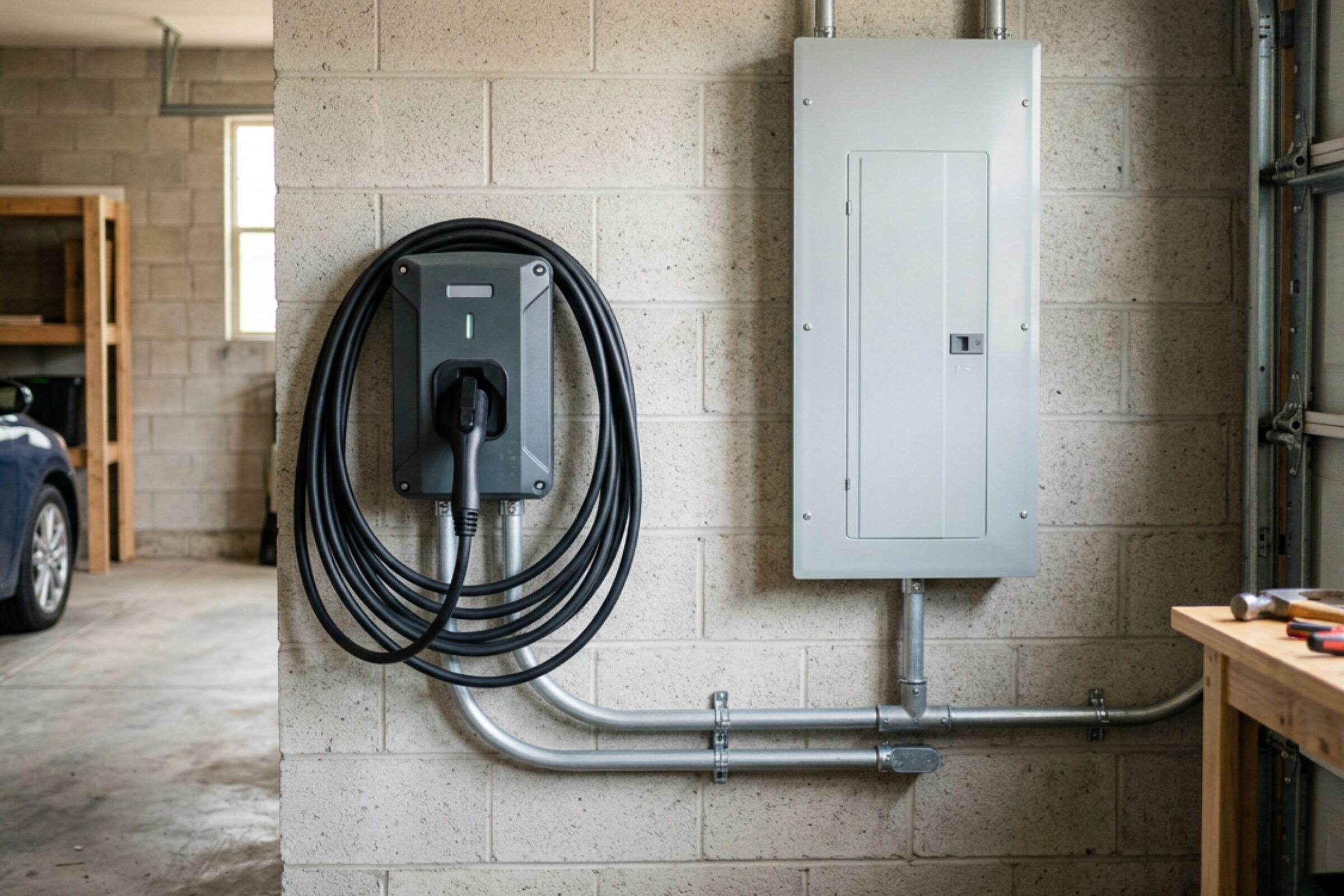
Replacing an aging panel without changing the incoming service is different from increasing a property’s service capacity. Adding a circuit for an EV charger is different again. Some projects require changes to BC Hydro’s equipment or service conductors; others remain entirely within the customer’s electrical installation.
A connection charge may apply when a property first connects to the electrical system or when an existing connection is modified. The published charges cover new connections, temporary services, and upgrades or alterations involving new service wire or cable.
When suitable secondary service at 750 volts or less is readily available, a standard connection charge generally applies. If the existing distribution system cannot provide the required service, an extension or other additional work may be necessary.
That distinction matters more than the panel’s price tag. Before comparing estimates, establish whether the project involves customer-owned equipment only, utility connection work, or both.
What the Utility Connection Charge Covers
The published connection charges cover specified wire or cable between existing utility infrastructure and the meter base. They are not a complete price for upgrading a property’s electrical system.
Meter installation is charged separately. Possible distribution extensions, site preparation, and the electrician’s labor and materials also need separate consideration.
On the customer side, a project might require a new panel, meter base, grounding and bonding work, conduit, or changes to existing wiring. Underground work may also involve excavation and surface restoration. Responsibility for each item should be clear in the estimate.
Eligible customers may receive a utility contribution toward connection costs when wire or cable charges apply. Eligibility and the contribution amount need confirmation for the specific project.
A BC Utilities Commission-approved update to the distribution extension policy took effect July 5, 2025. If your project requires an extension, ask how that policy applies rather than assuming the standard connection minimum will cover everything.
Published Minimum Connection Charges
The following amounts are before GST. Charges may be higher when work takes place outside regular working hours.
Service size, phase configuration, and the choice of overhead or underground service affect the applicable minimum.
Overhead service
Service size or work typeSingle-phaseThree-phaseUp to 200 amps$880$980Greater than 200 amps, up to 400 amps$1,370$1,570Greater than 400 amps, up to 600 amps$1,610Based on estimateAlteration of existing wire$820$820
Overhead service uses conductors supported above ground between utility infrastructure and the building’s service connection.
For a qualifying single-phase connection up to 200 amps, the published minimum is $880 before GST. That does not mean every residential electrical upgrade to 200 amps has an $880 utility bill. The actual work and applicable charge category still need confirmation.
Underground service
Service size or work typeSingle-phaseThree-phaseUp to 200 amps$1,400$1,520Greater than 200 amps, up to 400 amps$2,600$2,950Greater than 400 amps, up to 600 amps$3,530Based on estimateAlteration of existing wire$820$820
For comparable service sizes, the published underground connection minimums are higher than the overhead minimums.
For example, the single-phase minimum for service greater than 200 amps and up to 400 amps is $2,600 underground, compared with $1,370 overhead. That is a $1,230 difference before GST, without accounting for customer-side construction.
The “alteration of existing wire” category also needs careful interpretation. Do not assume that every change to an existing service qualifies for the $820 charge. BC Hydro must determine the applicable scope.
Single-Phase or Three-Phase: Why It Matters
Single-phase service is common in homes and many retail commercial buildings. Three-phase service is typically used by larger commercial and industrial customers, particularly where equipment requires it.
This is not simply a choice between a basic and a premium connection. The service must suit the building’s electrical needs and the available utility supply.
For commercial electrical projects, equipment specifications can be as important as the total amperage. A business adding machinery may need to confirm voltage and phase requirements before finalizing its service design.
Industrial electrical projects can require more detailed planning because equipment loads and supply requirements vary substantially. The published tables reflect this: three-phase connections greater than 400 amps and up to 600 amps are priced by estimate.
Have licensed electricians establish the required service configuration before using a fee table to build a budget. A price for the wrong configuration is not a useful estimate.
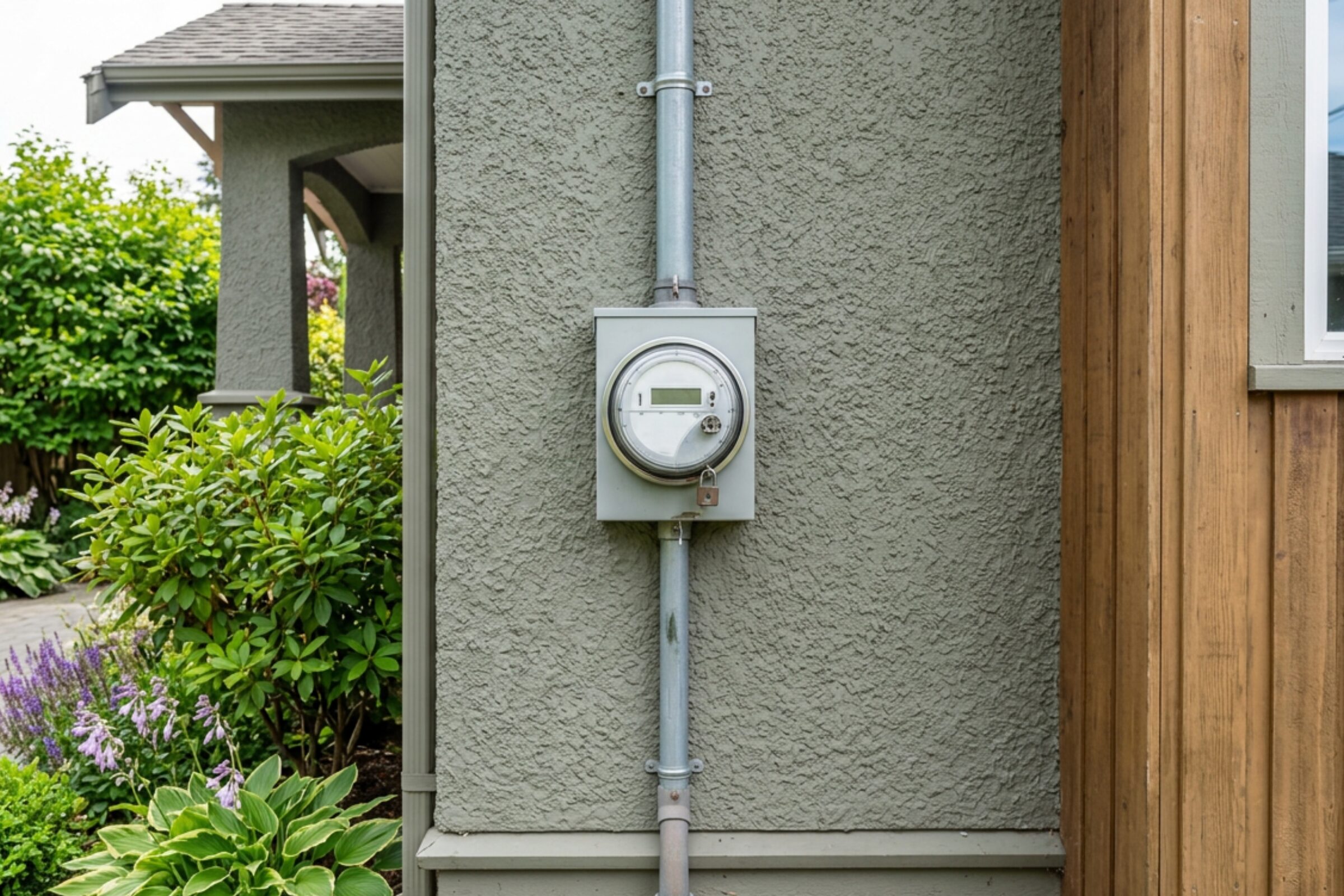
Meter Installation Is a Separate Charge
One common budgeting mistake is assuming the connection fee includes the meter installation.
The published minimum metering charges include:
-
$64 plus GST when a meter is installed at the same time as a service connection.
-
$262 plus GST for a meter installed outside a service connection.
Other metering entries include a $262 plus GST charge and an $840 plus GST charge that includes meter and wiring installation. The applicable amount depends on the metering request, so these entries should not be treated as interchangeable.
For a straightforward illustration, suppose BC Hydro confirms that a project qualifies for the $880 single-phase overhead connection minimum and the $64 concurrent meter installation charge.
Those two items total $944 before GST, or $991.20 with 5% GST.
That calculation is useful, but limited. It excludes the electrician’s work, any extension costs, and any other project-specific charges. It is an example of adding confirmed line items, not a complete service-upgrade quote.
Why the Full Project Can Cost More Than the Minimum
The utility’s minimum charge is a starting point for a defined scope of work. It is not a ceiling on the total project.
Existing infrastructure may not be sufficient
A property may need more than a replacement service cable. If suitable service is not readily available, BC Hydro may need to assess an extension or other distribution work.
This can affect both cost and scheduling. It is worth establishing early, especially when the project depends on a larger service being available by a particular date.
Customer-side electrical work varies
Two properties requesting the same amperage can require very different amounts of work.
One may have a suitable meter location and a straightforward cable route. Another may need a relocated meter base, changes to the service entrance, or substantial wiring upgrades.
An electrician’s estimate should describe that work separately from BC Hydro charges. Permits, inspections, and any excavation or restoration responsibilities should also be addressed rather than left implicit.
Scheduling can affect charges
The published minimums may increase when utility work falls outside regular working hours.
A business may prefer an evening shutdown to avoid interrupting customers, but that convenience can affect the budget. Ask about the utility’s scheduling charges before choosing the work window.
Access to an electrician’s 24/7 emergency service does not determine BC Hydro’s availability or its charges for after-hours work. Those arrangements are separate.
EV Charger Installation Does Not Always Require a Service Upgrade
An EV charger installation often prompts questions about electrical capacity. It should prompt an assessment, not an automatic assumption that a larger service is needed.
The decision depends on the building’s calculated electrical load, existing service capacity, charging requirements, and whether an approved load-management approach is suitable.
For example, a homeowner planning overnight charging may have different requirements than a commercial site installing several chargers for regular daytime use.
If the project can proceed without changing the utility connection, the connection charges discussed here may not apply. If new service conductors or a larger connection are required, those utility costs become part of the budget.
The same reasoning applies to other additions, such as electric heating or new commercial equipment. Start with the electrical requirements. Then determine whether the existing connection can support them.
Avoidable Charges: Site Readiness and Return Visits
A scheduled utility visit can become more expensive if the site or equipment is not ready.
The listed charge for a required return visit is $351 plus GST. Readiness therefore deserves more than a quick check on the morning of the appointment.
Before the crew arrives, confirm the required installation work is complete, necessary approvals are in place, and access is available. Your electrician and BC Hydro should establish what must be ready for that particular visit.
A practical pre-connection check should cover:
-
Completion of the required customer-side electrical work.
-
The applicable permit, inspection, and authorization requirements.
-
Clear access to the meter location and utility work area.
-
Coordination of the shutdown, connection, and meter work.
This is especially useful for occupied commercial properties, where access may depend on building management or tenant arrangements.
Reconnection Fees Are Different From Upgrade Charges
Some charges in the utility schedule relate to restoring service after non-payment or access issues. They should not be confused with planned upgrade costs.
The listed non-payment reconnection charges are assessed per meter: $30 plus GST for standard reconnection, $280 plus GST for manual overtime reconnection, and $700 plus GST for reconnection following access refusal.
These are separate categories. They are not general prices for reconnecting a property after every electrical project.
If an estimate refers to “reconnection,” ask what that means in context. A planned service alteration and a non-payment reconnection are different situations, even if both involve restoring power.
Streetlight Charges Need Their Own Budget
Streetlight service has a separate set of charges and should not be priced using the residential or commercial service tables.
The schedule lists streetlight service charges of $1,710 plus GST and $1,060 plus GST plus the depreciated fixture cost, depending on the applicable category.
The depreciated fixture cost falls with age. Listed amounts range from $1,150 plus GST at age zero to $9 plus GST at age 27. For example, the listed value is $63 at age 20 and $24 at age 25.
For a project involving streetlighting, confirm the service category and fixture age before calculating the expected charge.
Build a Budget With Clear Boundaries
A useful electrical upgrade estimate makes responsibilities visible.
It should distinguish the electrician’s scope from the utility’s connection charge, identify meter work separately, and explain whether extension costs remain unresolved. Taxes and possible after-hours charges should be clear too.
Before approving the project, confirm the required amperage and phase, whether the connection is overhead or underground, and which utility charges have actually been verified.
For electrical services across the Greater Vancouver area, site conditions can differ considerably. A nearby property’s upgrade cost may be a helpful conversation starter, but it is not a reliable quote for yours.
The most dependable budget starts with a defined electrical scope and a confirmed utility connection plan. Once those are established, the published minimums become useful numbers rather than misleading shortcuts.