


Most people notice energy waste the same way they notice a roof leak, late. The bill arrives, something feels off, and then the questions start. Why is this room always hotter? Why do the lights stay on all night? Why does one circuit trip every time the microwave and kettle run together?
Licensed electricians look at those problems a bit differently. They are not only chasing faults. They also see where power gets wasted through old equipment, bad habits, weak controls, and electrical systems that no longer fit the building. That matters in homes, offices, warehouses, and production spaces alike.
In Vancouver and across the lower mainland, plenty of buildings were wired for a very different era. Fewer electronics, fewer vehicles charging at home, less automation, and lighter electrical loads overall. That gap between old systems and current use is where a lot of avoidable energy loss shows up.
This guide breaks down practical energy-saving advice from licensed electricians, with tips for residential electrical, commercial electrical, and industrial electrical settings. Some fixes are simple. Some call for wiring upgrades or control changes. Either way, the goal is the same: lower waste without compromising safety.
Start with the loads that matter
A lot of energy advice lives at the level of small habits. Turn off a light. Unplug a charger. Those things help, sure, but they are rarely the whole story.
The bigger savings usually come from asking better questions:
Is equipment running longer than it needs to?
Are circuits overloaded or poorly distributed?
Are lights, heaters, fans, and motors controlled in a sensible way?
Is the electrical system forcing newer equipment to work harder than it should?
That is why good electrical services often begin with observation, not guesswork. An electrician might check panel schedules, circuit loading, operating hours, fixture types, controls, and signs of wear. In a commercial or industrial space, they may also look at startup loads, demand peaks, and whether old gear is still drawing power well after its useful life.
This part is less glamorous than buying a smart gadget, but it is usually more effective. If you do not know what is using power and when, you are just hoping for savings.
Home energy-saving tips that actually pay off
Switch to LED lighting, but do it thoughtfully
LED upgrades are old news by now, and still, plenty of homes have a strange mix of fixture types. One room has efficient bulbs, another still has old pot light trims, and the garage somehow runs a bright but power-hungry fixture from fifteen years ago.
LEDs use far less electricity than incandescent or halogen lamps and last much longer. That part is obvious. The less obvious part is that the upgrade works best when paired with the right controls and fixture compatibility. An incompatible dimmer can cause flickering. A sealed fixture with the wrong lamp can shorten bulb life. Outdoor and damp locations need the correct rating.
If you only tackle one easy project, lighting is still a smart place to start. It is one of the fastest ways to cut waste in residential electrical systems without changing how you live.
Stop paying for standby power you do not need
Many homes quietly waste energy through devices that never really turn off. Televisions, game consoles, printers, sound systems, coffee machines, cable boxes, and older appliances all draw small amounts of power when idle. One device is not a disaster. Ten or twenty devices, year after year, adds up.
Smart power bars can help in offices and entertainment setups. Timers help too, especially for things like bathroom heaters, towel warmers, and decorative lighting. In some homes, a few well-placed controls save more than a month of nagging people to turn things off.
This is one area where habit and hardware work well together. If people forget, automate it.
Make sure your panel and wiring still match your life
This is the part people skip because it is hidden. You cannot show off a panel inspection the way you can show off new lights. Still, older wiring and overloaded circuits can waste power in subtle ways.
Loose connections create heat. Corrosion increases resistance. Crowded circuits encourage bad workarounds like extension cords, plug strips, and adapters everywhere. None of that is good for efficiency, and some of it is flat-out unsafe.
In the greater Vancouver area, many older homes were not designed for home offices, multiple refrigerators, heat pumps, and EV charger installation on top of the usual household loads. When that happens, wiring upgrades are not about luxury. They are about bringing the electrical system back in line with actual use.
A licensed electrician can check whether circuits are balanced properly, whether the panel has enough capacity, and whether certain loads should be separated. That is not only a safety check. It can also reduce nuisance tripping and improve how efficiently equipment runs.
Use timers and smart controls on electric heat
If your home uses electric baseboards, wall heaters, heated floors, or electric hot water equipment, controls matter a lot. A heater running two hours too long each day is a bigger problem than a hallway light left on.
Programmable or smart thermostats can reduce waste, especially in rooms that sit empty most of the day. Entryways, guest rooms, storage areas, and workshops are common offenders. People often set these spaces and then forget them for months.
The trick is not to make the house uncomfortable. It is to match heating time to actual occupancy. Electric heat responds well to consistent scheduling. When the schedule reflects real life, bills usually improve.
Charge electric vehicles at the right time, not just the fastest time
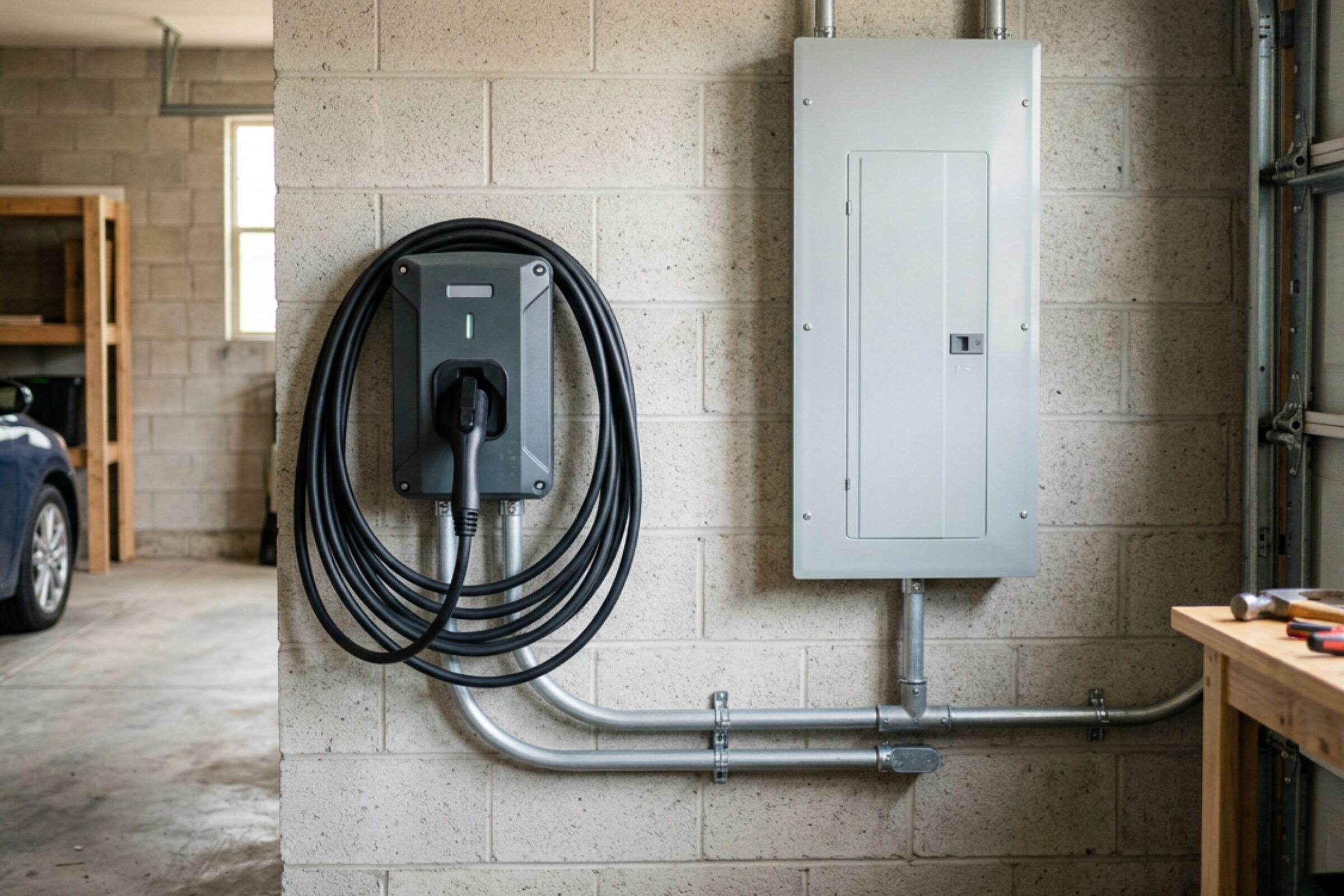
EV charger installation is becoming common in detached homes, townhouses, strata buildings, and workplaces. It is a useful upgrade, but it can also become a major new electrical load if nobody thinks about timing.
The cheapest or smartest option is not always the highest-amperage charger. Sometimes a properly sized charger with scheduled overnight charging is the better call. It reduces strain on the electrical system, works well with off-peak habits, and may avoid the need for bigger service changes right away.
This is where homeowners should be careful about shortcuts. Improper EV charging setups can overload circuits, overheat conductors, or create problems inside the panel. A licensed electrician can check available capacity, confirm the right breaker and wire size, and see whether load management makes sense.
Commercial buildings often waste energy in boring places
Commercial electrical savings are rarely dramatic. They tend to come from ordinary things that nobody bothered to revisit.
Lighting is a classic example. Offices, retail units, storage areas, stairwells, washrooms, and back-of-house spaces often run on a one-size-fits-all schedule, or no schedule at all. Occupancy sensors, photocells, timer controls, and LED retrofits can cut waste without making the space harder to use.
Then there is plug load creep. Small appliances, printers, display screens, under-desk heaters, and battery chargers spread slowly through a business until the electrical bill starts looking heavier than expected. These loads are easy to ignore because each one feels minor. Together, they are not minor.
Refrigeration, ventilation, and exhaust systems can also drift into waste when controls fail or schedules are outdated. A fan that runs all weekend in an empty unit might not sound like a big deal. Over a year, it becomes one.
For business owners and property managers, one of the best habits is reviewing actual operating hours against electrical operating hours. If the business closes at 6 p.m. but lights, signage, makeup air, and office devices effectively close at midnight, the system is working for no reason.
Demand charges can hit harder than people expect
This point matters more for commercial electrical and industrial electrical clients than for most homes. Utilities often charge not only for total energy use, but also for peak demand. That means a short burst of high consumption can cost more than people expect.
Electricians help here by looking at what turns on at the same time. Large HVAC units, kitchen equipment, compressors, chargers, pumps, and process loads can stack on top of each other and create a peak that drives costs up.
Sometimes the fix is simple scheduling. Start one major load a few minutes later. Use staggered timers. Separate heavy equipment so everything does not ramp up at once in the morning. In other cases, the answer is upgrading controls or rethinking how a panel or subpanel is laid out.
This is one of those areas where a little planning beats constant frustration. You do not always need less equipment. You may just need it to stop waking up all at once.
Industrial sites save energy through maintenance, motors, and control logic
Industrial electrical systems bring their own kind of waste. It is less about forgotten lamps and more about motors, feeders, controls, and uptime habits.
Motors are often the big one. If a motor runs continuously when intermittent operation would do the job, energy gets burned with no real benefit. If it starts under heavy load too often, that adds stress and cost. Variable frequency drives can help in the right applications because they let motors run at the speed the process actually needs rather than full tilt all the time.
Control logic matters too. Many sites inherit equipment settings from a previous tenant, a past process, or a quick repair done years ago. The system still works, so nobody touches it. That is understandable. It is also how waste becomes normal.
Electrical maintenance has a role here that people sometimes underappreciate. Loose terminations, failing contactors, overheating breakers, worn disconnects, and voltage imbalance can all make equipment run poorly. Poorly running equipment usually costs more to operate before it fails.
In industrial settings, energy savings and reliability are tied together. A system that is electrically healthy tends to be cheaper to run.
A 30-minute walkthrough you can do before calling anyone
Before booking electrical services, it helps to do a simple walkthrough of the property. You do not need test gear. You just need honesty about what is actually happening.
-
Walk the space at a time when it should be mostly idle. Note every light, fan, screen, heater, charger, and machine still running.
-
Check rooms or areas that are rarely used. Guest rooms, storage spaces, meeting rooms, utility rooms, and back corridors are common spots for wasted power.
-
Listen for equipment that runs continuously. Bathroom fans, sump systems, old refrigerators, compressors, and circulation pumps can become background noise you stop noticing.
-
Open the panel directory if it is safe and accessible. If labels are missing, vague, or clearly outdated, that is useful information. Poor labeling often goes with poor load management.
-
Think about recent changes. A new freezer, server rack, tenant improvement, workshop tool, or EV charger can shift your electrical demand more than people realize.
-
Write down any warning signs, including warm plugs, flickering lights, buzzing, burning smells, or frequent breaker trips.
That last point matters. If you see signs of overheating or repeated electrical faults, stop thinking about efficiency for a moment. That is a safety problem and may require 24/7 emergency service, not a routine energy review.
When it makes sense to bring in licensed electricians
There is a decent amount you can do on your own, especially with lighting habits and scheduling. But some energy problems are really electrical system problems in disguise.
Bring in licensed electricians when:
You have an older panel and rising electrical use.
Breakers trip when normal appliances run together.
Lighting flickers or changes brightness without a clear reason.
You are planning EV charger installation.
You suspect circuits are overloaded.
A commercial space has equipment running outside business hours.
An industrial site has unexplained heat, nuisance shutdowns, or motor issues.
You are considering wiring upgrades to support renovation, expansion, or heavier loads.
In homes, this often starts with comfort and convenience. In businesses, it often starts with a bill that feels wrong. In industrial settings, it may start with reliability problems. Different entry point, same basic idea: the system needs a closer look.
Energy savings are better when they are boring and repeatable
The best energy-saving moves are not always exciting. They are often practical, almost annoyingly practical. Better controls. Cleaner scheduling. Right-sized circuits. Safer wiring. Equipment that shuts off when nobody needs it.
That is the real takeaway from electrician-led efficiency work. You do not need magic. You need the electrical system to match the building, the equipment, and the way people actually use the space.
For homes in Vancouver, retail units in the greater Vancouver area, and larger facilities across the lower mainland, the pattern is usually the same. Small waste hides inside routine. Once you find it, the fixes are often straightforward. And when they are not, the right upgrade tends to pay off in safety, reliability, and lower energy use at the same time.