
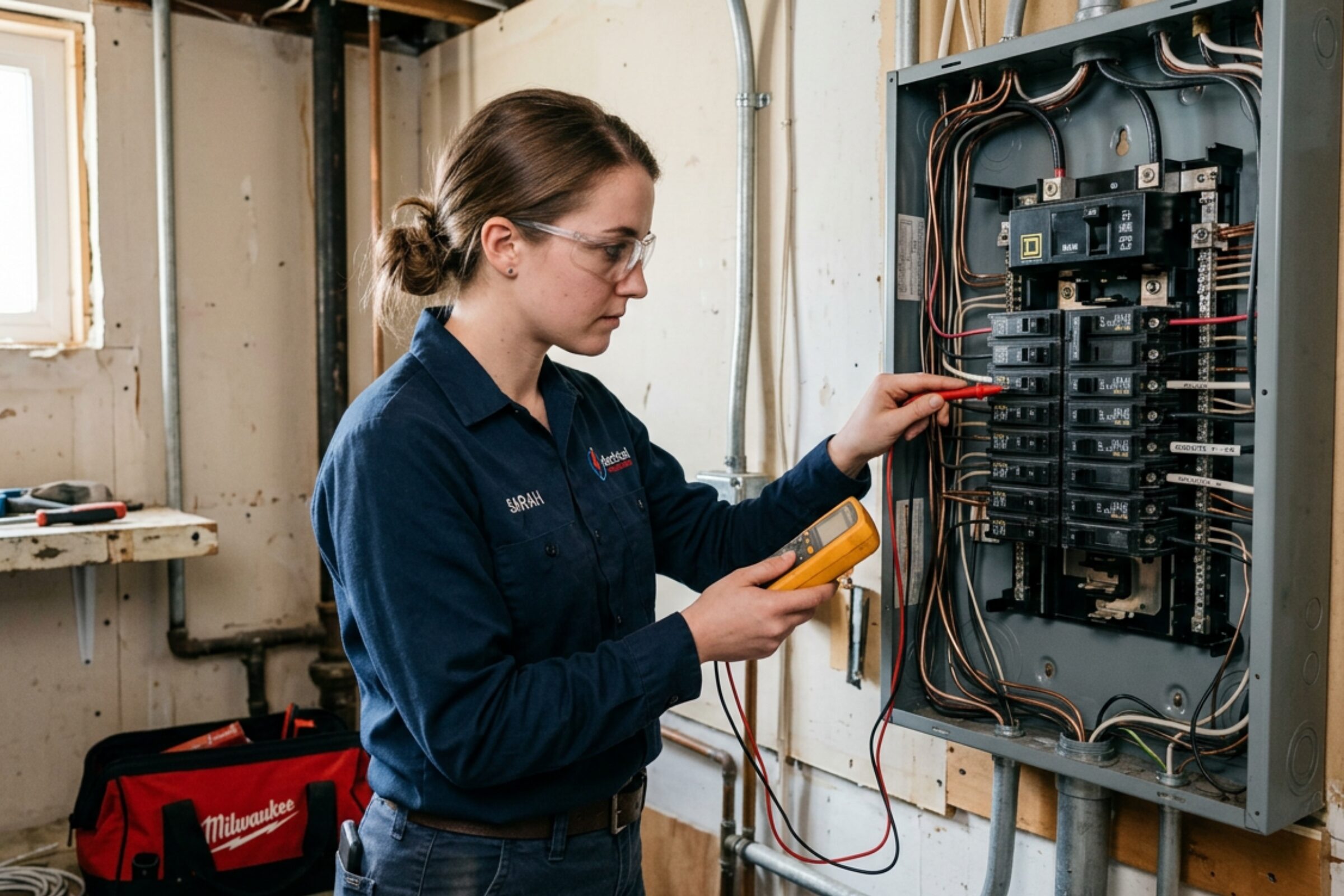

A heat pump, an EV charger, or a new suite can change how a home uses electricity. It is reasonable to wonder whether a 100-amp service will still be enough. It is also easy to assume that the answer is automatically no.
That assumption can lead to an expensive detour. Some homes have room for new equipment on their existing service. Others need a way to manage when large loads run. Some do need an upgrade. The useful question is not “Does this project require 200 amps?” It is “What will the home’s demand be with this project added, and can the existing electrical system safely support it?”
A licensed electrician can answer that question with a load calculation. In British Columbia, the calculation is also part of the electrical permit process. Getting it done early gives you a sound basis for choosing equipment, planning costs, and deciding whether service work belongs in the project at all.
What your service rating does, and does not, tell you
A home’s electrical service rating, often 100A, 125A, or 200A, describes how much current the service is rated to carry. It does not tell you how much capacity is available right now.
Imagine two homes with 100A services. One has gas space and water heating and relatively few large electrical loads. The other has electric baseboards, an electric water heater, a range, and a dryer. The same EV charger may be straightforward to accommodate at one property and require further planning at the other.
Demand also depends on which equipment is likely to run at the same time. Adding the nameplate ratings of every appliance does not, by itself, describe a household’s normal peak. That is why electrical codes use load-calculation methods rather than relying on a quick count of devices.
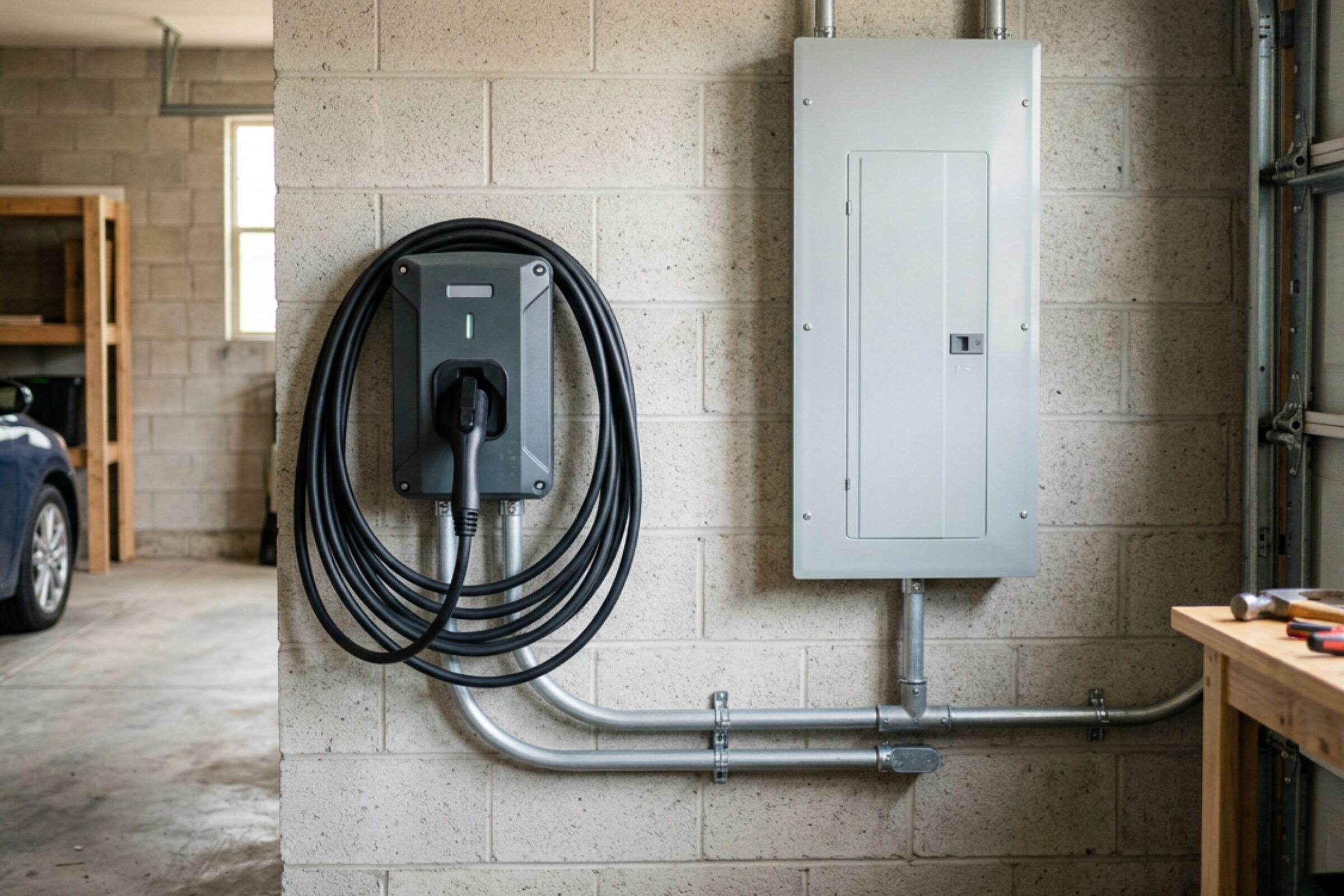
The service is only part of the picture. A contractor must also check the panel’s rating and condition, space for breakers, the proposed circuit, and whether any wiring upgrades are needed. A panel change and a service-capacity increase are related but different jobs. You may need a panel modification without increasing the service rating, or service work that involves more than the panel.
How electricians calculate the load
A load calculation compares the home’s existing electrical demand, the proposed new load, and the capacity of the service. For an EV charger installation, the electrician needs the charger’s intended operating current and installation details. For a heat pump, the specifications matter, especially if electric backup heat is part of the system.
There are two main ways to assess existing demand: a traditional calculated-load method and, when eligible, a method based on actual meter data.
The traditional calculated-load method
This method uses code-based formulas and assumptions about the home. Inputs can include floor area and the electrical equipment installed or planned. The calculation accounts for how loads are expected to contribute to demand rather than assuming every device runs at full power continuously.
Its strength is that it works without a year of utility records. That makes it suitable for new construction, recently occupied homes, and properties where complete usage data is unavailable. Its limitation is that standardized assumptions may not closely match how a particular household uses electricity. That does not make the method wrong; it means it answers the question using an accepted model rather than the home’s recorded history.
The meter-data method
Since 2023, Technical Safety BC has approved a method that uses a continuous 12 months of electricity-use data to assess existing demand. A contractor can examine the home’s recorded peak and apply the approved formula, then account for the proposed equipment.
Meter data can be especially helpful when a traditional calculation suggests a service upgrade but the household’s actual peak use has been lower. It is not an automatic exemption from an upgrade. The new load still has to be evaluated, and the method must be acceptable to the authority responsible for the permit. Not every contractor uses it, so ask about it when requesting an assessment.
This approach needs a full year of suitable account data. It cannot be used for a newly built home without that history, a property occupied for less than 12 months, or an account that cannot provide the required continuous record. In those cases, the traditional method remains available.
How to get your electricity-use data
Your electrician generally cannot enter your utility account to retrieve your records. You will need to export the file and give it to them. In a utility portal with the export options described here, the process is:
-
Sign in and open the data export center.
-
Choose “consumption history” as the export type.
-
Select the previous 12 months as the date range.
-
Set the interval to hourly and submit the export request.
-
Download the file when the utility emails you that it is ready, then share it with your contractor.
The file is generally prepared within 24 hours, though the portal will control the actual timing. If you cannot find the export settings, ask the utility how to obtain hourly consumption history rather than sending your electrician a bill summary. Monthly totals do not show the short periods when demand was highest.
Hourly data requires careful interpretation. The largest hourly reading, measured in kilowatt-hours, describes energy used over that hour. It is not a direct reading of instantaneous amperage. The electrician applies the approved Technical Safety BC or municipal method to convert and assess the data, then compares the resulting demand with the service rating.
For a simplified example, suppose the approved calculation indicates existing demand below the limit of a 100A service. The difference is potential room to consider a new load, not a promise that every device with a smaller amp rating will fit. The proposed equipment, calculation rules, and any required load management still determine what can be installed.
Check the less expensive options before committing to an upgrade
A service increase can involve a new panel or other equipment, permits, utility coordination, and scheduling around an interruption of power. If the load calculation shows limited room, it is worth asking whether you can manage the new demand within the existing service.
Manage when equipment uses power
An electrical energy-management system monitors loads and adjusts selected equipment so demand stays within an approved limit. This can be useful when an EV charger would otherwise push the calculation beyond the service capacity.
EV power management can reduce or pause charging when the home’s other loads are high, then allow more charging when capacity is available. For many households, that trade-off is workable: a car can charge more slowly during a busy evening and continue overnight. Your electrician should confirm that the specific equipment and installation approach are permitted for the project. Rebates may be available under some programs, subject to eligibility.
Power-sharing equipment addresses a related situation. Where two compatible loads are designed to share available power on a circuit or service, a controller allocates capacity between them. The details matter. Do not assume two large appliances can simply be connected to one circuit because they are unlikely to run together; that arrangement needs appropriate equipment and an approved design.
Remove loads that are truly going away
Replacing electric baseboard heating with a heat pump may change the home’s electrical demand, particularly if the baseboards are removed from the installation rather than kept for backup. Tell the electrician what will remain operational. Equipment that is still connected and available for use cannot necessarily be ignored in a load calculation.
The same question applies to an unused second refrigerator, freezer, or other fixed equipment. Removing a load may help, but merely promising not to turn it on is different from disconnecting it as required for the calculation. Have the contractor identify which changes count under the applicable rules before making decisions around them.
Improve efficiency, but keep the peak in mind
Insulation, windows, and doors can reduce heating and cooling needs. More efficient water heaters and appliances can also lower electricity consumption, and eligible efficiency renovations may qualify for rebates.
There is an important distinction, though: a lower annual electric bill does not always mean a lower electrical peak. Replacing a refrigerator with a more efficient model may save energy over the year while making little difference to the demand calculation for an EV charger. By contrast, choosing equipment with a smaller electrical input or reducing a major heating load may materially affect the design. Ask your electrician which proposed improvements change the permitted load calculation, not only which ones save energy.
Everyday habits can reduce waste and costs, too. They are worthwhile, but a safe installation cannot usually depend on everyone remembering to avoid running the dryer when the car is charging. If coordinating loads is necessary for service capacity, use an approved control system.
When a service upgrade is the sensible choice
Sometimes the calculation shows that the existing service cannot support the new equipment, even after practical load-management options are considered. A service upgrade may also make sense when several substantial projects are planned close together.
Consider the whole property before choosing a rating. An owner who is installing an EV charger now and expects to add a secondary suite later should bring both plans to the first assessment. The same goes for a heat pump, addition, pool, or hot tub. Designing only for the first project can mean reopening the service question sooner than expected.
That does not mean choosing the largest service available “just in case.” Moving from 100A to 200A may be enough for one home’s calculated demand and future plans; another may need a different solution. A substantially larger 320A or 400A service can add equipment and installation costs that may not be justified. Your contractor should recommend a rating based on the load calculation, equipment specifications, household use, and credible future projects.
Before authorizing an upgrade, ask to review the assessment together:
-
What is the existing calculated demand, and which method was used?
-
How does each proposed project affect the result?
-
Could an approved management system or removal of an old load avoid or reduce service work?
-
What changes are needed at the panel, service equipment, and utility connection?
Clear answers make it easier to compare an upgrade with alternatives. They also help prevent a misunderstanding about what is included in a quote.
Plan for permits and utility coordination
Service modifications are more involved than adding a branch circuit. Depending on the property, they may require an electrical permit, equipment changes, a utility application or scheduled disconnection, and a new connection. Standard utility connection charges may apply. Utility procedures can also differ for alterations rated at 400A or less and those exceeding 400A, so the proposed service size affects the planning process as well as the hardware.
In Vancouver and elsewhere in the Lower Mainland, confirm which authority has jurisdiction over the electrical permit and which utility steps apply to the address. A licensed electrician can establish the load requirements and explain the work that follows. If the project involves a suite or addition, other renovation requirements may affect the overall schedule.
The best time to ask about electrical capacity is before buying equipment or booking installation. Start with the load calculation. Provide a full year of hourly meter data if you have it, describe the projects you expect to undertake, and be specific about old equipment you intend to remove. Then you can choose among using the existing service, managing loads, or upgrading it, based on what the home actually needs.