

Electrical panels need a dry, stable environment to do their job safely. That sounds obvious, but it is easy to overlook in the Lower Mainland, where rain, damp basements, coastal humidity, and aging homes make moisture a routine part of property maintenance.
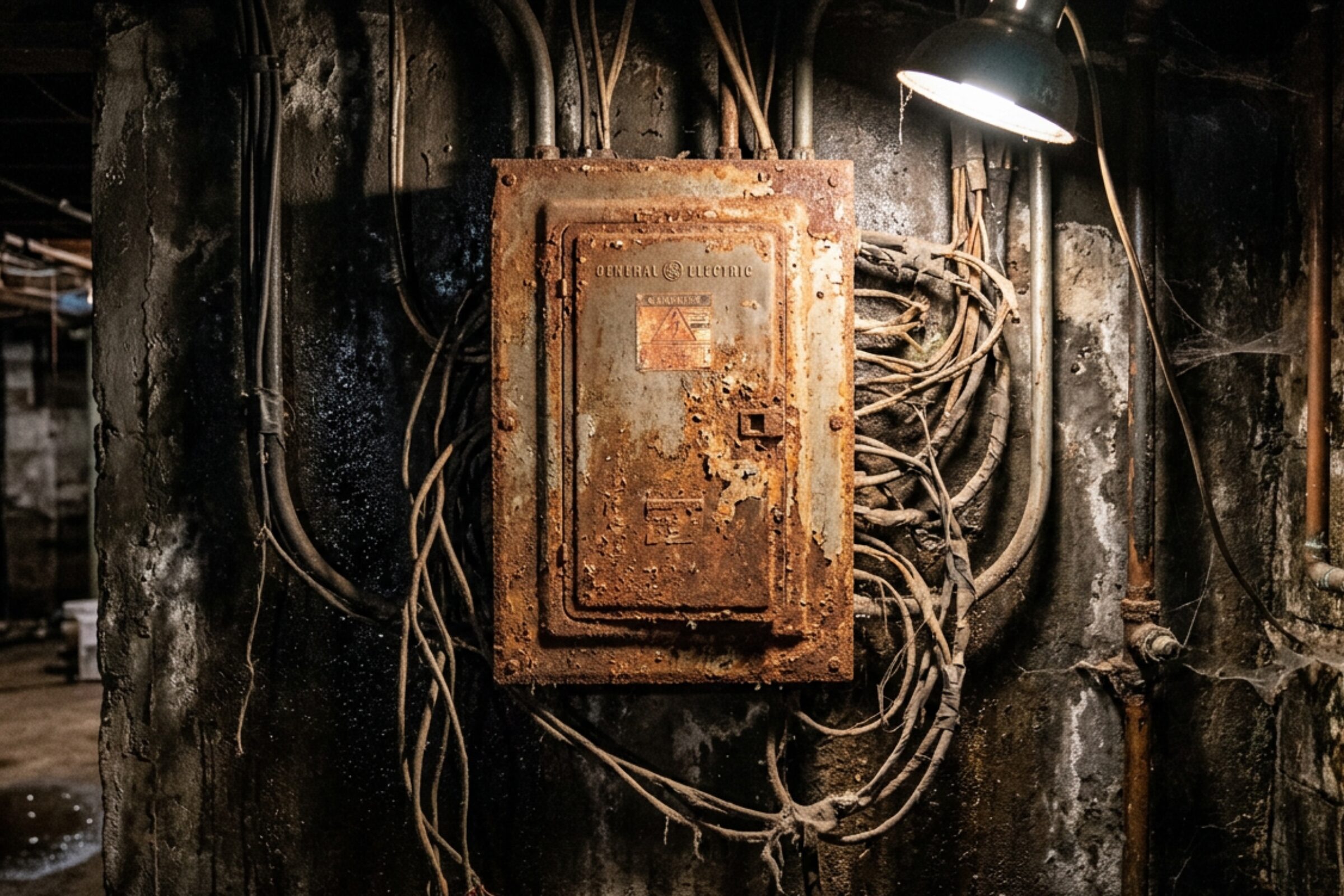
A little rust on a panel door may seem cosmetic. Water staining on the wall above the panel may seem like a drywall issue. Neither assumption is safe. Moisture can corrode terminals, weaken electrical connections, damage breakers, and affect the metal bus bars that distribute power through the home. Left alone, that deterioration can lead to unreliable circuits, overheating, arcing, and, in serious cases, fire.
The good news is that moisture damage is often detectable before it becomes an emergency. Knowing what to look for, and knowing when to call licensed electricians, helps homeowners deal with the root cause rather than simply hoping the problem stays small.
Why electrical panels are vulnerable to moisture
Your electrical panel is the central distribution point for power in the home. It contains breakers, wiring connections, neutral and ground bars, and energized components that should remain protected from water, excessive humidity, and corrosion.
Moisture affects electrical equipment in several ways. Rust can compromise a metal enclosure or fasteners. Oxidation at terminals can interfere with conductivity. Corrosion can loosen connections over time, and loose connections generate heat when electricity flows through them. This is one reason a panel can look mostly normal from the outside while having more serious deterioration behind its cover.
The Lower Mainland’s climate can make the problem worse. Long wet seasons, frequent temperature swings, and high humidity create conditions where condensation forms on cooler metal surfaces. Older homes may also have drainage issues, foundation seepage, limited ventilation, aging plumbing, or building-envelope leaks that bring moisture close to electrical equipment.
A panel installed in a dry utility room may go decades without trouble. A panel in a damp basement, garage, crawlspace-adjacent area, or exterior-facing wall needs closer attention.
Moisture damage is rarely only an electrical problem
When an electrical panel shows signs of water exposure, the first task is to determine where the moisture is coming from. Replacing a corroded breaker without addressing a leak or humidity problem is a temporary fix at best.
Common sources include:
-
Foundation leaks, groundwater seepage, poor drainage, or high humidity in basements and crawlspaces
-
Plumbing leaks near water heaters, laundry areas, bathrooms, or utility rooms
-
Condensation in garages caused by cold weather, wet vehicles, and poor air circulation
-
Rain intrusion through siding, flashing, windows, roof penetrations, or exterior-wall gaps
-
Damp masonry and insufficient ventilation around utility spaces
-
Flooding or a failed sump system
Water stains above or beside a panel often point to a building issue rather than a fault inside the panel itself. That distinction matters. An electrician can identify electrical damage and safety concerns, but a roofer, plumber, restoration professional, or building-envelope contractor may also be needed to stop the moisture source.
It can feel frustrating to discover that one rusty panel screw has turned into a multi-trade repair. Still, solving both sides of the issue is the only dependable way to prevent repeat damage.
Visible warning signs around the panel
Start with what you can see without opening the panel. Homeowners should never remove the dead-front cover or touch internal components. Even when breakers are switched off, parts of the panel may remain energized.
Walk past the panel periodically and look at the enclosure, the wall around it, and the floor beneath it.
Rust and corrosion
Rust on the enclosure, cover screws, hinges, conduit, or breaker handles should be taken seriously, particularly when it appears in more than one spot. Light surface rust does not automatically mean the equipment is unsafe, but it is a reason for an assessment.
Inside the panel, corrosion may appear as white, green, gray, or dark deposits. Those deposits can form around terminals, wiring connections, breaker clips, or bus bars. Because internal corrosion is not visible from the outside, even minor exterior rust can justify a professional inspection if moisture has been present.
Water marks and wall damage
Staining, bubbling paint, peeling drywall, warped trim, or a musty smell near the electrical panel deserves attention. Water marks may be old, but they can also indicate an active leak that only appears during heavy rain, snowmelt, or certain plumbing use.
Pay attention to the location of the stain. Marks directly above a panel may suggest water traveling down from a roof leak, plumbing line, window, or wall cavity. Dampness behind the panel can be just as damaging as direct drips into it.
Condensation or damp surfaces
A panel enclosure should not feel wet or regularly collect condensation. In garages, this can happen after wet vehicles are parked inside or when temperature changes cause moisture in the air to collect on cold metal. In basements, damp air and poor ventilation can create the same result more gradually.
If the area around the panel feels persistently humid, smells musty, or has visible mold growth nearby, the electrical equipment may be exposed to a broader moisture problem.
Electrical symptoms that should not be ignored
Some moisture-related panel problems show up through the way your electrical system behaves. These symptoms can have several causes, so they do not prove that water is involved. They do mean it is time to stop guessing.
Breakers that trip repeatedly
A breaker trips to protect wiring from overloads and faults. One trip after running a space heater, microwave, and toaster on the same circuit is understandable. A breaker that trips repeatedly, especially without an obvious change in use, needs investigation.
Moisture can damage breakers or wiring insulation, create leakage paths, and weaken connections. Repeated trips may also point to an overloaded circuit, a failing appliance, an improperly sized breaker, or a wiring defect. Resetting a breaker over and over is not a repair.
Flickering lights and intermittent power
Lights that dim, flicker, or brighten unexpectedly can be annoying. They can also signal a loose or corroded connection. If multiple rooms are affected, or if appliances shut off and restart without explanation, the source may be at the panel, service equipment, or a major connection.
A single flickering lamp may be a loose bulb. A pattern across several circuits is different. It calls for a licensed electrician.
Buzzing, crackling, heat, or burning odors
Electrical panels should operate quietly. A faint hum from some equipment may occur, but buzzing, sizzling, crackling, or popping noises are warning signs, especially when paired with moisture evidence.
A warm panel cover, a burning-plastic smell, discolored breaker handles, melted components, or visible smoke requires urgent action. Do not touch the panel to investigate. If there is immediate danger, smoke, or fire, leave the area and call emergency services. For electrical conditions that need rapid assessment but do not involve an active fire, a 24/7 emergency service provider can help determine the next safe step.
Why age and capacity still matter
A panel can be dry and still be outdated. In older homes, panel condition and capacity often overlap with moisture concerns.
Many panels have an expected service life of roughly 25 to 40 years, although actual lifespan varies. High humidity, corrosion, poor installation, frequent breaker trips, and heavy electrical demand can shorten it considerably. Older equipment may also lack modern protective devices, such as appropriate arc-fault and ground-fault circuit interrupters.
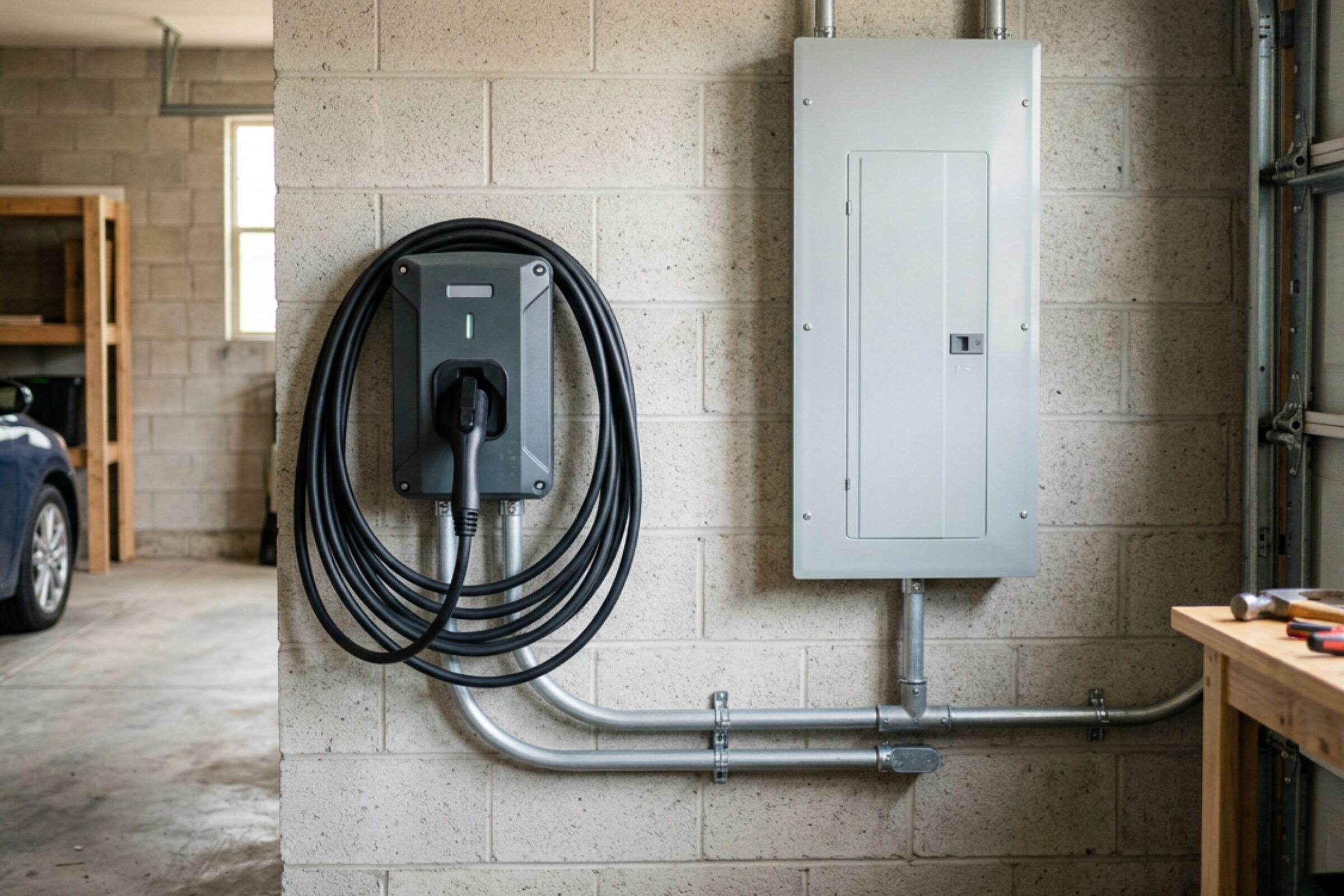
Today’s homes use more electricity than many homes built decades ago. Heat pumps, induction ranges, home offices, workshop equipment, air conditioning, and EV charger installation can add substantial demand. If the panel was already near capacity, adding new loads without a formal evaluation can create overheating risks.
A panel assessment often identifies problems that are not visibly related to water, including:
-
Breakers that are too large for the connected wire size
-
Double-tapped breakers, where two wires share a terminal not designed for them
-
Loose or poorly terminated conductors
-
Missing grounding or bonding components
-
Circuits that are overloaded or improperly modified during past renovations
-
Incomplete circuit labels that make emergency shutoffs harder
-
Obsolete panel designs with known safety concerns
This is why residential electrical inspections are useful before renovations, major appliance additions, or an EV charger installation. The question is not only whether there is an empty breaker space. It is whether the system can safely support the new load.
What a professional electrical panel inspection includes
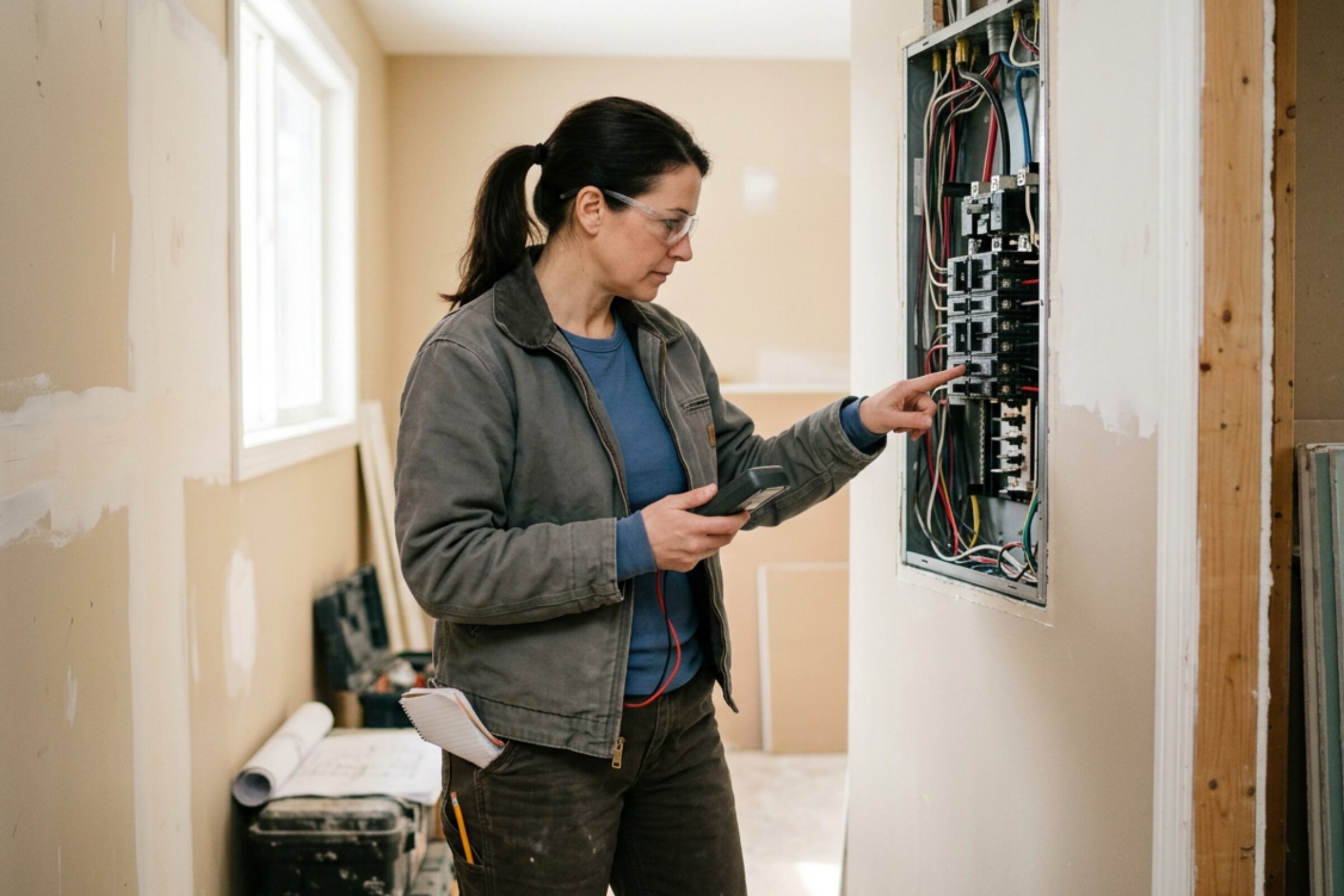
An electrical panel inspection is more than a quick glance at the breakers. A qualified electrician follows safe procedures to inspect accessible parts of the system and identify whether corrosion is localized or part of a continuing moisture issue.
The process commonly begins with the panel enclosure and the surrounding area. The electrician checks for rust, staining, damaged conduit, wall deterioration, and signs that water may be entering nearby. They may ask about flooding, plumbing leaks, roof repairs, condensation, recent renovations, and recurring breaker problems.
After appropriate safety precautions, the electrician can remove the panel’s front cover to inspect internal components. This work should not be done by a homeowner. Energized service conductors can remain live even when the main breaker is off, and there is a real risk of shock, electrocution, or arc flash.
Inside the panel, the inspection may cover breaker condition, conductor sizing, terminations, bus bars, grounding, bonding, overheating, and signs of oxidation. Bus bars are especially important. If they are heavily pitted, corroded, discolored, or heat-damaged, replacing a few breakers may not solve the problem.
The electrician also reviews circuit capacity and current loads. This is particularly relevant for wiring upgrades, electric heating equipment, additions, suites, workshops, or electric vehicle charging.
A written record of findings is helpful. It gives homeowners a clear view of what needs immediate repair, what should be monitored, and what work may need to be coordinated with other trades.
Repair or replacement: how the decision is made
There is no single answer for every corroded panel. A minor, isolated issue may be repairable if the moisture source has been corrected and the core equipment remains in good condition. Repairs might involve replacing damaged breakers, correcting loose connections, improving grounding and bonding, or updating circuit labels.
More severe corrosion changes the calculation. Replacement may be the safer route when bus bars are damaged, the enclosure is compromised, equipment is obsolete, water has affected multiple components, or the panel lacks capacity for current household needs.
This is often where homeowners face a practical decision. A targeted repair may cost less now, while a panel upgrade may make more sense if the home also needs wiring upgrades or additional capacity in the near future. For example, an older panel that has corrosion, limited spaces, and no room for an electric vehicle charger may not be a good candidate for piecemeal work.
For Vancouver and the greater Vancouver area, electrical services should account for local moisture conditions as well as the property’s age and planned use. A modern panel is not immune to water damage, but properly installed equipment in a dry, well-maintained location has a much better chance of lasting.
When to schedule an inspection
Arrange a professional assessment promptly if you notice rust, oxidation, water staining, dampness, repeated breaker trips, flickering lights, unusual sounds, heat, or burning smells near the panel.
It is also smart to schedule an inspection when:
-
You are buying an older home
-
A leak, plumbing failure, or flood occurred near electrical equipment
-
You are planning a renovation or adding major electrical loads
-
You are considering an EV charger installation
-
The panel has not been reviewed in years
-
A home inspector identifies electrical concerns during a sale
-
Your insurer requests electrical documentation or correction of hazardous equipment
Commercial electrical and industrial electrical systems face similar moisture risks, but the stakes and equipment requirements can be different. Larger facilities may have more complex distribution equipment, heavier loads, and a greater need for documented maintenance. In any setting, water exposure around electrical equipment deserves a prompt response.
A safer way to respond to panel moisture
If you find water near the panel, keep people away from the area and do not remove the cover. Do not spray cleaners, use a hair dryer, scrape corrosion, or try to tighten connections. Those actions can make a dangerous situation worse.
If it is safe to do so and you can reach the main breaker without standing in water or touching wet equipment, turning off power may be appropriate. If there is any uncertainty, leave it alone and call for professional help.
Rust and water stains around a panel are not always an emergency, but they are never merely decorative flaws. They are clues. A careful inspection can identify whether the issue is a manageable moisture condition, a repairable electrical defect, or a panel that should be replaced before it fails.