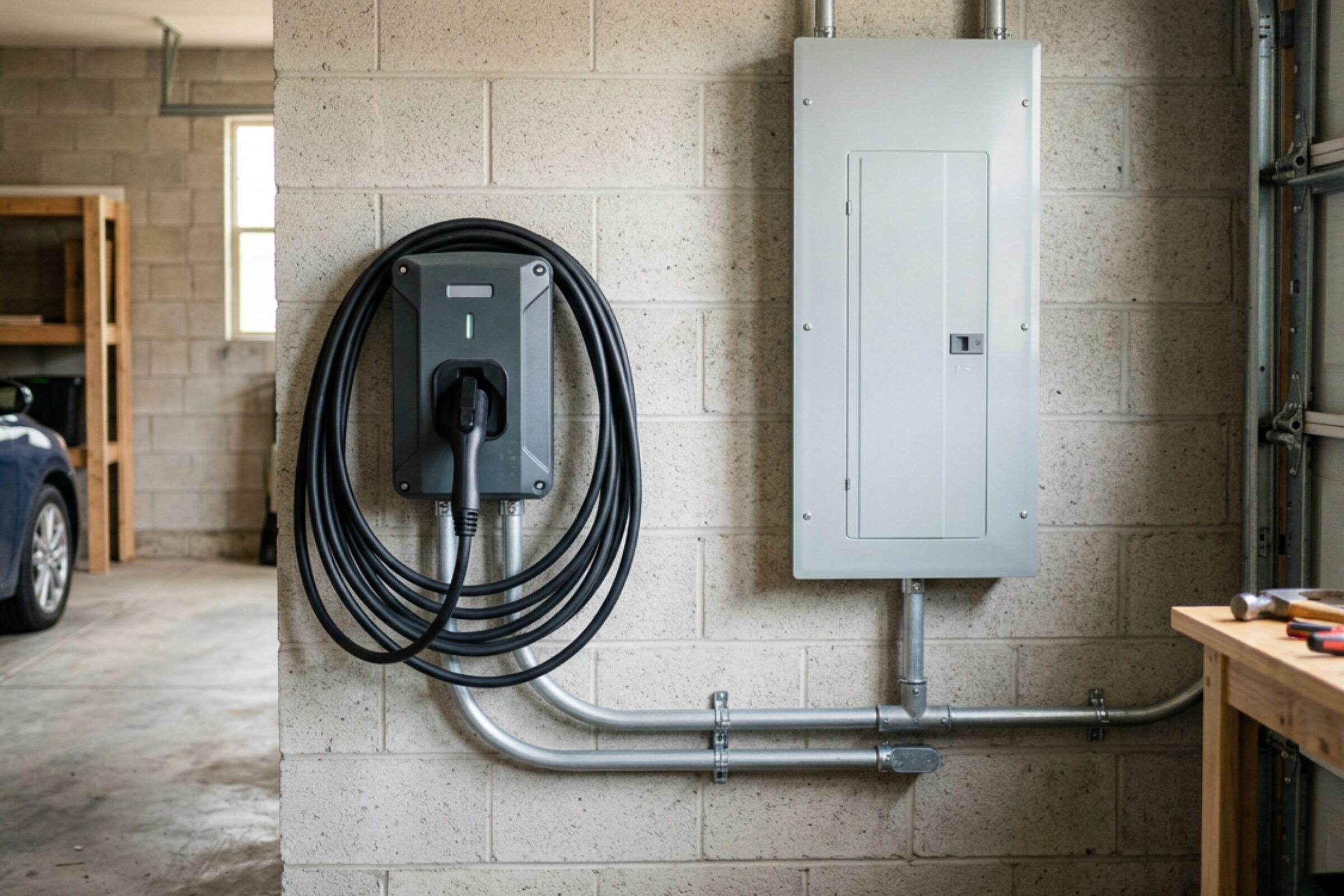

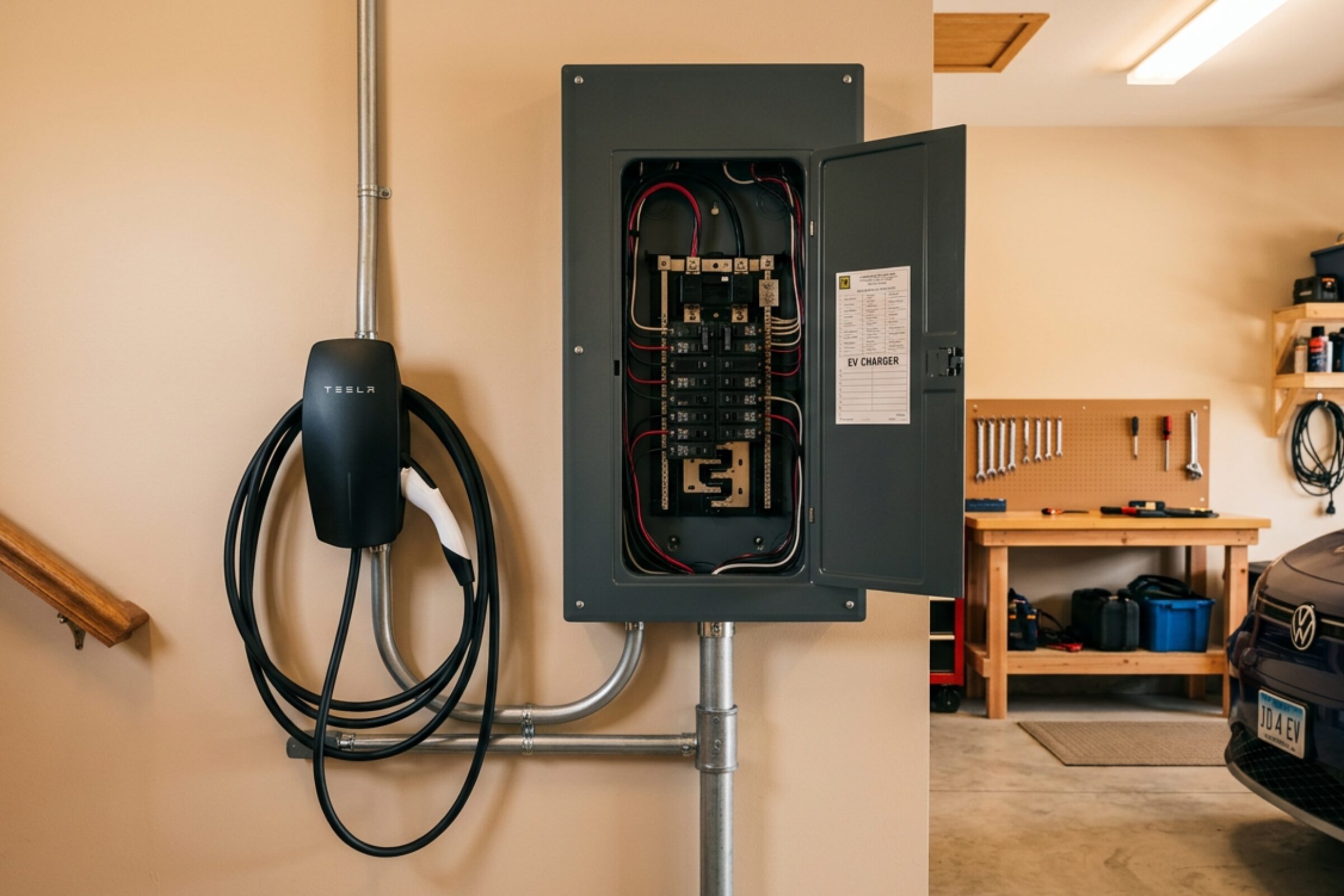

A Level 2 EV charger can make daily driving much easier. You arrive home, plug in, and wake up with enough range for the next day. But before installation, there is one question that matters more than charger brand, cable length, or app features: can your home’s electrical system safely handle the added load?
For many homes, the answer is yes. A standard Level 2 charger installation often fits within the available electrical capacity without major changes. In other homes, especially those with electric heating, older service equipment, large appliances, or plans for future upgrades, available capacity may be tight.
That does not automatically mean a costly panel or electrical service upgrade is the only answer. An EV power management device may allow the charger to operate safely within the limits of the existing service. The right choice depends on the house, the charger, current electricity use, and what you plan to add later.
Here is how EV load management works, how it compares with wiring upgrades and service upgrades, and what to discuss with licensed electricians before moving forward.
Why EV Charger Installation Starts With Electrical Capacity
Level 2 EV chargers use 240-volt power and charge much faster than a typical household outlet. Their electrical demand varies by charger and vehicle, but many residential chargers draw 32, 40, 48, or more amps while operating.
That load is significant because EV charging is usually treated as a continuous load. In practical terms, the branch circuit needs extra room beyond the charger’s listed operating current. A charger that draws 40 amps, for example, commonly needs a 50-amp circuit.
The circuit itself is only one part of the equation. An electrician must also consider:
- The breaker panel’s available space and rating
- The electrical service size, often 100, 125, 150, or 200 amps
- Existing large electrical loads, such as dryers, ranges, electric heat, hot tubs, and air conditioners
- The type and condition of the panel and service equipment
- The home’s actual peak electricity demand
- Planned additions that may increase demand later
A home can have an open breaker position but still lack enough service capacity for a new high-powered charger. Conversely, a home with a modest service may have sufficient capacity once its real usage is reviewed. This is why a panel inspection alone does not tell the whole story.
Electrical capacity calculations are about safety. If demand exceeds what the circuit, panel, or service can safely support, breakers may trip. In worse situations, equipment can overheat or deteriorate over time. The goal is not to squeeze one more load into the system. It is to make sure the system has a safe, code-compliant plan for supplying power.
What an EV Power Management Device Does
An EV power management device controls charging when the home is approaching its available electrical limit. It does not create more power. It prevents the EV charger from adding demand at the wrong moment.
That distinction is worth keeping clear. A panel or service upgrade increases the capacity available to the home. Load management works within existing capacity by treating EV charging as a flexible load.
An electric vehicle is particularly suited to this approach. Most cars sit parked for many hours, often overnight. If charging pauses briefly while the dryer runs or while household electricity use rises, the driver may never notice. The car can resume charging when demand falls.
There are two common approaches: branch-circuit sharing and feeder monitoring.
Branch-Circuit Sharing
Branch-circuit sharing lets an EV charger coordinate with one other appliance, often a clothes dryer. The charger and appliance share a circuit through an approved management device.
When the dryer starts, the device either stops the charger or reduces the power going to it. Once the dryer cycle ends, charging resumes. The two loads are not expected to run at full power at the same time.
This option can make sense when a dryer circuit is conveniently located near the parking area and the home’s electrical setup supports this type of installation. It can avoid running a separate large branch circuit in some cases, though the details depend on the equipment and local electrical code.
There is an obvious tradeoff: charging may pause whenever the shared appliance operates. For many households, that is not a serious problem. A dryer generally runs for an hour or two, while a vehicle may be plugged in all night. Still, it is worth thinking honestly about your routine. If the vehicle needs a quick turnaround between evening trips, a shared circuit may feel restrictive.
Feeder Monitoring
Feeder monitoring takes a broader view. Instead of watching one appliance, the device monitors the home’s total electrical demand at the service or panel feeder.
When household demand rises toward a pre-set limit, the device tells the EV charger to reduce power or stop charging. Once demand drops, the charger can resume at its normal setting.
This approach is often more flexible because it responds to what is actually happening across the whole home. A family might be cooking dinner, using electric heat, running laundry, and charging an EV at the same time. Feeder monitoring can prioritize the loads that are already in use and temporarily make the EV wait.
The charger remains a lower-priority load, which is usually reasonable. You need the oven, heat pump, water heater, and household outlets to work when needed. Your car battery can typically wait an hour.
Some systems reduce charging current in stages rather than shutting it off completely. Others pause charging until capacity returns. The exact behavior depends on the approved device and charger compatibility.
When Load Management Makes Sense
Most Level 2 EV charger installations do not need a power management device. Homes with sufficient service capacity and a suitable panel can often add a dedicated circuit and charger through a conventional installation.
Load management becomes more relevant when an electrician determines that the charger would otherwise require an electrical service upgrade. It may be a practical answer for a home with a 100-amp service, particularly if the house already has several large electric loads.
It can also be useful for homeowners who want to preserve capacity for work planned later. Perhaps you are considering a heat pump, electric water heater, induction range, workshop equipment, or hot tub. Adding an EV charger without considering those future loads can create an awkward surprise when the next project comes along.
A power management device may allow you to install home charging now while keeping your options open. Still, it is not a cure-all. If a home is moving steadily toward full electrification, a service upgrade may eventually be the cleaner, more durable choice.
Think of managed charging as a traffic signal. It keeps vehicles moving safely through an intersection with limited space. It does not add lanes to the road.
When a Panel or Service Upgrade Is the Better Call
A panel upgrade and an electrical service upgrade are sometimes used as if they mean the same thing. They are related, but they are not always identical.
A panel upgrade may involve replacing an older or smaller breaker panel with a modern panel that has more spaces or a higher bus rating. This can help when the issue is lack of breaker space, aging equipment, or compatibility with new circuits.
An electrical service upgrade is more extensive. It may involve increasing the service capacity, such as moving from 100 amps to 200 amps. This can require new service conductors, meter equipment, a panel replacement, utility coordination, permits, and inspection.
A full upgrade may be the stronger long-term decision when several major electrical loads are already installed or planned. Examples include:
- Electric baseboard or resistance heating
- A heat pump with electric auxiliary heat
- An electric range and clothes dryer
- A hot tub, sauna, or large workshop equipment
- A second EV charger
- A future suite or major renovation
- Solar, battery storage, or extensive electrification plans
There is no universal rule that says every EV-owning household needs 200-amp service. Plenty of homes charge vehicles safely on smaller services with proper calculations and controls. But if the home will soon rely on multiple high-demand electrical systems, continually managing one charger may become frustrating.
A service upgrade gives the home more room to grow. It can also be the sensible route if the existing panel is outdated, damaged, overcrowded, or unsuitable for new equipment. In those situations, load management may address the immediate charger question without addressing the larger electrical problem.
The Importance of an Electrical Load Assessment
Before deciding between managed charging and wiring upgrades, ask for a proper electrical capacity assessment. This is not the place for guesses.
A qualified electrician will inspect the panel and service equipment, identify major loads, review the charger’s requirements, and complete the applicable demand calculation. They should also ask about future plans. That conversation matters more than many homeowners expect.
If you tell the electrician you plan to install a heat pump in two years, add a hot tub next summer, or convert a garage into a workshop, the EV charging plan should account for it now. A cheaper installation that blocks the next project is not always a bargain.
Reviewing electricity-meter data from the previous 12 months can be helpful as well. Real consumption data may show how much demand the home reaches during different seasons. Winter peaks are particularly relevant for homes with electric heating. A household that seems lightly loaded in July may tell a different story during a cold January evening.
The electrician should also confirm whether the selected charger can work with the proposed power management device. Compatibility is not something to assume. Some systems use direct communication with the charger, while others control power through a separate contactor or controller.
Permits and inspections are part of the process, too. A permitted EV charger installation helps confirm that circuit sizing, grounding, equipment placement, and load calculations meet local requirements. In the Greater Vancouver area, permit responsibilities and local rules can vary by municipality, so it is wise to clarify who will handle the paperwork before work begins.
What Charging Interruptions Feel Like in Daily Life
People sometimes hear “charger shutoff” and picture coming out to an uncharged car every morning. That can happen if the charging window is too short or the home routinely operates near its limit, but it is not the typical experience when the system is properly designed.
Consider a driver who gets home at 6 p.m., plugs in, and needs 25 kilowatt-hours before leaving at 7 a.m. Even if the charger pauses during dinner, laundry, or a period of high heating demand, there may still be plenty of overnight time to replenish the battery.
The practical question is not whether charging ever pauses. It is whether the vehicle gets enough energy before the next drive.
Your driving habits matter. A household with one EV, moderate daily mileage, and long overnight parking periods may be very comfortable with managed charging. A household with two EVs, late-night arrivals, early departures, and high daily mileage may benefit more from increased service capacity or a carefully planned multi-charger system.
It also helps to use vehicle and charger scheduling. Many drivers can set charging to begin after peak household activity has slowed down. This may reduce interruptions and, where time-of-use electricity rates apply, lower charging costs.
Rebates for Eligible Power Management Devices
In some utility rebate programs, eligible single-family-home customers can receive an additional $200 rebate for installing an approved EV power management device with an eligible Level 2 charger.
These programs are intended to help households that have limited electrical capacity but still want practical home charging. The device can make an EV charger installation possible without immediately moving to a larger electrical service.
Eligibility commonly depends on several conditions. The customer may need to live in a detached home, row home, duplex, or mobile home and receive service from the utility offering the program. The EV charger and power management device must generally be on the program’s approved lists, and installation must meet the program’s stated date requirements.
An approved electrical permit is usually required. The electrician often arranges the permit, but homeowners should confirm this rather than assume it has been handled.
There is typically no separate rebate application for the power management device. After the eligible charger and approved device are installed, the homeowner applies through the relevant home EV charger rebate program. If approved, the additional amount is included with the charger rebate payment.
One detail can trip people up: retroactive installations may not qualify. Check the program rules before purchasing equipment or booking work. If a device is not listed as eligible, the manufacturer and model may sometimes be submitted to the rebate administrator for review, but approval should never be assumed.
Questions to Ask Before Choosing a Solution
A good EV charger installation begins with a few direct questions:
- Does my home have sufficient capacity for the charger I want?
- Is the issue my panel, my electrical service, the charger circuit, or all three?
- Would a lower-amperage charger meet my actual driving needs?
- Is a branch-sharing device or feeder-monitoring system compatible with my panel and charger?
- How often is charging likely to pause under normal household use?
- What electrical additions should be included in the load calculation?
- Does the work require a permit and inspection?
- Are the charger and power management device eligible for available rebates?
The right answer may be simple. You may need a dedicated circuit and no further changes. Or the assessment may show that feeder monitoring is a sensible way to avoid a major upgrade. In a heavily electrified home, a service upgrade may be the answer that avoids repeated compromises later.
Make the Decision Based on the Whole Home
EV charging is one piece of a home’s electrical system. It should not be planned in isolation.
For homes in Vancouver and across the Lower Mainland, electrical demand is changing. More households are adding heat pumps, electric vehicles, induction cooking, battery systems, and other equipment that replaces fossil-fuel use with electricity. That shift is often worthwhile, but it asks more of residential electrical systems that may have been designed decades ago.
Power management gives many homeowners a safe, practical path to Level 2 charging without immediately replacing service equipment. A panel or service upgrade provides more underlying capacity when the home truly needs it. Neither option is automatically better.
The useful question is simple: what will safely support the way you live now, and the changes you are likely to make next? A load assessment by licensed electricians turns that question into a plan grounded in the actual numbers, rather than a costly guess.