

Your electrical panel usually gets little attention until a breaker trips or the lights go out. That is understandable. A panel should quietly distribute electricity and help protect wiring when a circuit draws too much current.
But some problems develop long before an outage. Repeated trips, unusual sounds, discoloration, or moisture near the panel deserve attention. Recognizing these signs can help you get a problem assessed before it causes equipment damage, electric shock, or fire.
For homeowners in Vancouver, the Lower Mainland, and the Fraser Valley, both the age of a home and exposure to moisture can affect electrical equipment. An older home is not automatically unsafe, and a newer panel is not automatically trouble-free. The condition of the installation matters more than appearances alone.
Here is what you can safely observe, when to call an electrician, and what a professional inspection should cover.
Start With Safety: What Homeowners Should Never Do
A homeowner’s panel check should be limited to observations made from a safe location. Do not remove the panel cover, reach inside, tighten connections, or attempt to replace a breaker yourself.
Even switching off the main breaker does not necessarily make every component inside the enclosure safe. Incoming service conductors and terminals may remain energized. Electrical work also carries an arc-flash risk, which can cause severe burns.
If you notice smoke, flames, active sparking, or a strong burning smell, move away and keep others clear. For suspected fire or immediate danger, leave the home and call 911. Do not use water on an electrical fire or approach a damaged panel to shut it off.
For urgent electrical faults without an active fire, contact a qualified electrical contractor. A provider with 24/7 emergency service may be appropriate when the problem cannot safely wait.
Nine Electrical Panel Warning Signs to Take Seriously
1. Breakers Trip Repeatedly
A breaker trips to interrupt current when it detects a condition it is designed to protect against. An occasional trip may have an obvious cause, such as too many portable appliances operating on one circuit.
Repeated trips need investigation. Possible causes include an overloaded circuit, a short circuit, a ground fault, a faulty appliance, or a problem with the breaker or wiring.
Do not keep resetting a breaker to get through the day. Never install a higher-rated breaker simply to prevent trips. The breaker must be appropriate for the wiring and equipment it protects.
2. Lights Flicker or Dim
A brief change in brightness when a large motor starts can have a different cause than persistent flickering throughout the house. Neither should be diagnosed by guesswork.
Flickering may come from a bulb, fixture, appliance, loose connection, or utility supply issue. It does not automatically mean the panel needs replacement.
Tell the electrician whether the problem affects one light, one room, or the whole house. Lights that suddenly become unusually bright while others dim deserve urgent attention because a neutral connection problem may be involved.
3. The Panel Makes Unusual Sounds
Crackling, sizzling, or popping around electrical equipment is a warning sign. These sounds may indicate arcing or a deteriorating connection.
Humming requires context. Some electrical equipment produces low-level sound during normal operation, but a new, loud, or persistent buzz should be assessed, especially if it occurs with flickering lights, heat, or an odor.
Listen only from a safe distance. Do not move closer or open the enclosure to locate the source.
4. There Is a Burning Smell or Visible Scorching
A hot-plastic smell, smoke, blackened areas, or melted material can indicate overheating. Treat these signs as urgent even if the lights still work.
An electrical connection can overheat without immediately tripping a breaker. “The power is still on” is not evidence that the installation is safe.
Do not reset breakers or investigate inside the panel. Follow the emergency guidance above if there is smoke, active sparking, or suspected fire.
5. The Enclosure Appears Overheated
Excessive heat, heat-related discoloration, or a panel that has become noticeably hotter than usual needs professional attention.
Some warmth can occur during operation, so temperature alone is not a reliable homeowner diagnosis. An electrician can assess whether it is consistent with the equipment and its load.
Do not deliberately touch a suspect panel to test it. Visible damage, odor, or sounds are enough reason to stop and seek help.
6. You Can See Rust, Corrosion, or Moisture
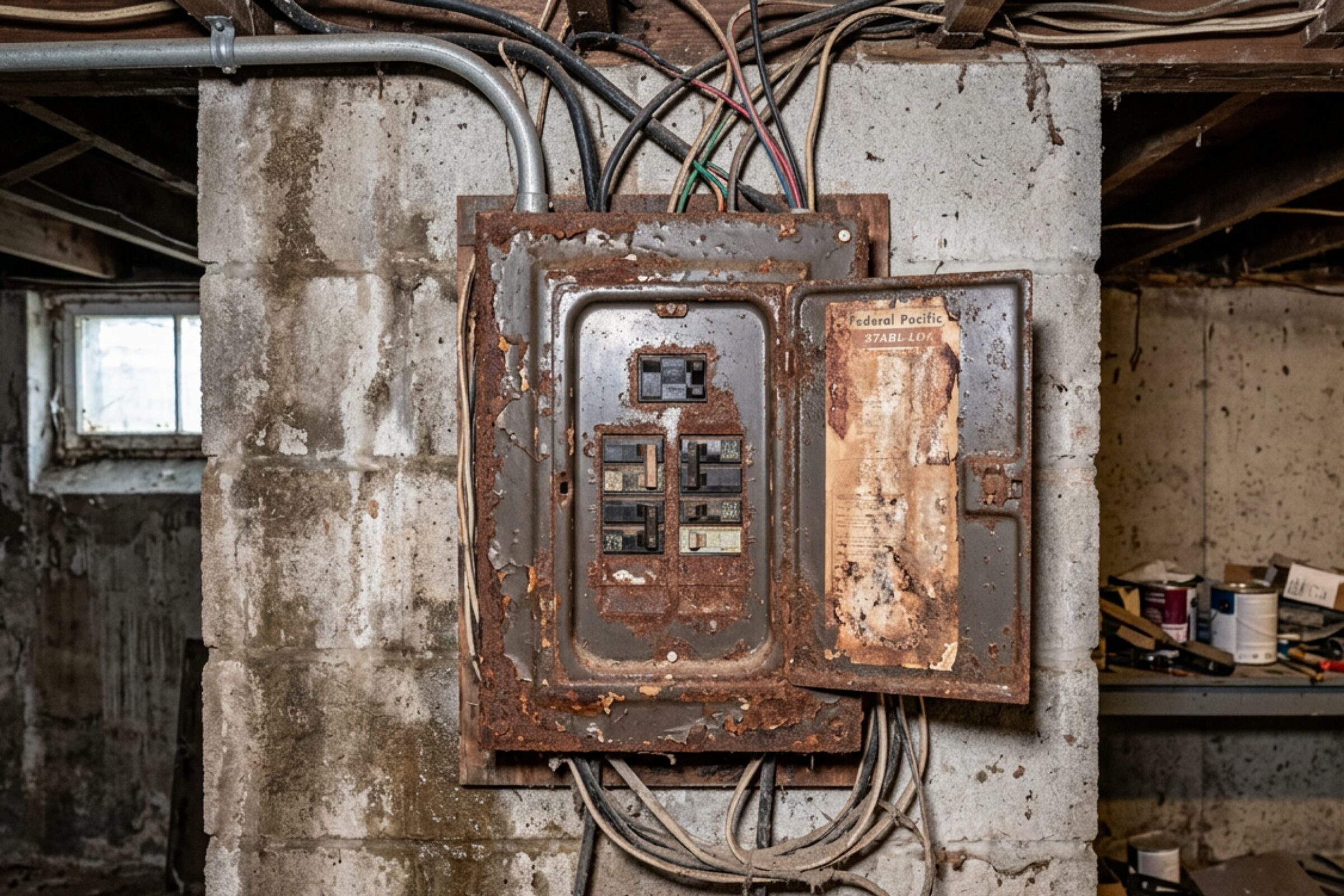
Water and electrical equipment are a dangerous combination. Rust on the enclosure, water stains above it, condensation, or nearby leaks can point to moisture exposure.
In the Lower Mainland’s wet climate, it is worth noticing roof leaks, foundation seepage, and water entering around service equipment. Moisture can corrode connections and damage insulating materials.
Do not touch a wet panel or stand in water near electrical equipment. Both the electrical damage and the source of the water need assessment. Drying the outside does not establish that the equipment is safe.
7. High-Power Appliances Cannot Run Together
If using the microwave and kettle together repeatedly trips a breaker, they may share a branch circuit that cannot support both loads simultaneously. That does not, by itself, prove the entire panel is undersized.
The distinction matters. The solution might involve a dedicated circuit, an appliance repair, wiring upgrades, or a broader service-capacity assessment.
Note which appliances were running and which breaker tripped. Do not deliberately recreate the fault.
8. There Is No Apparent Room for Another Circuit
A full panel becomes relevant when you plan to add electrical equipment. It is not automatically an immediate hazard or proof that the home needs a larger service.
Breaker spaces and electrical capacity are separate issues. A panel can have empty spaces yet lack capacity for a proposed load. Another may have enough calculated capacity but no suitable space for an additional breaker.
An electrician can check the panel’s labeling, permitted breaker configurations, and load calculation. Possible solutions include a suitable subpanel, approved load management, or a panel or service upgrade. Tandem breakers are appropriate only where the equipment is designed and approved for them.
9. The Equipment Is Old, Damaged, or of Uncertain History
Some older equipment designs have documented concerns involving breakers that may fail to interrupt overcurrent properly. Age alone, however, cannot establish whether a particular panel is hazardous.
Missing labels, incompatible breakers, damaged covers, and evidence of improvised work also warrant investigation. A licensed electrician can identify the equipment and check its condition and suitability.
If you have been told your panel has safety concerns, record its make and model from accessible exterior labeling. Do not remove the cover to find more information.
What a Professional Panel Inspection Covers
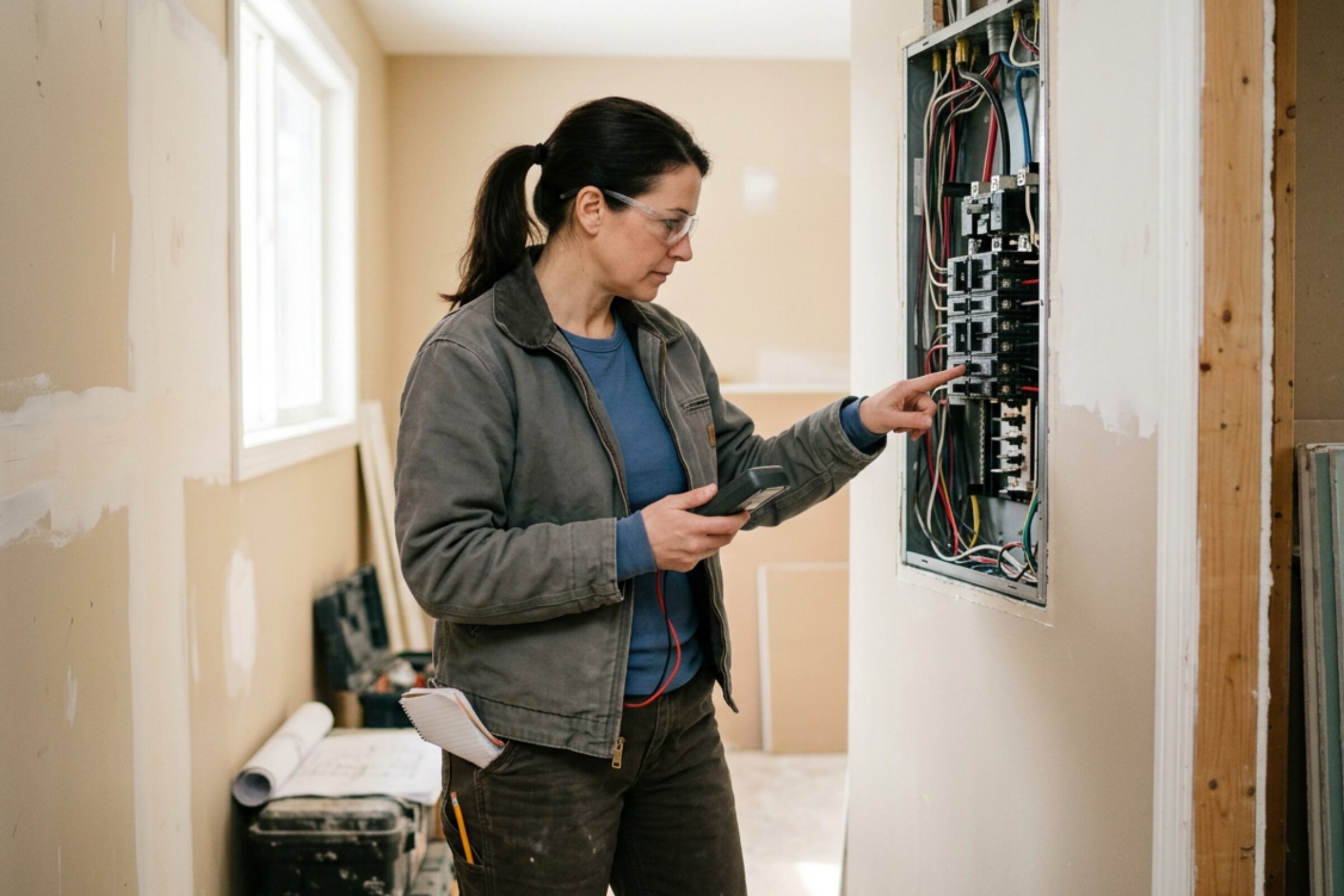
A useful inspection goes beyond looking at the breaker handles. The electrician assesses the equipment, installation, and signs of deterioration, with the exact scope depending on access and whether shutdowns or testing are needed.
The work typically begins with the enclosure and surrounding area. Physical damage, moisture, working clearance, and accessibility all matter. A panel blocked by storage may be difficult to reach during an emergency and may not have the required clearance.
When it is safe to access internal components, the electrician checks breakers, conductors, connections, and bus bars. Melted insulation, discoloration, corrosion, and pitting can reveal overheating or electrical damage.
Breaker ratings must suit the conductors they protect, accounting for applicable installation requirements. The electrician also checks whether connections are suitable for the number and type of conductors installed. Two wires under one terminal are a problem when that terminal is not approved for that arrangement.
Grounding and bonding receive attention because they help limit shock hazards and provide an effective fault-current path. Circuit labeling should be accurate enough to identify what each breaker controls.
Ask for written findings that distinguish immediate hazards, recommended repairs, and optional improvements. An inspection helps identify problems; it cannot guarantee that every concealed defect has been found.
Why Older Homes Need an Individual Assessment
Homes in Surrey, Burnaby, Vancouver, and surrounding communities may have had several rounds of renovations. The visible panel might be relatively recent while older wiring remains elsewhere.
Past work can introduce incompatible components, concealed splices, or circuits extended beyond their intended use. Unpermitted work deserves scrutiny, although a missing permit record alone does not establish the condition of every installation.
Older homes may also lack ground-fault circuit interrupter protection or arc-fault circuit interrupter protection in locations where current rules require them for new work. GFCI protection helps reduce shock risk; AFCI protection addresses certain arcing conditions.
Whether an existing installation must be changed depends on the applicable requirements and the scope of work. A professional assessment should explain those distinctions rather than assume every older installation needs complete replacement.
When Should You Schedule an Inspection?
Warning signs should determine urgency. Do not wait for a routine inspection date when you notice burning odors, repeated trips, corrosion, or unusual sounds.
An assessment is also sensible when buying an older home, when the electrical history is unclear, or before a renovation that adds substantial demand. A general home inspection may flag concerns, but it does not necessarily include a detailed electrical assessment.
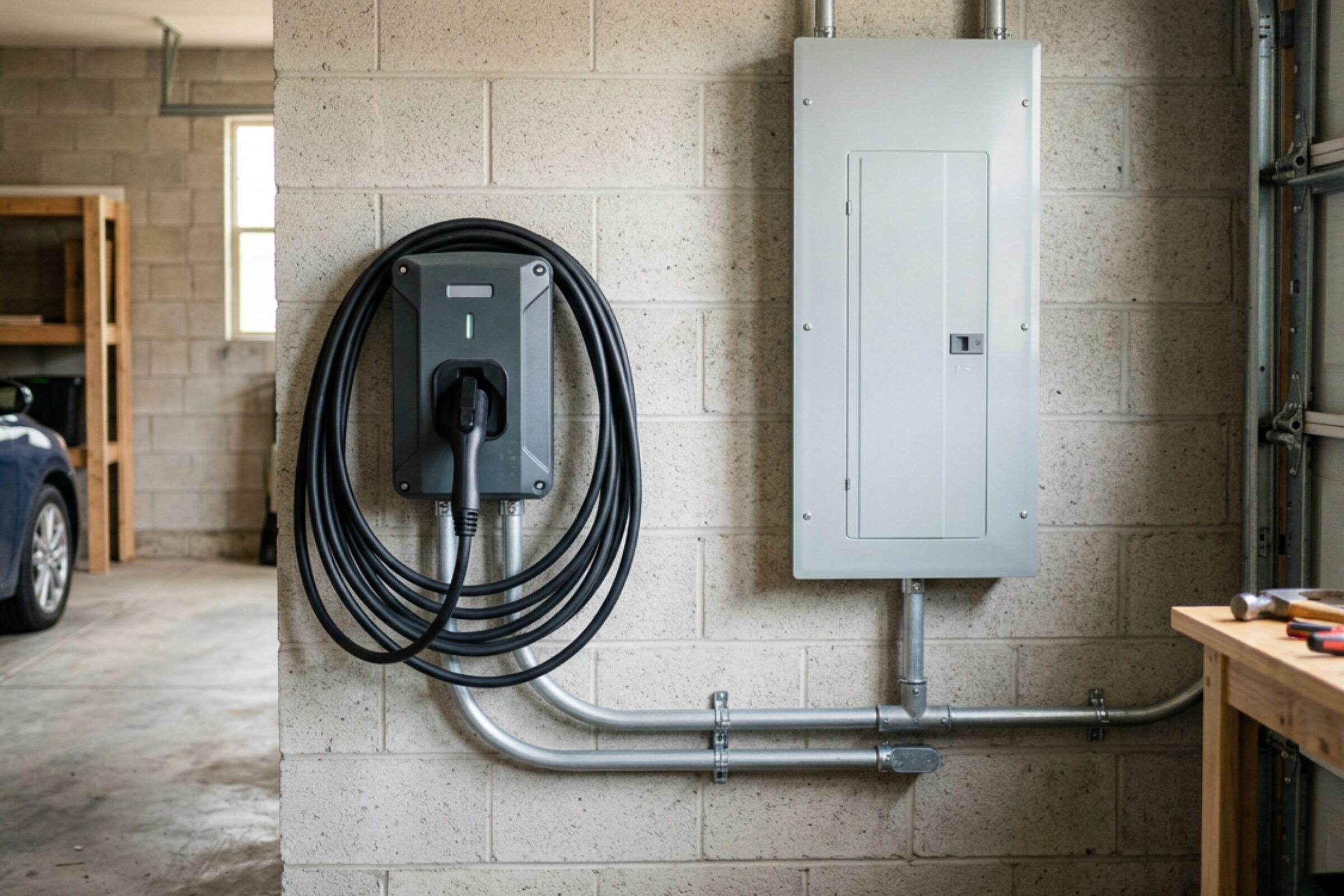
Plan ahead for a hot tub, heat pump, electric cooking equipment, or EV charger installation. A load calculation can help establish whether the existing service can support the proposed equipment and whether load management is an option.
There is no single inspection interval that suits every home. Equipment age, condition, moisture exposure, previous repairs, and insurer requirements all influence timing. Ask the inspecting electrician to recommend a follow-up schedule based on the findings.
Inspection Costs, Repairs, and Insurance Questions
Inspection costs depend on the scope of work, accessibility, troubleshooting time, and whether a written report or specialized testing is included. Ask what the quoted fee covers before booking electrical services.
Repairs are usually separate. A damaged breaker, a circuit issue, and a full service upgrade involve different work. The findings should explain why a proposed repair is necessary and whether permits or utility coordination will be required.
Some British Columbia insurers request electrical documentation for older homes or equipment they consider higher risk. Requirements vary. Ask your insurer what report it accepts and who must complete it before arranging an inspection for insurance purposes.
A Few Practical Questions
How long does an electrical panel last?
A commonly cited planning range is about 25 to 40 years, but it is not an expiration date. Moisture, heat, installation quality, and operating history can shorten service life. Breakers can deteriorate independently of the enclosure.
Does a tripping breaker mean I need a new panel?
No. The fault may be limited to an appliance or branch circuit. Diagnosis should come before an upgrade recommendation.
What can I do safely between inspections?
Keep the panel accessible and the surrounding area dry. Pay attention to changes during ordinary use, and record symptoms without trying to reproduce them. Keep inspection reports and repair records for future reference.
The most useful homeowner habit is simple: notice changes and act on them. A panel does not need to fail completely before it deserves professional attention.