



An electrical upgrade can involve two different kinds of work: changes to the electrical system on your property and changes to the utility connection that supplies it. Those costs are easy to confuse, especially when you are comparing quotes for a panel replacement, an EV charger installation, or a larger commercial service.
A utility connection charge is not the total price of an electrical upgrade. It covers a defined part of the work, and it may sit alongside separate charges for metering, infrastructure extensions, permits, inspections, and your electrician’s labor and equipment.
For property owners in Vancouver and the greater Vancouver area, understanding those boundaries makes budgeting much easier. This guide explains the published utility charges described below, how the distribution extension policy changed in 2025, and what to confirm before scheduling work. Treat the listed amounts as planning references, not a substitute for a project-specific utility quote.
What Changed Under the Distribution Extension Policy?
The provincial utilities regulator approved updates to the distribution extension policy on March 5, 2025. Those changes took effect on July 5, 2025.
The stated goals were to simplify upgrades and reduce the cost of connecting new customers. Under the updated policy, eligible customers may receive a utility contribution toward some service connection costs when wire or cable charges apply.
That contribution matters, but it should not be treated as an automatic discount for every electrical project. Eligibility and the applicable contribution need to be confirmed with the utility.
It also does not establish the price of work inside your building. A contribution toward utility connection costs does not mean the utility pays for a replacement panel, branch-circuit wiring, or an EV charger.
Before relying on a contribution in your budget, ask the utility which parts of your proposed connection qualify and how the contribution will appear in the estimate.
Where Utility Work Ends and Your Electrical Project Begins
The published connection charges cover wire or cable between existing utility infrastructure and the meter base. Meter installation is billed separately unless the applicable charge specifically includes it.
Your electrical contractor’s scope is different. Depending on the project, it may include a new panel, service equipment, grounding and bonding, wiring upgrades, or circuits for new equipment. Permits and inspections also need to be accounted for.
The exact division of responsibility should be established before work begins. Underground projects deserve particular attention because trenching, conduit installation, surface restoration, and related work can affect the budget. Do not assume those tasks are included in a standard utility connection fee.
For example, a homeowner replacing an older panel with a 200-amp panel might need changes to the utility service conductors. The utility connection charge would be one part of the project. The panel, contractor labor, permitting, and any required repairs would be separate considerations.
By contrast, some panel replacements or circuit additions may not require new utility wire or cable at all. Licensed electricians can assess the proposed work, while the utility confirms its connection requirements and charges.
When a Standard Connection Charge Applies
A connection charge applies when a property is connected to the utility system or an existing connection is modified.
When suitable secondary service rated at 750 volts or less is readily available nearby, a standard charge generally applies based on the service type. If that service is unavailable or unsuitable, the project may require additional infrastructure.
That difference can have a substantial effect on the budget.
A building beside suitable distribution infrastructure may have a relatively straightforward connection. A property that requires an extension or changes to supporting infrastructure needs a more detailed assessment. The standard connection charge alone will not describe that project’s full utility cost.
The published charges cover overhead and underground service for new connections, temporary services, and upgrades or alterations involving new wire or cable. Work outside regular utility working hours may incur additional charges.
Single-Phase and Three-Phase Service
Single-phase service is common in homes and many retail buildings. Larger commercial and industrial customers commonly use three-phase service.
The appropriate service depends on the building’s electrical requirements and the equipment it supplies. Three-phase power should not be viewed simply as a larger version of residential service.
For commercial electrical or industrial electrical projects, confirm the required voltage, phase, and capacity early. Those details affect equipment selection as well as the utility application.
Published Minimum Overhead Connection Charges
Overhead connections use service conductors routed above ground. The schedule below lists minimum charges before GST.
Service size or work typeSingle-phaseThree-phaseUp to 200 amps$880$980More than 200 amps and up to 400 amps$1,370$1,570More than 400 amps and up to 600 amps$1,610Estimate requiredAltering existing wire$820$820
The word “minimum” is important. These amounts should not be treated as guaranteed final prices for every property.
A straightforward single-phase overhead connection up to 200 amps has a listed minimum of $880 plus GST. Additional infrastructure, separate metering work, or after-hours requirements can change the amount payable.
The existing-wire alteration charge is also a distinct category. It does not mean every service upgrade involving existing conductors will qualify for that price. The utility must determine which charge applies to the requested work.
Published Minimum Underground Connection Charges
Underground connections have a separate fee schedule, also shown before GST.
Service size or work typeSingle-phaseThree-phaseUp to 200 amps$1,400$1,520More than 200 amps and up to 400 amps$2,600$2,950More than 400 amps and up to 600 amps$3,530Estimate requiredAltering existing wire$820$820
For new wire or cable connections in the listed capacity bands, underground minimum charges are higher than overhead minimum charges. The listed existing-wire alteration charge is the same for both.
Still, comparing those tables is only one part of deciding how a project will be supplied. Existing infrastructure, utility requirements, property conditions, and the proposed installation all matter.
An underground connection may also involve site work outside the listed cable charge. Ask who is responsible for excavation, conduit, inspections, and restoration before accepting a budget. A driveway opened for electrical work still needs to be repaired, and that responsibility should not be left unclear.
Metering Charges Need Their Own Budget Line
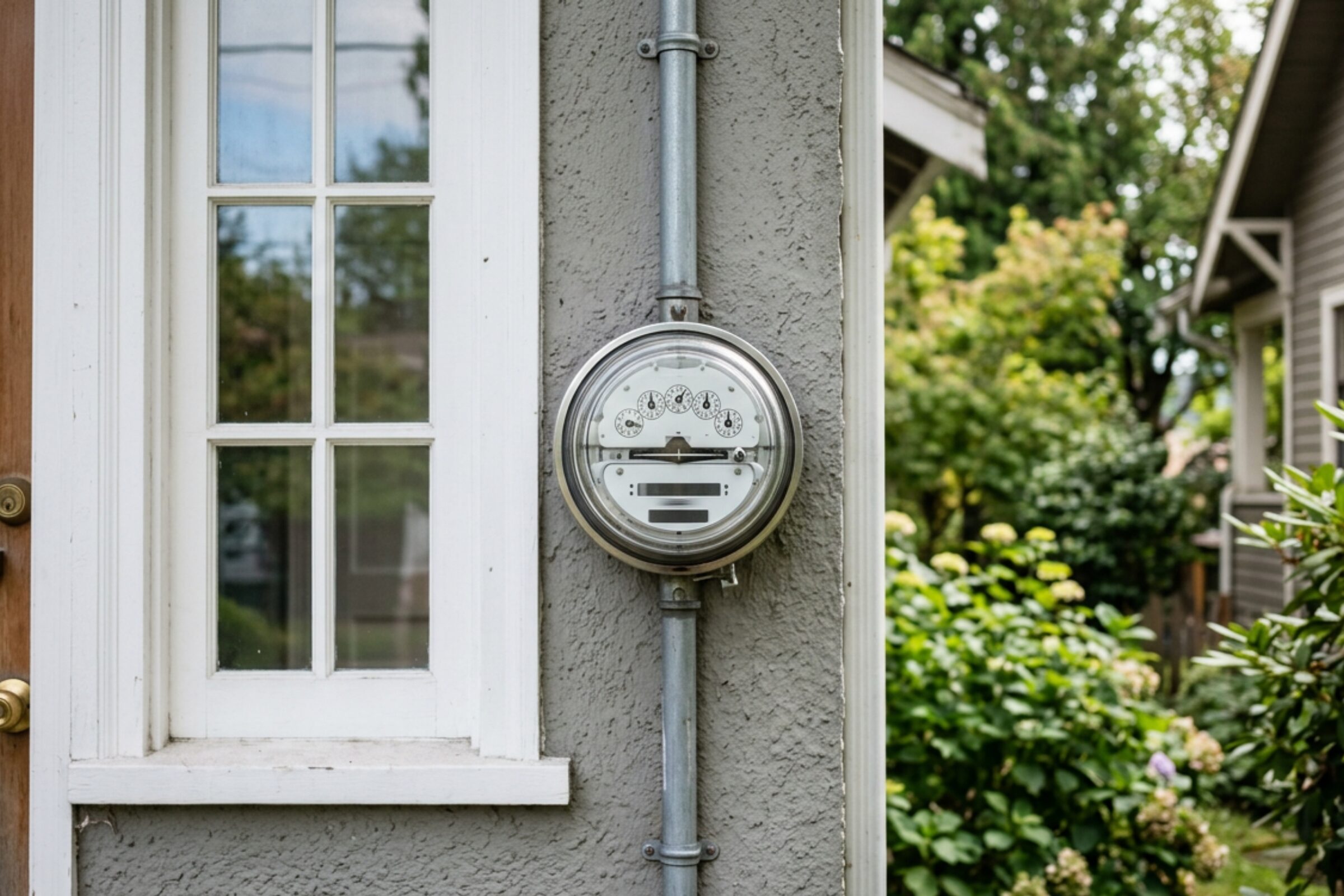
Metering costs are separate from the wire or cable connection charge unless a specified combined charge applies.
The published amounts include a minimum of $262 plus GST for a meter installed separately from the service connection. A $64 plus GST minimum is also listed for metering work performed at the same time as a service connection, while a meter and wiring installation charge of $840 plus GST appears as another category.
There is also a separate $262 plus GST metering listing. Because the applicable amount depends on the request type, it is better to confirm the category than to assume the lowest listed fee applies.
Ask the utility to identify the metering charge in the written estimate and explain whether it covers installation alone or associated wiring work.
This is particularly useful when a project changes the metering arrangement rather than simply replacing equipment downstream of an existing meter. Different requests can require different work, even when they sound similar in everyday conversation.
Costs That Can Catch Property Owners Off Guard
A Return Visit Because the Site Is Not Ready
If utility crews arrive and the site or equipment is not ready, a required return visit carries a listed charge of $351 plus GST.
That is an avoidable expense worth paying attention to. Readiness may depend on completed contractor work, required approvals, access, and the utility’s installation requirements.
Before the appointment, confirm with your contractor and the utility that all prerequisites have been met. A scheduled date does not, by itself, mean the site has been cleared for connection.
Work Outside Regular Utility Hours
Utility work outside regular working hours may cost more. This can matter for businesses trying to schedule an outage when customers or production staff are absent.
Electrical contractors advertising 24/7 emergency service operate on their own schedules. That availability does not establish the utility’s hours, fees, or ability to complete planned connection work immediately.
For a commercial property, weigh the potential after-hours utility charge against the operational cost of a daytime outage. Obtain the applicable pricing before making that decision.
Reconnection and Street-Light Charges
Reconnection after disconnection for nonpayment is a separate category from an electrical upgrade. Listed charges are $30 plus GST per meter for standard reconnection, $280 plus GST per meter for manual overtime reconnection, and $700 plus GST per meter when access is refused.
Street-light service also has separate charges. The published schedule includes amounts of $1,710 plus GST and $1,060 plus GST plus the depreciated fixture cost, depending on the applicable request. Listed fixture costs decline with age, from $1,150 plus GST for a new fixture to $24 at age 25 and $9 at age 27.
These categories are usually outside a typical building service upgrade. Include them only when the utility confirms they apply to your project.
How These Charges Affect Common Electrical Projects
Residential Electrical Upgrades
For a home, the first question is whether the proposed work requires a change to the utility connection.
A new panel, added circuit, or appliance replacement does not automatically require new utility conductors. The existing service capacity, equipment condition, and calculated electrical demand need to be assessed.
This is why a panel’s amp rating alone is not enough to determine the total upgrade cost. Your contractor needs to evaluate the installation, and the utility needs to confirm any changes on its side.
EV Charger Installation
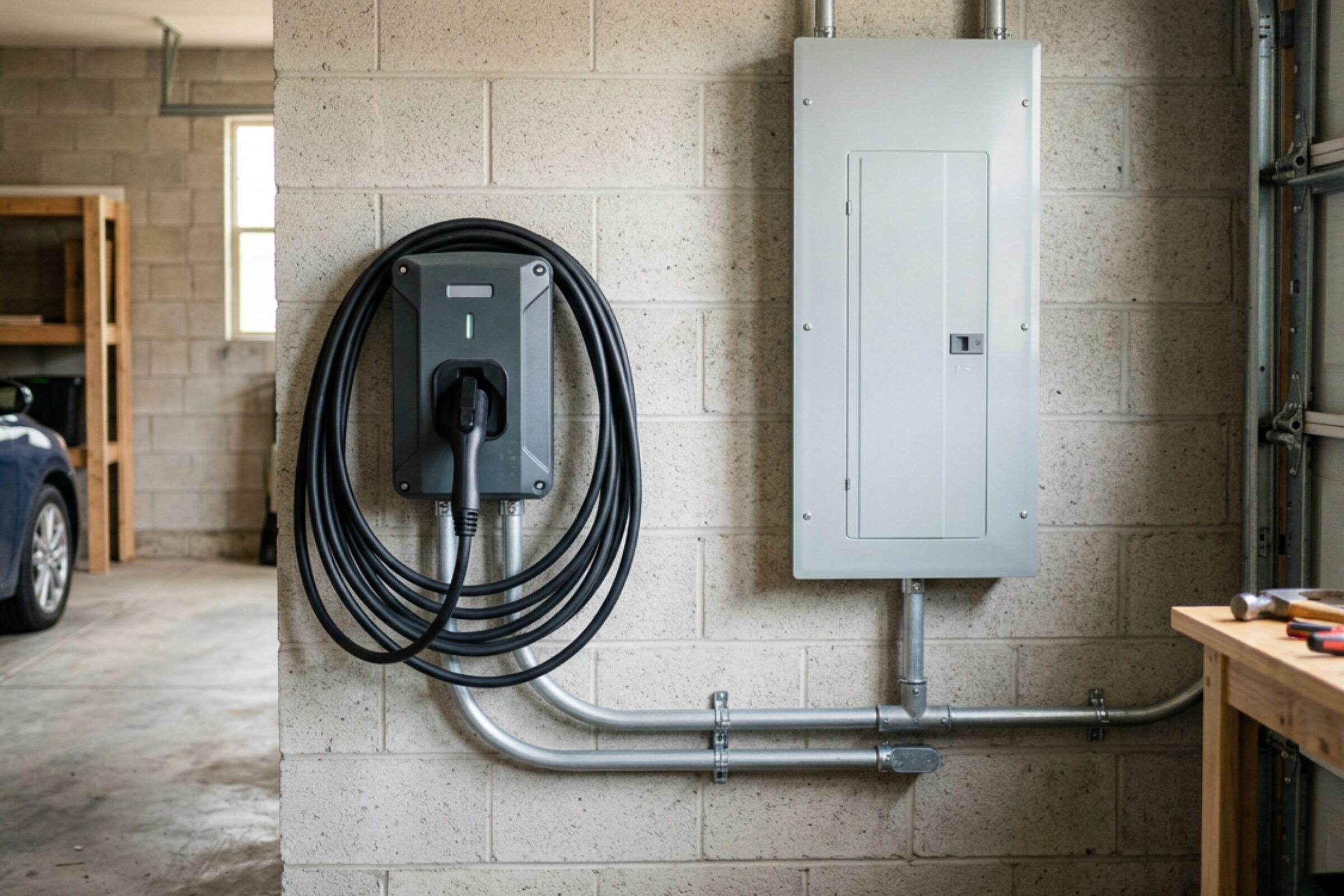
An EV charger adds electrical demand, but a service upgrade is not inevitable.
Depending on the home’s load calculation, charger settings, applicable requirements, and available equipment, an EV energy management system may allow charging within the existing service capacity.
If a utility service change is required, the connection and metering charges become part of the budget. If it is not, the project may mainly involve customer-side electrical work.
The sensible starting point is an assessment, rather than an assumption that every EV charger installation needs a larger service.
Commercial and Industrial Projects
Commercial and industrial electrical work often requires more coordination because equipment loads, operating schedules, and service characteristics vary widely.
A retail renovation and a manufacturing equipment installation may have very different supply requirements. Larger services can require utility estimates rather than a published minimum, including three-phase connections above 400 amps in the tables shown here.
Confirm equipment requirements before finalizing the electrical design. Discovering a supply mismatch after equipment has been purchased is a costly way to begin a project.
Build a Budget Around the Actual Scope
A useful electrical upgrade budget separates utility work from contractor work and regulatory costs. It also records who is responsible for each task.
Before approving the project, work through these questions:
-
Does the project require new utility wire or cable, an alteration, or no utility connection change?
-
Is suitable secondary service available, or is an infrastructure extension required?
-
Which connection and metering charges apply, and is a utility contribution available?
-
Who handles excavation, site preparation, permits, inspections, and restoration?
-
What must be completed before utility crews attend, and will after-hours work cost extra?
For projects across the Lower Mainland, the best use of published utility fees is as a starting point. They help you recognize the likely categories of cost and ask better questions.
The final budget should come from the actual design, a defined contractor scope, and confirmation of the utility’s requirements. That is how you avoid mistaking a connection fee for a complete upgrade price, and how you keep an otherwise straightforward project from becoming an expensive surprise.