
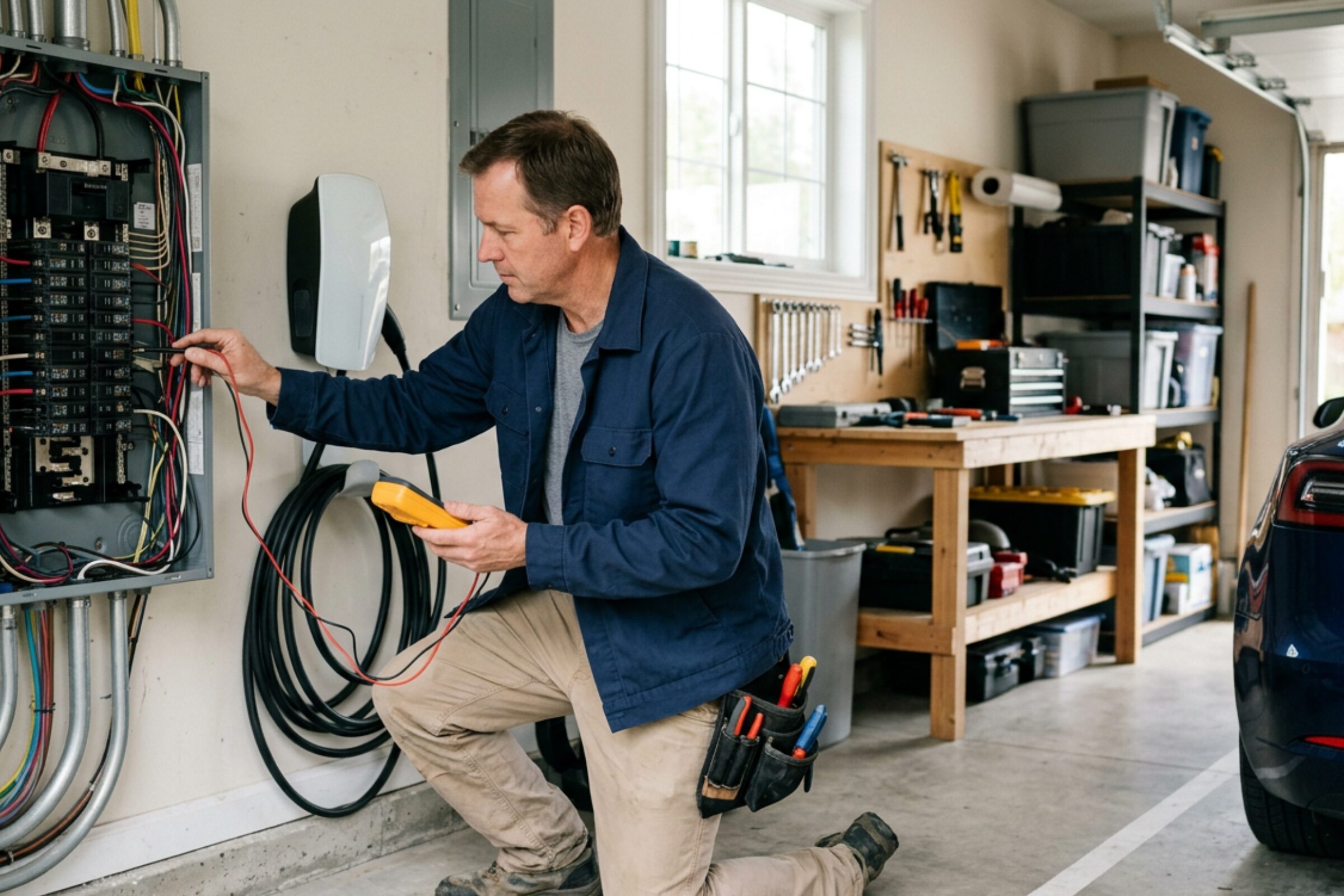

Adding an EV charger can raise a question that most homeowners have never needed to ask: how much electrical capacity does this house actually have?
The answer is not as simple as counting empty spaces in the breaker panel. A panel may have room for another breaker while the electrical service has little capacity for an additional sustained load. Another home may have enough capacity to charge a vehicle safely, provided charging slows down or pauses when household demand is high.
That is where the choice between load management and an electrical upgrade begins.
For homeowners planning an EV charger installation in Vancouver or elsewhere in the Lower Mainland, both approaches deserve consideration. Load management can help you use existing capacity more effectively. A service upgrade can increase available capacity when managing demand is insufficient. The right choice depends on the condition of the electrical system, your charging needs, and what else you plan to electrify.
First, Understand What Needs Upgrading
People often use “panel upgrade” and “service upgrade” interchangeably. They are related, but they do different jobs.
The electrical panel distributes electricity to individual circuits. Its breakers help protect circuit wiring against excessive current. The electrical service is the supply arrangement that brings power into the property, including equipment whose ratings limit how much electricity the building can draw.
Replacing a panel does not automatically increase the capacity of that supply.
For example, installing a panel with a higher rating will not create additional usable capacity if the service conductors, main protection, or other equipment remain rated for a lower amount. A genuine service increase requires an assessment of the relevant equipment and coordination with the utility.
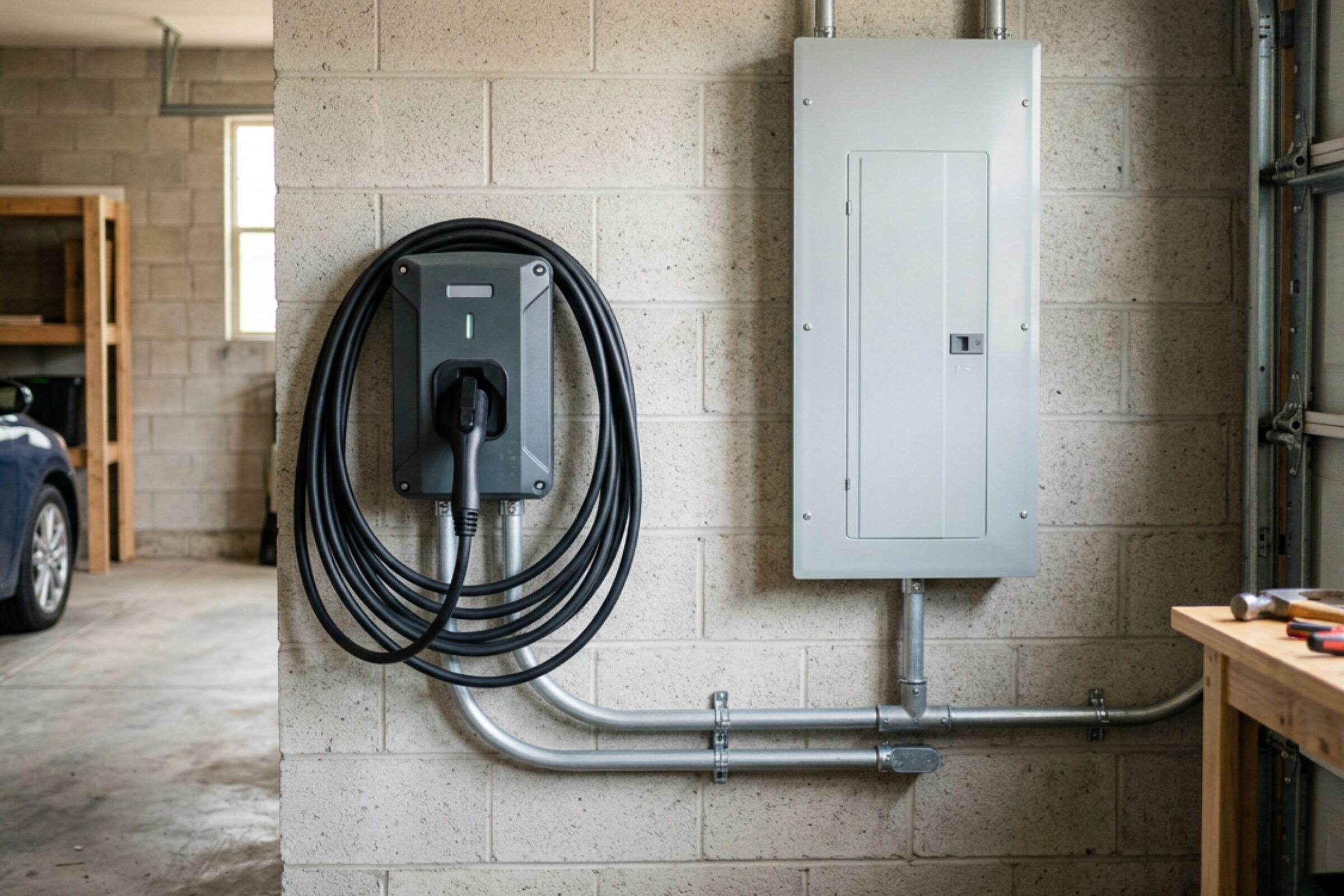
There is also a third possibility: adding a dedicated charging circuit without replacing the panel or increasing the service. Where the existing installation is suitable and the load assessment permits it, that may be all the project requires.
The practical question is therefore broader than “Do I need a bigger breaker box?” It is: “What changes will let this property charge an EV safely and meet its expected electrical needs?”
Why an EV Charger Changes the Calculation
An EV charger can draw substantial power for hours at a time. That makes it different from a small appliance used for a few minutes.
A home may already have an electric range, clothes dryer, water heater, and heating equipment. Adding charging demand means considering how those loads interact, rather than simply checking whether each appliance has its own circuit.
Licensed electricians assess the installation using applicable electrical code requirements and approved calculation methods. Depending on the project, relevant demand information may also help establish how the building uses electricity.
Empty breaker spaces do not prove capacity
An unused breaker position tells you there may be physical room for a circuit. It does not establish that the panel, service, or building supply can support that circuit’s intended load.
The reverse can also happen. A crowded panel may need a suitable equipment change even when the service has enough electrical capacity. Physical space and electrical capacity are separate constraints.
Charging speed should match actual driving
The highest charging rate available is not automatically the best choice.
Consider a driver who travels a modest distance each day and parks at home overnight. A lower-power charging setup may comfortably replace the energy used during the day. Someone with long daily trips and short charging windows may need more power.
Before choosing equipment, estimate daily driving, typical parking time, and the vehicle’s charging capabilities. A realistic charging target can prevent unnecessary electrical work.
How EV Load Management Works
EV load management controls charging demand so the electrical system stays within an established limit.
In a common residential arrangement, monitoring equipment measures electrical demand at the service. When household demand rises, the system reduces or interrupts EV charging. When capacity becomes available again, charging can resume or increase.
Think of a winter evening when electric cooking and heating are both in use. Rather than allowing the charger to add its full demand, the control system temporarily limits it. Later, when household use falls, more capacity is available for the vehicle.
The exact behavior depends on the equipment. Some systems adjust charging current; others disconnect and reconnect the charging load. Equipment must be approved for the application, compatible with the installation, and configured correctly.
When load management can make sense
Load management is worth assessing when the existing electrical equipment is in suitable condition, but unrestricted EV charging would exceed the permitted capacity.
It can be especially useful when high household demand occurs only during limited periods and the vehicle remains plugged in long enough to charge around those periods.
The trade-off is charging predictability. If household demand stays high for much of the night, the vehicle may receive less energy than expected. A system can operate safely and still fail to meet a particular driver’s daily needs.
What it cannot repair
Load management does not fix damaged equipment, loose connections, deteriorated wiring, or an unsuitable panel.
It also does not increase the amount of power supplied to the property. It controls how available capacity is used. That distinction matters when evaluating a proposal: avoiding a service upgrade is useful only if the resulting installation is safe and practical.
A timer alone is not equivalent to an approved load-management system. Scheduling charging for nighttime may reduce overlap, but other appliances can still operate during that period.
When a Panel or Service Upgrade Is the Better Choice
Sometimes the existing system needs improvement regardless of the charger.
A panel replacement may be appropriate because of its condition, configuration, or compatibility with the required equipment. A service upgrade may be necessary when the property needs more capacity than an acceptable managed arrangement can provide.
Future plans matter here. An EV may be the first addition, followed by a heat pump, electric water heating, or a second vehicle. Evaluating those plans together can avoid paying for electrical work twice.
Services rated at 200 amps or 400 amps may be considered for some properties, but neither is a universal target. The appropriate capacity depends on the calculated demand, building characteristics, utility requirements, and project scope.
Nor does every upgrade require the same work. One property may need a relatively straightforward panel replacement. Another may require changes to the meter equipment, service conductors, or utility connection.
An upgrade should solve an identified need. Bigger equipment is not automatically better value if the existing service can safely support the household’s realistic plans.
Two Homes, Two Reasonable Solutions
Consider two illustrative Vancouver households requesting home charging.
The first home has service equipment in good condition. Its assessment shows that unrestricted charging would create a capacity problem, but an approved load-management arrangement is suitable. The driver usually parks overnight and does not need the vehicle to charge at maximum power throughout that time.
In this situation, managed charging may meet the household’s needs without a full service upgrade. Installation still requires proper circuit design, equipment selection, permits, and testing.
The second home has an electrical setup that cannot support the proposed installation as planned. Its equipment may need replacement, or its overall demand and charging requirements may leave insufficient room for a workable managed solution.
Here, a service and panel upgrade may be the appropriate route before installing the charger.
Neither household illustrates a rule for every property. The useful lesson is that two similar charger requests can lead to different electrical designs. A recommendation should follow an assessment, not a standard package.
Warning Signs to Address Before Adding Charging
An EV charger project sometimes reveals an existing electrical problem. Certain symptoms deserve attention whether or not you proceed with charging.
Arrange an electrical assessment if you notice:
-
Breakers that trip repeatedly during normal use.
-
Lights that frequently dim or flicker when equipment starts.
-
Rust, discoloration, or visible damage around electrical equipment.
-
Unusual heat, crackling sounds, or a burning smell near the panel.
-
Appliances that appear to operate improperly or lose power.
These symptoms do not identify a single cause. Dimming lights, for example, may relate to a connection problem rather than insufficient service capacity. Diagnosis matters.
If there is smoke, sparking, or an active burning condition, keep away from the equipment and contact emergency services as appropriate. Do not remove the panel cover or attempt repairs yourself.
Age is another reason to request an assessment, but it is not a diagnosis. Panels are often discussed in terms of a roughly 25- to 40-year service life; actual condition depends on equipment quality, environment, maintenance, and loading history. An older home does not automatically need a complete electrical replacement.
Some older homes also contain aluminum branch-circuit wiring. Its connections require appropriate evaluation and methods. That is a separate issue from EV capacity, although necessary wiring upgrades may become part of the broader project.
What a Proper Assessment and Installation Should Include
A useful on-site assessment looks beyond the panel label. The electrician should review the service rating, equipment condition, existing loads, proposed charger location, and the route for the new circuit.
Your plans belong in that conversation too. Mention a future heat pump or second EV before the design is finalized.
The proposal should explain what work is required and why. It should also identify permit responsibilities, inspection arrangements, and any utility coordination. If load management is proposed, ask how it will affect charging during periods of high demand.
For projects involving service equipment, a planned utility disconnection and reconnection may be necessary. Confirm the expected outage and prepare for any household equipment that needs continuous power.
After installation, testing should cover the charger and any load-management functions. Where required, the work must receive the appropriate electrical inspection.
Strata and shared buildings need extra planning
In strata properties, approval may involve common electrical infrastructure, parking access, cable routing, and documentation. A charger serving one parking space can still affect shared building capacity.
Commercial electrical and industrial electrical projects may involve multiple chargers, operational loads, or site-specific requirements. Managed charging can distribute available power across vehicles, but the design must suit the building and its users. A residential arrangement should not simply be copied into a larger site.
Compare the Whole Project, Not Just the Equipment Price
There is no reliable single price for every panel upgrade or managed charging installation in the Greater Vancouver area.
Costs depend on existing equipment, circuit length, accessibility, required wiring, permits, utility work, and possible repairs to finished surfaces. A service upgrade with difficult access can differ substantially from one with a straightforward connection.
Compare proposals for the same charging outcome. A lower initial price may include slower charging, less extensive work, or different assumptions about future capacity.
Load management also has equipment and installation costs. It may avoid more extensive service work, but that should be established through a project-specific comparison.
Choose Capacity Based on How You Will Use It
Start with the vehicle’s daily energy needs and the building’s actual electrical condition. Then compare an appropriately sized charging circuit, approved load management, and any necessary panel or service upgrades.
Ask each proposal to answer two questions: will the installation meet electrical safety requirements, and will it reliably deliver enough charging for your routine?
The best solution is not necessarily the largest service or the fastest charger. It is the one that safely supports your household’s use today, with sensible provision for the changes you reasonably expect next.