

A complete loss of power at home is stressful under any circumstances. Lights go out, refrigeration stops, internet disappears, and suddenly even basic routines become difficult. When the cause is a damaged main breaker, though, the situation is more than an inconvenience. The main breaker is a critical safety device, and damage to it calls for a careful, licensed repair process.
This Burnaby case study follows an emergency panel failure at a residence where the homeowner lost all electrical power. The cause was traced to a failed main breaker in the central electrical distribution panel. Restoring service required more than swapping one component. The work involved diagnosis, City of Burnaby permitting, coordination with BC Hydro for a service disconnect and reconnection, replacement of the breaker, inspection, and panel re-certification.
It is a useful example for homeowners throughout the Lower Mainland because it shows why some electrical emergencies cannot, and should not, be handled as a quick reset or a do-it-yourself repair.
The problem: complete power loss from a damaged main breaker
The homeowner, Allex, experienced a full household outage. Unlike a tripped branch circuit breaker, which may affect a few outlets or one area of a home, this outage affected the entire property.
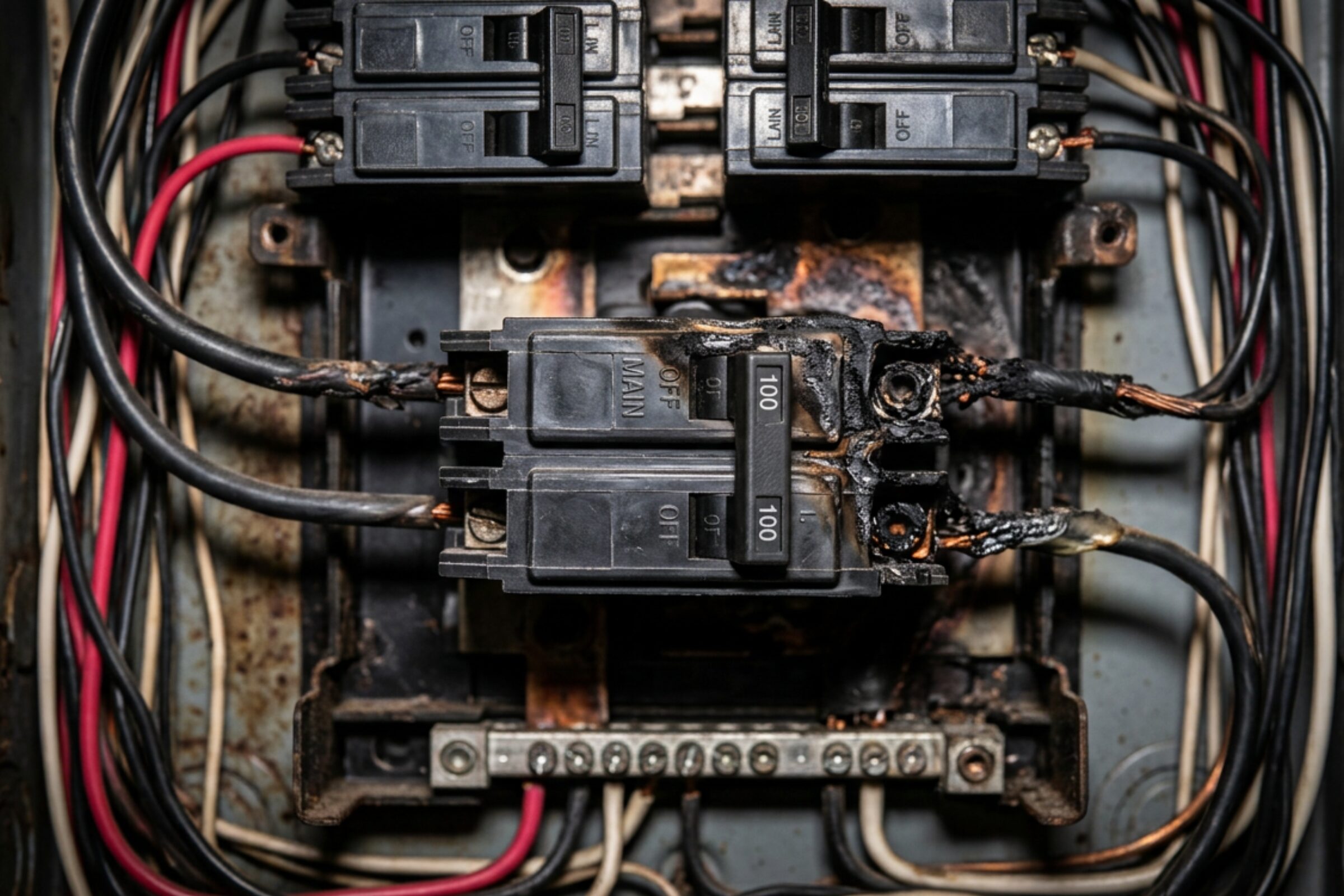
The main breaker was found to be damaged.
A main breaker controls the electrical supply entering the panel and distributes power to the circuits that serve the home. It also provides overcurrent protection at the main service point. If it is damaged, burned, mechanically unreliable, or unable to make safe electrical contact, the whole home can lose power.
This is where homeowners can get caught off guard. A breaker that will not reset is sometimes assumed to be a minor issue. That may be true for a small circuit supplying a bathroom outlet or bedroom lights. A main breaker is different. It is tied to the incoming electrical service and sits at the center of the home’s power system.
In this case, the failed breaker prevented safe distribution of incoming power. Leaving it in service would have created both practical and safety concerns. The home remained without electricity, and any attempt to force the damaged equipment back into operation could have increased the risk of overheating, arcing, or further panel damage.
The correct response was a controlled replacement, with the service properly de-energized before work began.
Why a main breaker failure requires a different response
Electrical panels contain equipment that should never be treated casually. Even when a panel appears “off,” certain service components may remain energized unless the utility disconnects power at the appropriate point.
That is why emergency main-breaker replacement often involves several parties:
-
A licensed electrician diagnoses the fault and determines whether repair is appropriate.
-
The municipality issues permits for work that requires inspection and approval.
-
The utility coordinates a safe disconnect and reconnection when required.
-
An inspector reviews the completed work before permanent service is restored.
It can feel like a lot of process during an outage. Frankly, nobody enjoys waiting for administrative steps when their refrigerator is warming up and their home is dark. But these safeguards exist for a reason. The goal is to restore power without putting the household, electrical worker, utility crews, or the property at risk.
The panel may need to be disconnected at the street-side service point or another utility-controlled location before the main breaker can be safely replaced. In the Burnaby project, BC Hydro coordinated the temporary power shutoff and subsequent reconnection. That made it possible to work on the damaged breaker under safe conditions.
Diagnosing the cause before replacing equipment
A total outage does not automatically mean the main breaker has failed. Several issues can produce similar symptoms, including a utility outage, service damage, a meter problem, loose connections, equipment failure, or a fault elsewhere in the electrical system.
The first job is diagnosis.
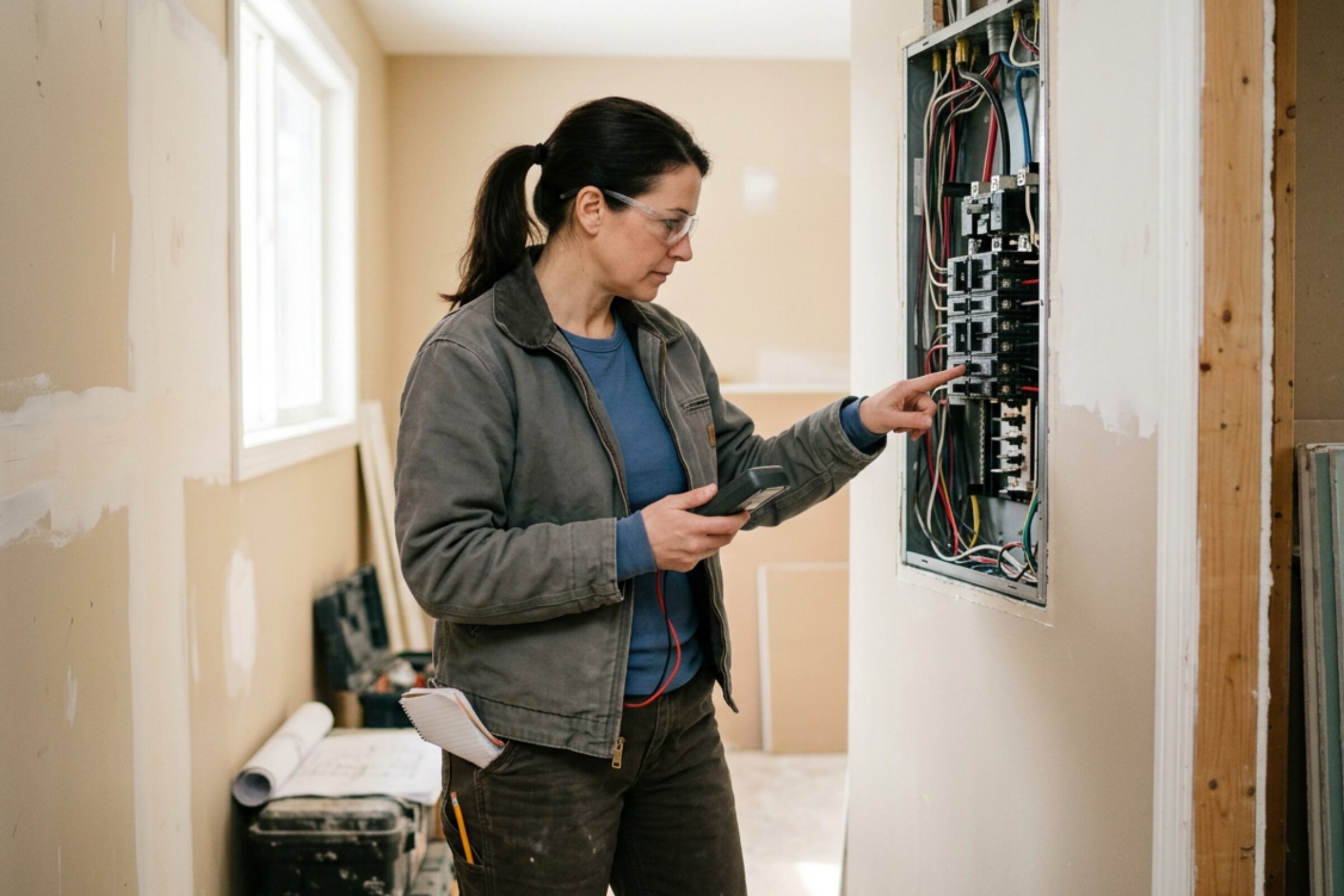
During this project, the electrical assessment confirmed that the main breaker was the root cause of the home’s power loss. The panel was also reviewed to determine whether the problem was limited to the breaker or whether the panel itself required replacement.
That distinction matters. Replacing a breaker in a panel with severe corrosion, damaged bus bars, heat damage, incompatible parts, or widespread deterioration may not solve the underlying problem. A repair only makes sense when the remaining equipment is in suitable condition and can safely accept a compatible replacement part.
The panel assessment included attention to:
-
The condition of the main breaker and its connection points
-
Signs of heat damage, discoloration, burning, or corrosion
-
Panel interior condition and available breaker space
-
Grounding and bonding connections
-
The suitability of the panel for continued service
-
Whether replacement equipment matched the panel’s specifications
A good diagnosis may take longer than homeowners expect, especially during an emergency. That time is worthwhile. Guessing at the cause of a complete outage is how minor problems become expensive ones.
Coordinating permits with the City of Burnaby
Electrical permits are sometimes misunderstood as paperwork that slows down repairs. In reality, permitting creates a documented path for work that affects a building’s electrical safety.
For this Burnaby emergency, permissions were obtained from the City of Burnaby so the replacement and reconnection could proceed under local requirements. The permit process also supported the final inspection and panel re-certification.
For homeowners, this creates several practical benefits. A permitted repair provides evidence that licensed work took place and that the installation was inspected. That documentation can be useful for insurance questions, future renovations, refinancing, or resale.
It also brings another set of trained eyes to the job. Inspection does not replace the electrician’s responsibility to do quality work, but it adds accountability for safety and code compliance.
Permit requirements vary based on the scope of work and the local authority. A straightforward branch-circuit repair may follow a different process than work involving the main electrical service. When the main breaker is involved, the job often has a larger safety footprint because the electrician may need utility coordination to access the equipment safely.
Working with BC Hydro during a service emergency
One of the most important details in this project was coordination with BC Hydro.
A damaged main breaker cannot always be isolated by simply switching the panel off. Depending on the panel arrangement and the nature of the repair, the incoming service must be disconnected before the breaker can be removed. That work needs to happen at the appropriate utility-controlled point.
The project required a timed shutoff, replacement work, inspection steps, and reconnection. Managing those pieces well made a real difference to the homeowner’s outage time.
A typical emergency sequence may look like this:
-
The electrician confirms the likely fault and checks whether the issue is within the home’s equipment.
-
Required municipal permissions are arranged.
-
The utility schedules a disconnection window.
-
The electrical service is de-energized.
-
The damaged main breaker is removed and replaced.
-
Connections, grounding, and bonding are checked.
-
The installation is inspected and approved as required.
-
The utility reconnects service and the electrical system is function-tested.
The schedule can depend on utility availability, weather conditions, site access, permit timing, and the exact service configuration. There is no honest way to promise that every emergency will follow the same timeline. Still, direct communication between the electrician, the city, the utility, and the homeowner can prevent avoidable delays.
In this case, the homeowner specifically praised the handling of both city permitting and BC Hydro coordination. That feedback points to something easy to overlook: during a power outage, communication is part of the service. People need a realistic estimate, clear safety instructions, and updates when scheduling changes.
Replacing the damaged breaker safely
Once the service was disconnected, the damaged main breaker could be removed and replaced with the correct unit for the panel.
This is not a job for a universal, improvised, or mismatched breaker. Electrical components must be compatible with the panel and installed according to manufacturer requirements and applicable electrical rules. A breaker may physically fit in a panel while still being unsuitable for its bus system or service rating. That is not a risk worth taking.
After the replacement, the electrical work included verification of the panel’s connections, grounding, and bonding. These checks matter because a successful repair is about more than seeing lights turn back on. The equipment must operate safely under normal use and provide proper protection if a fault occurs.
Functional testing followed before permanent service was restored. The panel was then re-certified after the work and final approval was completed.
The outcome was a restored power supply, a reliable replacement main breaker, and documentation that the panel met the required standards after repair.
Warning signs that deserve prompt attention
Main breakers do not always fail without warning. Sometimes the clues are subtle, and sometimes they are alarming. Either way, it is sensible to treat panel symptoms seriously.
Call licensed electricians promptly if you notice persistent burning smells near the panel, buzzing sounds, visible scorching, warmth around breakers, repeated main-breaker trips, flickering throughout the home, or unexplained total power loss when nearby homes still have service.
A main breaker that trips once after a clear overload may not be damaged. But repeated tripping, failure to reset, or physical signs of deterioration should be assessed. Do not tape a breaker in position, force a handle, remove panel covers, or continue resetting a breaker that trips immediately.
If there is smoke, fire, visible arcing, or a strong burning smell, move away from the affected area and contact emergency services. Do not attempt to investigate the panel yourself.
For a general outage with no visible panel damage, checking whether neighbours are also affected can help determine whether the issue may be utility-related. Even then, avoid touching meter equipment or service conductors. Those areas can remain dangerous.
When a repair is enough, and when a panel upgrade makes more sense
The Burnaby case was resolved with main-breaker replacement and panel re-certification because the assessment supported repair. That will not always be the answer.
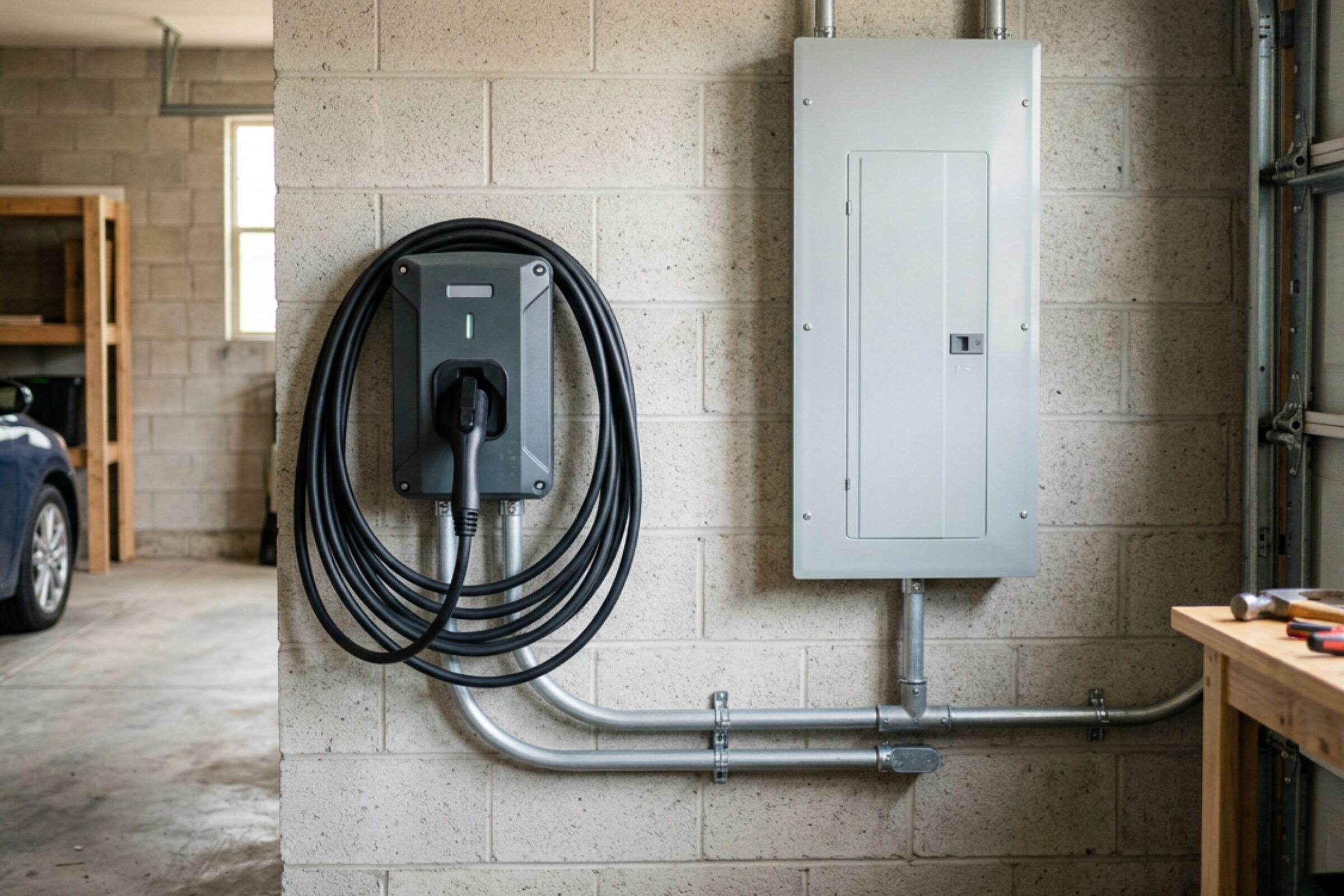
A full panel replacement or wiring upgrade may be appropriate when a panel is outdated, has significant heat damage, lacks capacity, contains obsolete equipment, or cannot safely support current electrical demands. Older homes often face this question when owners add high-load equipment such as electric heating, air conditioning, a heat pump, or an EV charger installation.
Modern households use more electricity than many older service panels were designed to handle. That does not mean every home needs a larger panel. It does mean that planned additions should be evaluated before installation begins.
This applies across residential electrical, commercial electrical, and industrial electrical work. Loads must be calculated properly, equipment must be rated for the intended use, and the existing service needs enough capacity to support the upgrade.
For homeowners in Vancouver, Burnaby, and the greater Vancouver area, panel condition deserves attention before a failure forces the issue. A planned assessment is usually calmer, less disruptive, and easier to schedule than an emergency repair.
What homeowners can learn from this Burnaby repair
The central lesson is simple: a main breaker failure needs professional coordination, not shortcuts.
The Burnaby homeowner’s power was restored through a sequence that addressed both urgency and safety. The fault was diagnosed, permits were arranged, BC Hydro managed the disconnect and reconnect, the damaged breaker was replaced, and the panel was inspected and re-certified.
That process removed an immediate operational and safety hazard while giving the homeowner a documented, code-compliant repair.
Electrical emergencies can make people feel pressured to accept the fastest possible fix. The better standard is fast work done properly. For a failed main breaker, that means licensed installation, utility coordination where needed, municipal approval, and testing before power returns.
Reliable electrical services are rarely about a single replacement part. They are about knowing what must happen before, during, and after that part is changed.