
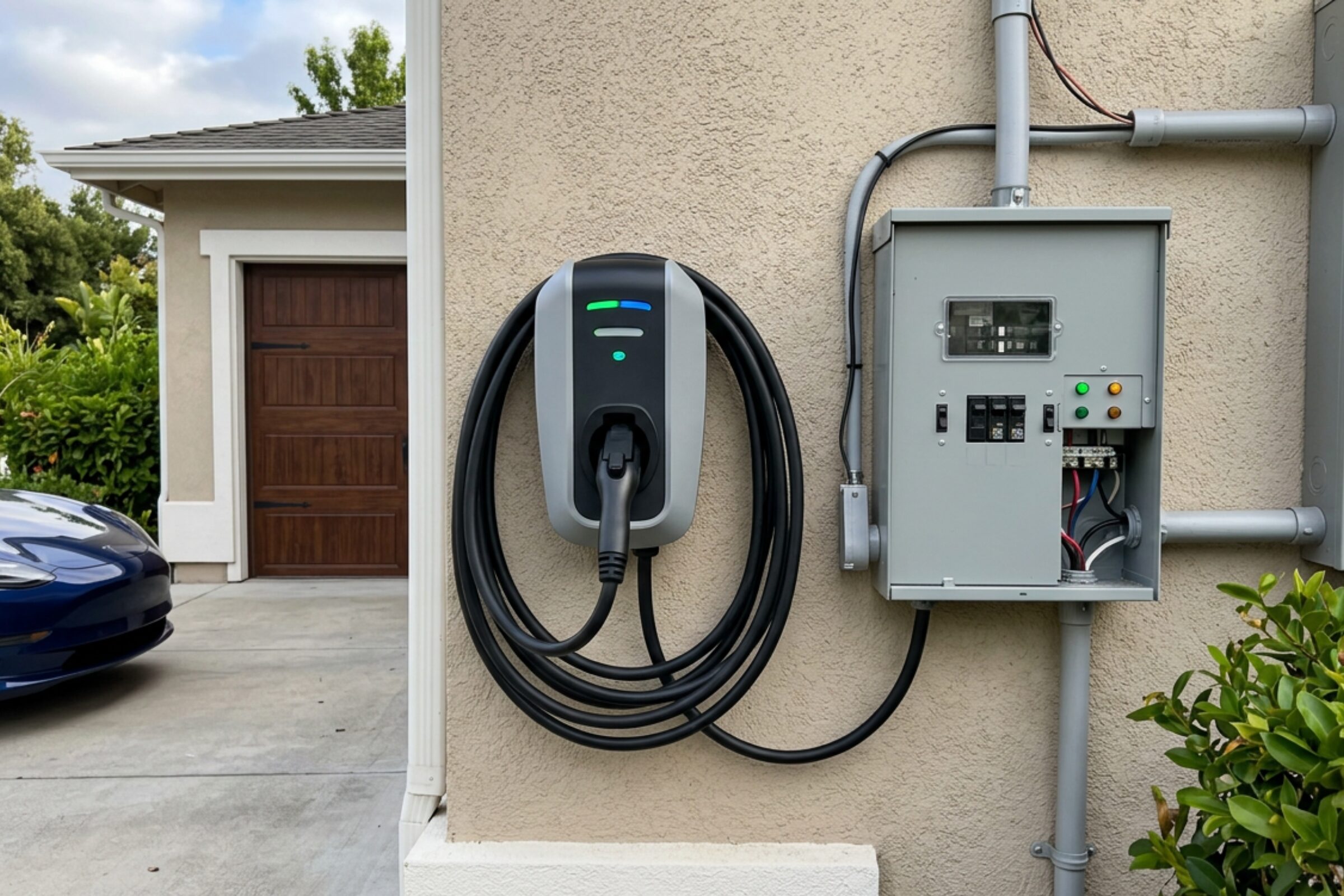

Adding an EV charger, a heat pump, or an induction range can make an older home’s electrical system feel suddenly undersized. The natural question is whether the house needs a larger electrical service.
Sometimes it does. But a service upgrade is not the only way to support electrification.
Load management controls when certain equipment can draw power, helping a home stay within its electrical limits. Used appropriately, it can make room for new equipment without replacing the entire service. It cannot fix unsafe wiring, and it does not make electrical capacity unlimited.
For homeowners in Vancouver and the Lower Mainland, the best starting point is an assessment of the existing system and the equipment you plan to add. From there, you can compare load management with a service upgrade, including the practical differences between overhead and underground connections.
What Electrical Capacity Actually Means
Your electrical service brings power from the utility into your home. Its capacity depends on more than the number printed on the main breaker. Service conductors, equipment ratings, panel configuration, and utility infrastructure all matter.
A home with a 100-amp service is not automatically unable to support an EV charger. Likewise, a 200-amp service does not guarantee that every new appliance can be installed without further work.
There are several separate questions to answer:
-
Does the service have enough capacity for the calculated demand?
-
Can the panel accommodate the necessary circuits and equipment?
-
Are the wiring and protective devices suitable for the new loads?
-
Is the existing system in safe condition?
These questions often get bundled together as “Do I need a new panel?” That can lead to confusion. Replacing a panel does not necessarily increase the capacity of the utility service. Adding breaker spaces also does not create more available power.
A qualified electrician should explain which limitation your project actually faces before recommending a solution.
Why Electrification Changes the Calculation
Many households are replacing fuel-powered equipment with electric alternatives. Each change affects electrical demand differently.
An induction range has periods of substantial demand, but it rarely operates at its maximum rating continuously. An EV charger can draw a steady load for hours. A heat pump’s requirements depend on its design, sizing, and whether electric resistance backup heat is installed.
Electric water heating can be another significant addition. Storage-tank and tankless systems have very different demand profiles, so treating them as interchangeable can distort the planning process.
The important issue is how these loads may overlap.
Picture a winter evening when the heating system is working, dinner is cooking, the dryer is running, and a vehicle starts charging. A home that handles each appliance individually may face a capacity problem when several operate together.
Still, adding every equipment nameplate rating is not a proper residential load calculation. Applicable electrical rules account for demand in specific ways. Licensed electricians use those rules to determine whether the proposed installation is acceptable.
How Load Management Works
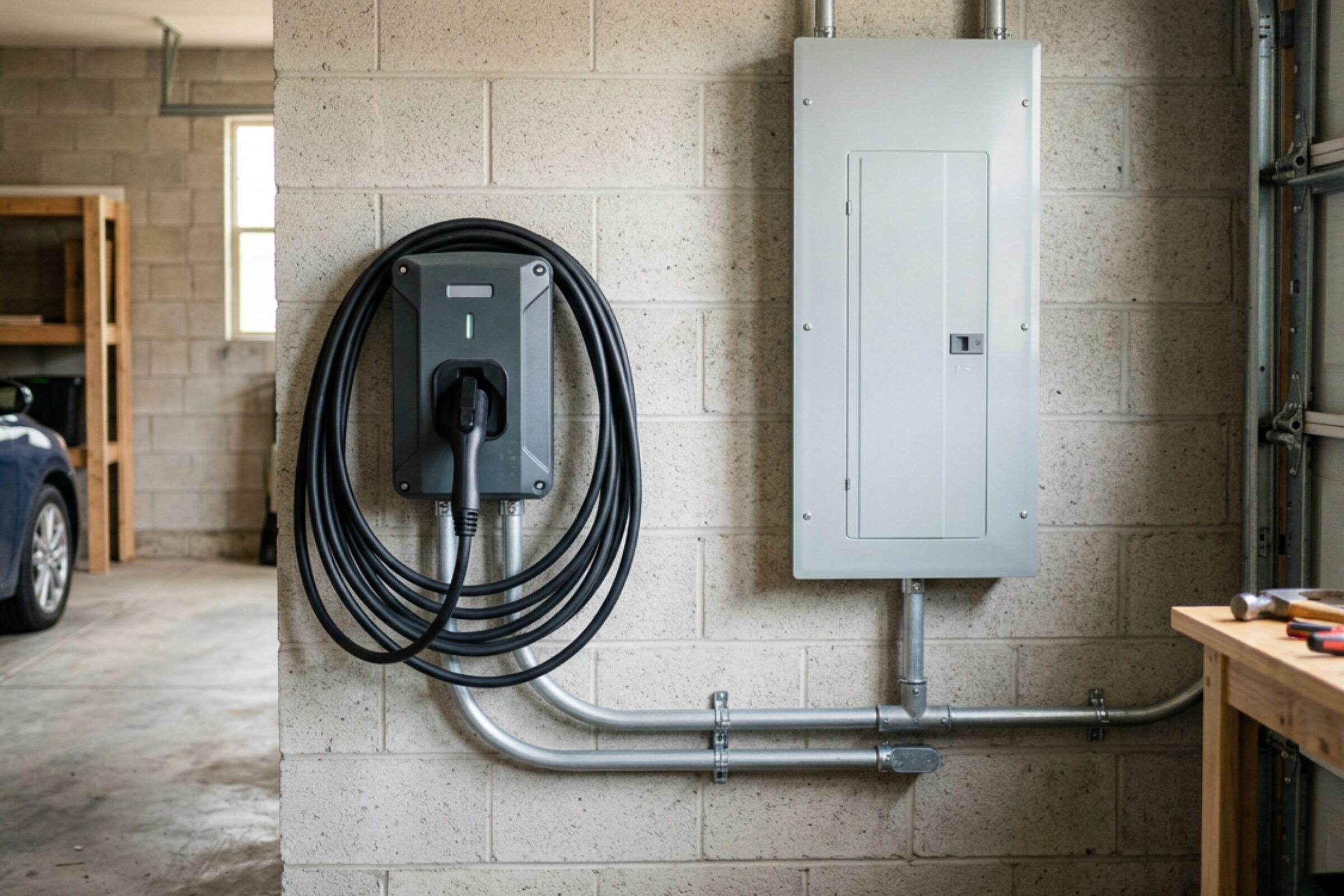
Load management limits, pauses, or adjusts selected electrical loads when necessary. In a home, EV charging is often a practical candidate because the vehicle usually does not need to charge at full power every minute it is plugged in.
A system may monitor the electrical service and allow the charger to operate while sufficient capacity is available. When household demand rises, it reduces charging power or temporarily stops charging. Once demand falls, charging resumes.
Other arrangements prevent two selected loads from operating simultaneously. More advanced systems can coordinate several devices, although their suitability depends on the equipment, design, and applicable requirements.
The distinction between convenience controls and protective load management matters.
An app that schedules charging after bedtime may reduce overlap. But a schedule alone does not necessarily provide an accepted way to prevent overload. Someone could change the schedule, start another appliance overnight, or plug in earlier than usual.
Where load management is being used to support the electrical design, the equipment and installation must be suitable for that purpose. The response to faults or lost communications matters too. A failed control should not leave the system able to exceed its permitted limits.
EV Charger Installation Is Often the Best Place to Start
Charging speed is easy to overestimate. Many homeowners assume they need the highest-powered charger available, even when their driving routine does not justify it.
The better question is how much energy the vehicle needs between trips.
Someone who drives modest distances and parks at home overnight may be well served by a lower charging rate. Another household with long commutes, two EVs, and short parking windows may need more capacity.
For example, charging at roughly 3.8 kilowatts for eight uninterrupted hours supplies about 30 kilowatt-hours before charging losses. Whether that is enough depends on the vehicle, weather, driving conditions, and daily travel.
That calculation is more useful than choosing a charger solely by its maximum amperage.
For an EV charger installation, discuss your normal driving pattern, charging window, and plans for another vehicle. Then compare an appropriately configured charging rate with dynamic load management. Either may reduce the need for a larger service, but the electrical assessment must confirm what is permissible.
What Load Management Cannot Fix
Load management is useful, but it has boundaries.
It does not repair deteriorated wiring, damaged equipment, loose connections, or an unsuitable panel. It does not eliminate the need for correctly sized branch circuits and required protective devices.
It may also be a poor fit when too many essential loads compete for limited capacity. If charging is paused so often that the vehicle cannot meet your daily needs, the installation may be electrically compliant but practically frustrating.
Heating deserves particular care. A design that manages EV charging around heating demand is different from one that interrupts heat during cold weather. Any control affecting heating must account for comfort, equipment requirements, and freeze protection.
This is why residential electrical planning should begin with the household’s needs rather than a preference for a particular device. The cheapest workable arrangement on paper is not always the best arrangement to live with.
When a Service Upgrade Makes Sense
A larger electrical service may be the more practical choice when the existing capacity cannot support planned loads through acceptable management, or when the home needs substantial electrical renewal anyway.
Future projects matter. If you are adding an EV charger now but expect to install electric heating and water heating soon, it is worth assessing those changes together. Otherwise, you may pay for work that needs to be revised later.
A service upgrade can also provide greater flexibility. Household members may be able to use equipment with fewer restrictions, and future additions may be easier to accommodate.
However, increasing the service size does not automatically resolve every issue inside the home. Branch-circuit wiring upgrades, panel changes, or other work may still be necessary.
Ask for a scope that separates the utility connection, service equipment, panel work, and new appliance circuits. That makes competing proposals easier to understand.
Overhead and Underground Service Upgrades: The Practical Differences
If a service upgrade is needed, the route used to bring power to the home affects construction, coordination, and cost. The existing connection and utility requirements usually shape the available options. Homeowners cannot assume either approach is available simply because they prefer it.
Overhead service
An overhead connection brings conductors to the home above ground, commonly from a utility pole.
Depending on the project, work may involve the attachment point, service mast, meter equipment, conductors, and changes needed to meet clearance requirements. Access, the condition of the building, and the location of the connection can affect the scope.
Overhead work often avoids extensive excavation, which may reduce disruption to driveways and landscaping. But it can still require significant changes, particularly if existing equipment or its location is unsuitable.
An overhead upgrade is not automatically simple or inexpensive.
Underground service
An underground connection routes conductors through a below-ground installation.
An upgrade may involve trenching, conduit work, cable replacement, excavation near other utilities, and restoration of disturbed surfaces. Existing underground pathways sometimes help, but they must be assessed rather than assumed usable.
A route beneath a garden bed presents different construction challenges from one beneath a paved driveway or retaining wall. Ground conditions and access for excavation equipment can also change the work considerably.
Underground connections avoid an exposed overhead span to the house, but their construction can be more disruptive. Fault location and repairs may require specialized work or excavation.
Compare the complete scope
There is no dependable universal price comparison between overhead and underground upgrades in Metro Vancouver. Site conditions and utility requirements are too important.
Compare estimates that include equivalent work. Check whether excavation, surface restoration, permits, utility charges, and interior electrical changes are included or excluded.
Responsibility boundaries also need confirmation. Which equipment belongs to the utility, and which belongs to the homeowner? Those answers affect both the project and future maintenance.
A Sensible Assessment Process
Good electrical services should begin with investigation, not an automatic recommendation to replace everything.
A useful planning process is:
-
Document the existing service, panel, major appliances, and visible concerns.
-
Identify the equipment you want to add, including likely future projects.
-
Complete the required load assessment and evaluate acceptable management options.
-
Compare solutions by installation scope, daily usability, maintenance, and future flexibility.
-
Confirm permits, inspections, utility requirements, and any necessary shutdown arrangements.
In British Columbia, the electrical permitting and inspection authority depends on the location. Technical Safety BC has jurisdiction in many areas, while some municipalities administer electrical permits themselves. Your contractor should identify the correct authority for the property.
Utility coordination is also project-specific. Service changes may require design review, scheduling, or infrastructure work beyond the homeowner’s property. Get those requirements clarified before treating a proposed installation date as firm.
Questions to Ask Before Approving the Work
The most useful questions are specific.
Ask what is limiting the existing system and how that conclusion was reached. If load management is proposed, ask which loads it controls, how often charging might be restricted, and what happens if the controller fails.
For a service upgrade, ask what capacity the completed system will provide and whether the quote includes related panel or wiring work. If excavation is involved, establish who handles utility locating and surface restoration.
Request a plain-language explanation of ongoing obligations too. A managed installation may rely on charger settings or approved equipment combinations. Replacing a device later could require another assessment.
Keep permits, inspection records, equipment information, and operating instructions with the home’s electrical documentation. They will be useful during maintenance, future renovations, or a sale.
Plan for a Home You Can Actually Use
The goal is a safe electrical system that supports your household’s routines without unnecessary construction or frustrating restrictions.
Load management can be a sensible way to add EV charging to an existing service. A larger service may be worthwhile when broader electrification plans demand more flexibility. Neither option should be selected by habit.
Start with the loads you need, a proper assessment, and a clear explanation of the alternatives. If an upgrade is necessary, compare overhead and underground work using the actual site conditions and complete project scope. That is a firmer basis for a decision than a generic price estimate or the assumption that every electrified home needs the same solution.