


A 200-amp electrical service upgrade is often described as a panel replacement. That description is incomplete, and it is one reason homeowners in British Columbia see such different prices online.
A new panel may be part of the work, but a true service upgrade involves the equipment that brings electricity into the home, the meter connection, service conductors, grounding, permits, inspections, and coordination with the utility. If the service is underground, it may also involve trenching and repairing whatever gets disturbed along the way.
For a relatively straightforward overhead upgrade, early planning costs may fall around $3,500 to $6,500 or more. Underground and more complex projects may start closer to $6,500 to $10,000 or more. Those figures are useful for rough budgeting, not for treating as a quote. A short driveway cut, a difficult meter relocation, or an old wiring problem can change the total quickly.
The most useful question is not, “What does a 200-amp upgrade cost?” It is, “What work does this particular property need to safely receive and use a 200-amp service?”
A panel upgrade and a service upgrade are different jobs
The terms “panel upgrade” and “service upgrade” get used interchangeably, even though they can describe very different scopes of work.
A panel upgrade may mean replacing an old breaker panel with a new enclosure that has more circuit spaces. This can solve crowding, obsolete breakers, corrosion, or a lack of room for a new circuit. It does not automatically increase the electrical service capacity.
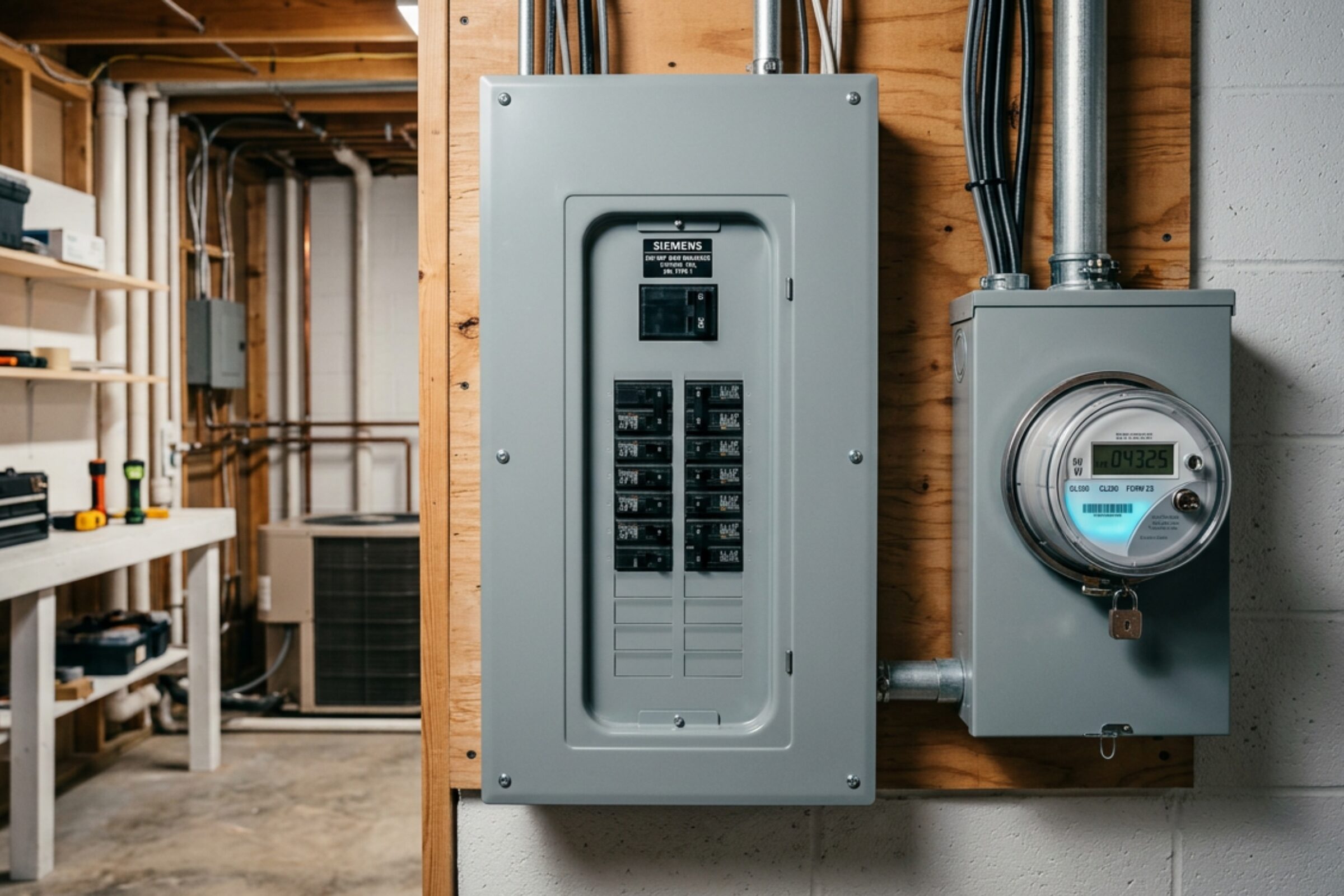
A 200-amp service upgrade means the main service equipment, conductors, meter equipment, and panel are designed and rated to provide 200 amps. The utility connection also needs to support that service arrangement.
Putting a larger panel enclosure on an existing lower-capacity service is not a 200-amp service upgrade. It may still be sensible work, especially when a home needs more breaker spaces, but it does not create more available capacity for large new loads.
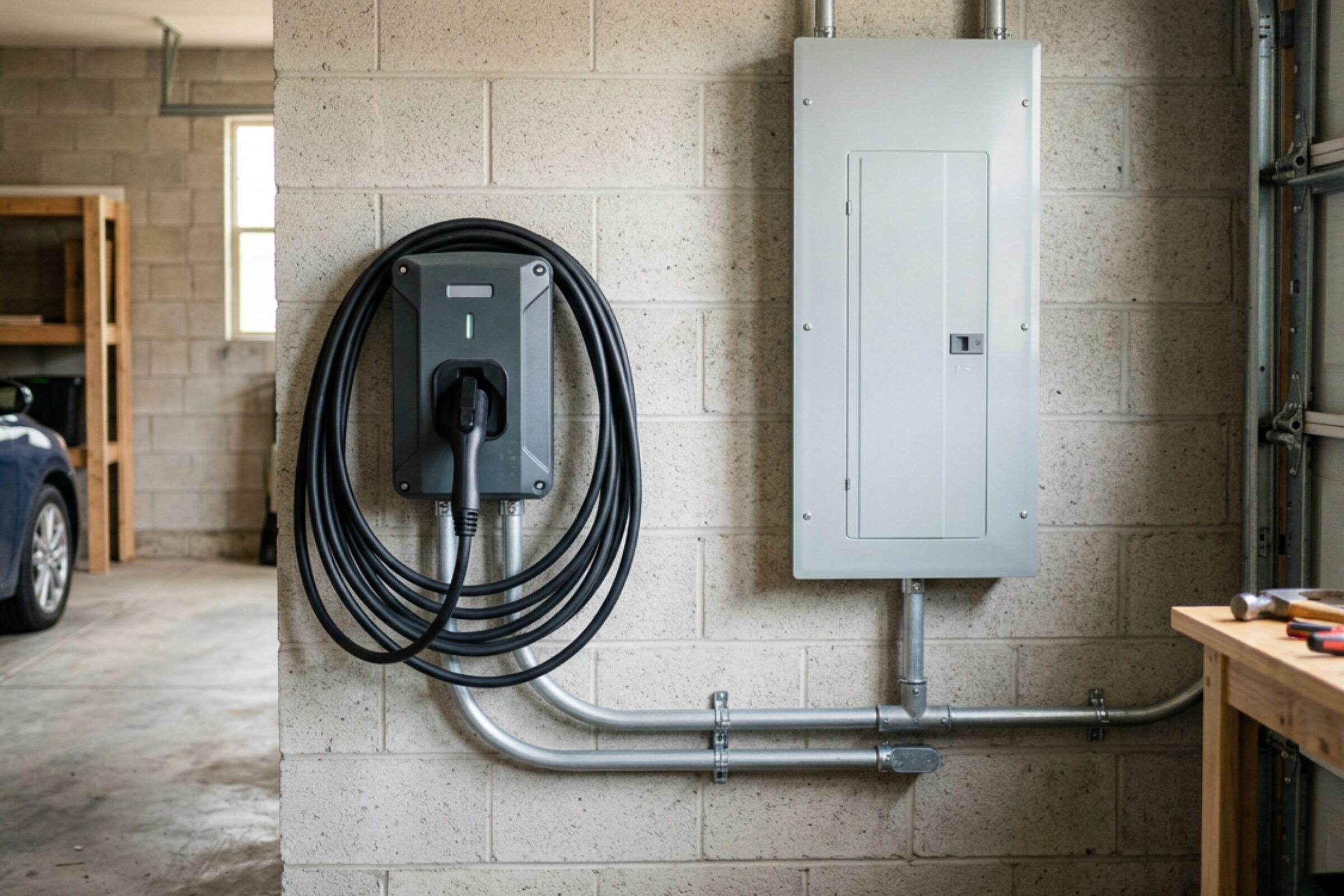
This distinction matters for anyone planning EV charger installation, heat pumps, electric water heating, or a secondary suite. Before budgeting for major residential electrical work, confirm whether the real constraint is panel space, service capacity, equipment condition, or all three.
Why one online price can be thousands lower than another
A low advertised price may cover the panel and electrician labour only. Another quote may include permits, meter equipment, new service conductors, utility charges, trenching, grounding upgrades, restoration, and taxes. Neither price is automatically wrong, but they are not comparable.
Homeowners sometimes receive two estimates for what appears to be the same project, then assume one contractor is simply charging more. In reality, the higher estimate may account for costs that the lower one has excluded or left for later.
When reviewing quotes, look beyond the headline number. Ask what is included in the scope and what will be treated as an extra. The difference becomes especially important when comparing overhead and underground services.
A detailed estimate can feel less appealing at first because it puts likely costs in plain sight. Still, a complete scope is usually easier to budget for than a vague low number followed by change orders after work begins.
What a complete 200-amp upgrade may include
Every property is different. An inspection determines what can remain in place and what needs replacement. Still, many 200-amp upgrades involve some combination of the following:
-
A new 200-amp panel, main breaker or main disconnect, breakers, circuit reconnection, and clear labelling
-
A meter base and service conductors sized for the new service
-
A new overhead mast and weatherhead, or underground conduit and pull boxes
-
Grounding and bonding work required under current electrical rules
-
An electrical permit, inspection, testing, and utility coordination
Some homes need all of these pieces. Others may need only part of the list because existing equipment is suitable and properly located. The final quote should identify the service rating being installed and clearly name the equipment included.
Surge protection may also be proposed. It is worth discussing separately rather than assuming it is automatically included. It can be a practical addition in a modern home full of electronics, but it is distinct from the core service upgrade.
Overhead service upgrades: the visible details matter
Overhead service upgrades are often less expensive than underground work, but they are not always simple.
A typical overhead service has a mast rising from the building, a weatherhead at the top, service conductors extending to the utility connection, a meter base, and the panel or main disconnect. If the existing mast, attachment point, or meter location does not meet current clearance requirements, changes may be necessary.
Roof height can matter. So can a newer deck, a renovation, a garage addition, or a tree that has grown into the area. A mast that was accepted decades ago may no longer meet the requirements applied when the service is altered.
Sometimes the meter needs to move. That can add cable routing, exterior work, and interior restoration if conductors must travel through finished walls or ceilings. It is one of those details that is hard to price accurately from a single exterior photo.
Access also affects labour. A clear side yard with a direct path to the panel is one thing. A steep lot, tight access, finished landscaping, or an awkward roofline is another.
Underground service upgrades: excavation is often the cost driver
Underground service can look tidy once finished, but the work below ground is where costs grow.
The project may require utility locates, route design, trenching, conduit, pull boxes, new service conductors, meter equipment, backfilling, and restoration. The final restoration might involve lawn, garden beds, pavers, asphalt, concrete, retaining walls, or a driveway.
Existing conduit is not automatically reusable. It may be too small for larger conductors, damaged, full of debris, improperly routed, or unsuitable for the updated installation. Discovering that after the work starts can change the plan.
There is also a design issue that homeowners should not overlook: do not assume where the utility connection will be made. BC Hydro or another local utility may need to review the route and identify the appropriate connection point before the design is final.
A trench that crosses a simple lawn is a different project from one that crosses a concrete driveway, landscaped garden, or heavily built-up side yard. The panel itself may cost roughly the same in both homes. The site work does not.
Utility coordination can take longer than the electrical work
The physical installation may take a day or two. The overall project may take longer because utility processes run on a separate schedule.
Utility work can involve an application, design review, payment of applicable charges, scheduling, and field work. Published connection charges may list a minimum, but the actual amount depends on what the utility needs to do for the property. Those costs are separate unless a quote explicitly says otherwise.
For example, an electrician may be ready to install the panel, but the final connection cannot happen until the utility completes its portion. This is frustrating when a homeowner is trying to coordinate a heat pump installation, renovation deadline, or EV charger installation. It is also normal.
Build some flexibility into the project schedule. Avoid booking other work around a single assumed energization date until the utility arrangements are confirmed.
Permits and inspections are part of the real price
A 200-amp service upgrade requires a permit and inspection process. Depending on the location, permits may be handled by the municipality or by Technical Safety BC.
Permit fees vary by authority and can change. A licensed electrician will usually obtain the permit, then either include the fee in the total or list it separately. If a quote does not mention a permit, ask about it directly.
This is not paperwork for paperwork’s sake. The inspection checks that the new equipment, conductor sizing, grounding, bonding, clearances, and installation methods meet the rules that apply to the project.
In the greater Vancouver area and across the lower mainland, local conditions can vary even between nearby communities. A professional site assessment is more reliable than trying to apply a neighbour’s renovation cost to your home.
Why older homes can be unpredictable
Older homes often need more investigation before a reliable price can be given. The panel may be only one part of a much older electrical system.
Branch-circuit conductors can be short, poorly labelled, tightly packed, or routed in ways that complicate reconnection. An electrician opening the panel may find damaged insulation, improper splices, incompatible breakers, poor grounding, or previous alterations that need correction.
Finished interiors add another layer. Plaster walls, finished basements, built-in cabinetry, and renovated ceilings may make it difficult to route new wiring without opening and repairing surfaces.
That does not mean every old home will become an expensive surprise. It does mean the quote should explain how hidden conditions will be handled. Find out whether the contractor has included an allowance, what conditions may trigger extra work, and whether approval is required before proceeding with changes.
Clear communication matters more than false certainty here.
Do you actually need 200 amps?
A 200-amp service is common in newer homes and can make sense for households moving toward electrification. But it is not automatically the right answer for every property.
A homeowner may request an upgrade because they want an EV charger. Yet a demand assessment might show that the existing service can support charging at a reduced rate. In other cases, an EV load-management system can temporarily adjust charging when the home is using more power.
That approach can be sensible when the home has a modest electrical demand and the owner only needs overnight charging. It may be less appealing if several large loads are planned soon and the service will need upgrading anyway.
A subpanel is another commonly misunderstood option. It can create more breaker spaces and organize circuits, but it does not increase the capacity of the incoming service.
A 200-amp upgrade is often worth considering when a home will add several major electrical loads, such as:
-
An EV charger, heat pump with electric backup heat, induction range, electric water heater, hot tub, or secondary suite
-
A detached workshop, garage conversion, or larger renovation with new circuits
-
Replacement of aging panel and service equipment that is already near the end of its useful life
For a homeowner planning a whole-home electrification path, doing the service upgrade early can prevent spending money on temporary equipment that will later be removed. On the other hand, a careful load calculation may show that a smaller project solves the actual problem. The diagnosis should come before the decision.
How to get a more accurate estimate
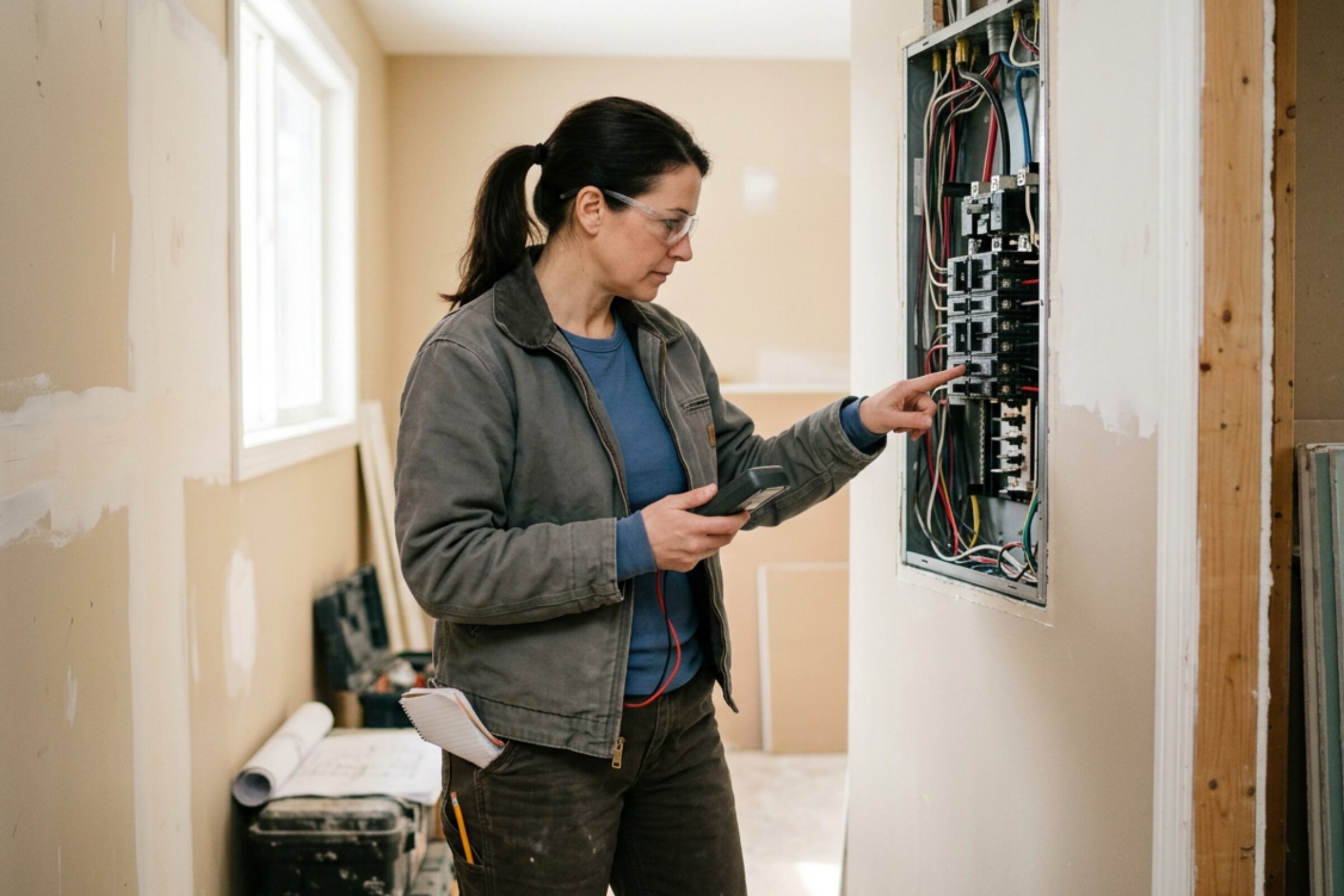
Photos can help with early planning, but they should be useful photos. Include the full panel interior with the main breaker visible, the meter and service entrance, and the path between the meter and panel.
For an overhead service, show the mast, weatherhead, roofline, and utility connection area. For underground service, include driveways, landscaping, gates, retaining walls, and the likely route between the utility connection and the home.
Also explain why you are considering the upgrade. List major existing loads and planned additions, including heating equipment, an induction range, EV charger installation, a suite, or workshop tools. This helps licensed electricians assess whether the concern is capacity, panel space, condition, or a combination.
Residential electrical projects need a different approach than commercial electrical or industrial electrical work, where load profiles, distribution equipment, and operating schedules can be far more complex. Still, the basic principle is the same: good information leads to a better design and fewer surprises.
Questions to ask before accepting a quote
A quote should make it easy to understand what you are paying for. Ask whether the total includes utility charges, permits, the panel, meter base, mast or underground conduit, grounding work, breakers, trenching, concrete repair, drywall repair, restoration, and tax.
It is also reasonable to ask how long the planned power outage will last, what payment schedule applies, and who is responsible for costs caused by utility scheduling changes.
The service changeover itself often means several hours without power. The broader project may stretch over multiple days if trenching, restoration, or utility field work is needed. Most people can remain in the home, but plan ahead for refrigeration, heating, medical equipment, internet access, and remote work.
A 200-amp service does not lower an electricity bill by itself. It gives the home more capacity to use electricity. Consumption, and therefore cost, still depends on what you run and how often you run it.
The practical way to budget for the project
The cleanest way to understand a 200-amp upgrade is to separate it into three categories: electrical work, utility work, and restoration.
Electrical work covers the panel, conductors, meter equipment, grounding, installation labour, permit, and inspection. Utility work covers the connection and any design or field requirements imposed by the utility. Restoration covers the surfaces disturbed to complete the job, especially on underground routes.
Once those categories are visible, price differences make more sense. A low-cost overhead project with a clear route and modern equipment may be quite manageable. An underground upgrade through concrete and finished landscaping can be a major construction job disguised as an electrical project.
The best starting point is a site-specific assessment by licensed electricians who can inspect the existing service, perform the appropriate load assessment, and identify the utility and restoration requirements. That process may feel slower than picking an online price, but it is how homeowners get a number they can actually plan around.