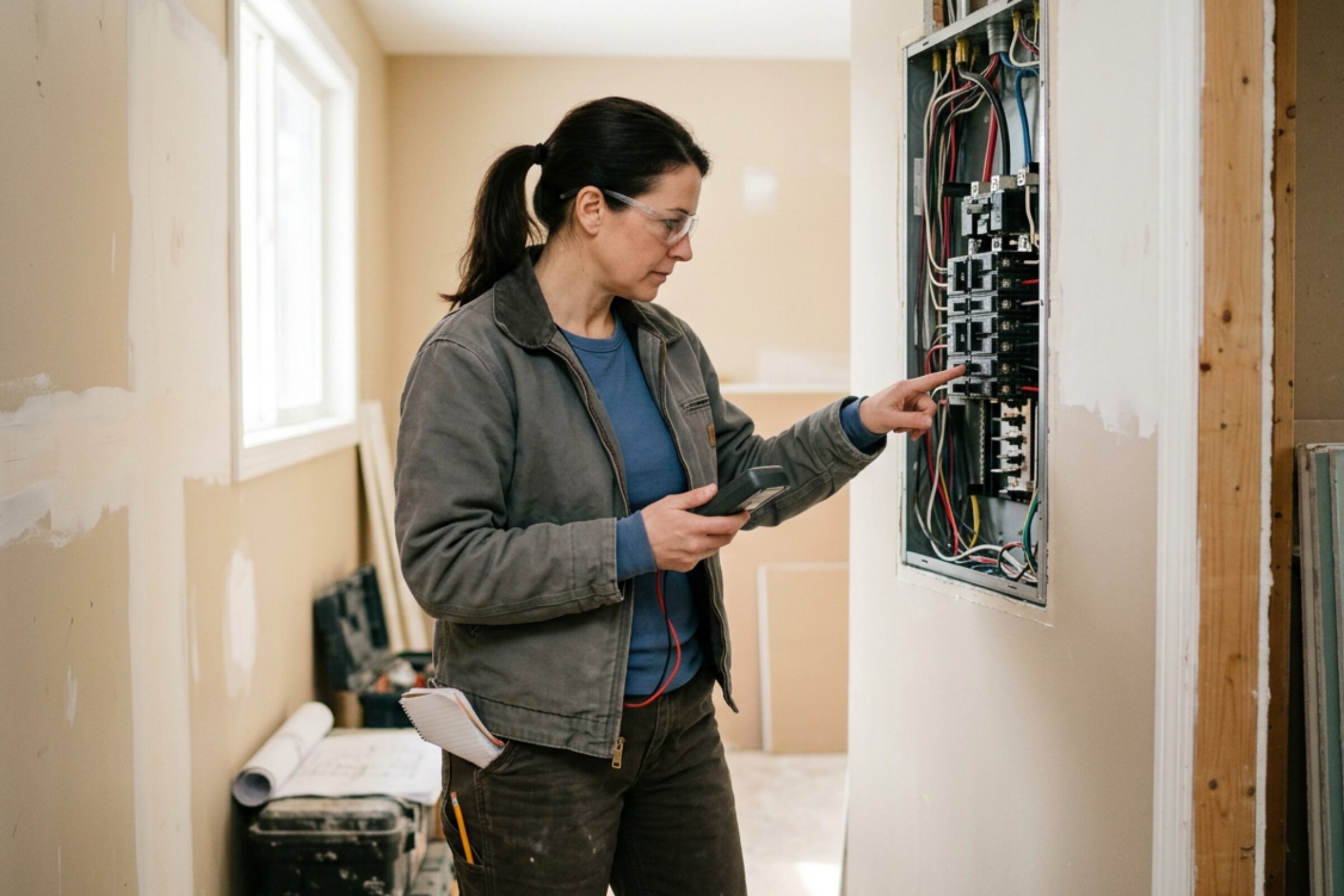


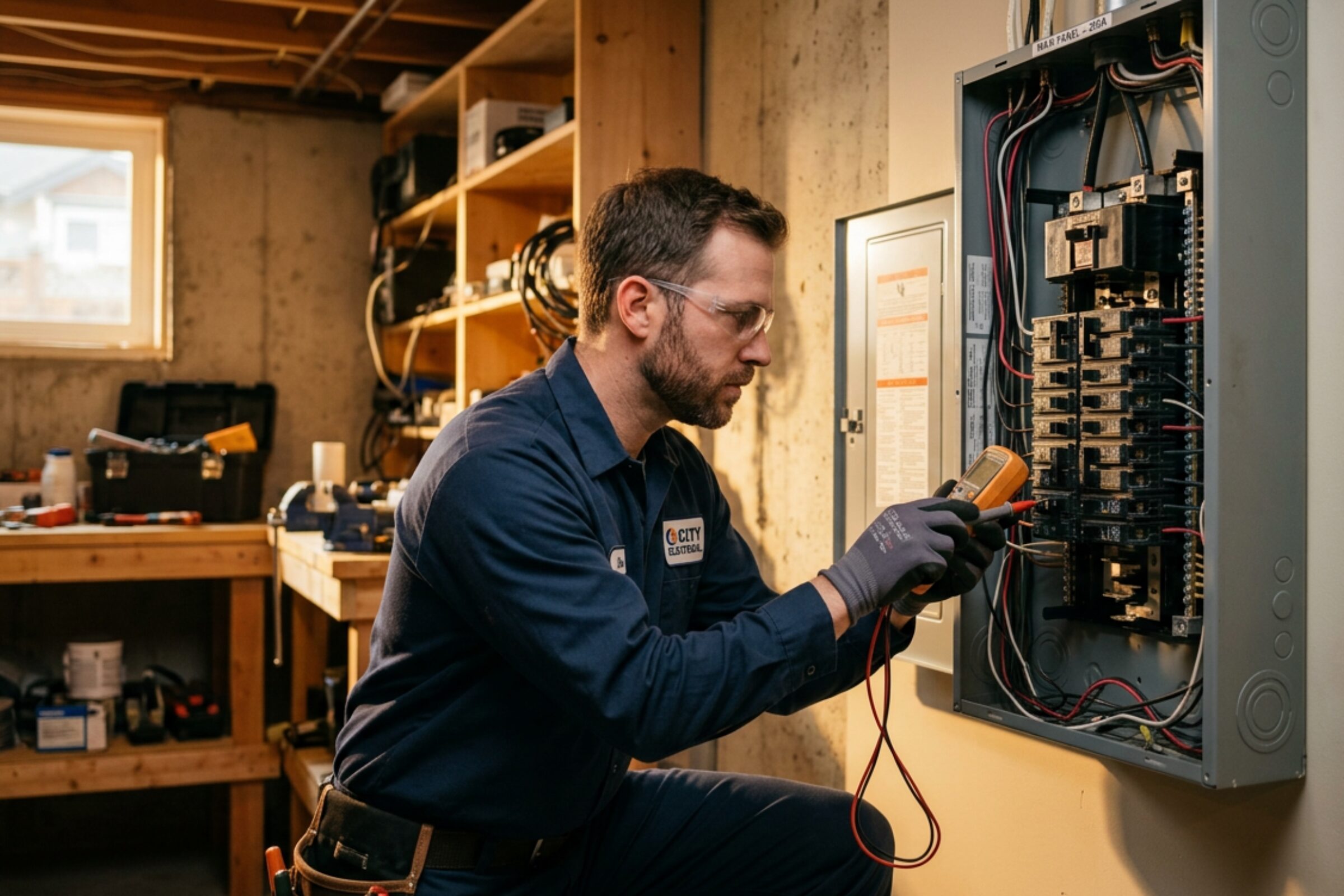

Electrical work at home often starts with a practical question: can you do the work yourself, or do you need to hire a licensed electrician?
The answer is not always obvious. Replacing a damaged outlet cover is one thing. Moving an outlet, adding a ceiling fan, installing an EV charger, or changing equipment near the electrical panel is another. Many projects require an electrical permit, and the person allowed to apply for that permit depends on the property, the work involved, and the authority that regulates electrical safety where you live.
For homeowners in Vancouver and the greater Vancouver area, it pays to sort this out before buying materials or opening a wall. Permit issues can delay a renovation, complicate an inspection, affect utility service work, and create headaches when the home is sold.
Here is how homeowner electrical permits work, when a contractor needs to pull the permit, and why inspections matter just as much as the application itself.
What Is an Electrical Permit?
An electrical permit is formal authorization to install, alter, extend, or connect electrical equipment. It gives the local inspection authority a record of the work and creates a path for required inspections.
The permit process exists for a good reason. Electrical systems are hidden behind walls, above ceilings, and inside panels. A wiring error may not cause an immediate problem. It might sit unnoticed until a circuit is overloaded, a connection overheats, or a fault creates a shock hazard.
A permit does not guarantee perfect workmanship, but it puts the work into a safety process. The authority can review plans when necessary, inspect the installation, and require corrections before the project is signed off.
In many parts of British Columbia, electrical permits are issued by the provincial technical safety authority. In other locations, the local municipality has jurisdiction. Vancouver has its own permitting processes for many types of construction work, so property owners should always confirm which authority applies to their address.
Electrical Work That Often Requires a Permit
People sometimes assume permits are only for major renovations or a full electrical service upgrade. In reality, relatively common residential electrical projects may need a permit.
Examples often include:
-
Installing, relocating, or adding light switches and receptacles
-
Installing a new lighting circuit, ceiling fan, or hardwired light fixture
-
Connecting permanently installed equipment, such as a dishwasher, range hood, heat pump, security camera system, or over-range microwave
-
Adding solar equipment
-
Installing an EV charger
-
Extending branch-circuit wiring to a basement suite, garage, shed, or workshop
-
Replacing or upgrading an electrical panel
-
Altering the electrical service, meter equipment, or service capacity
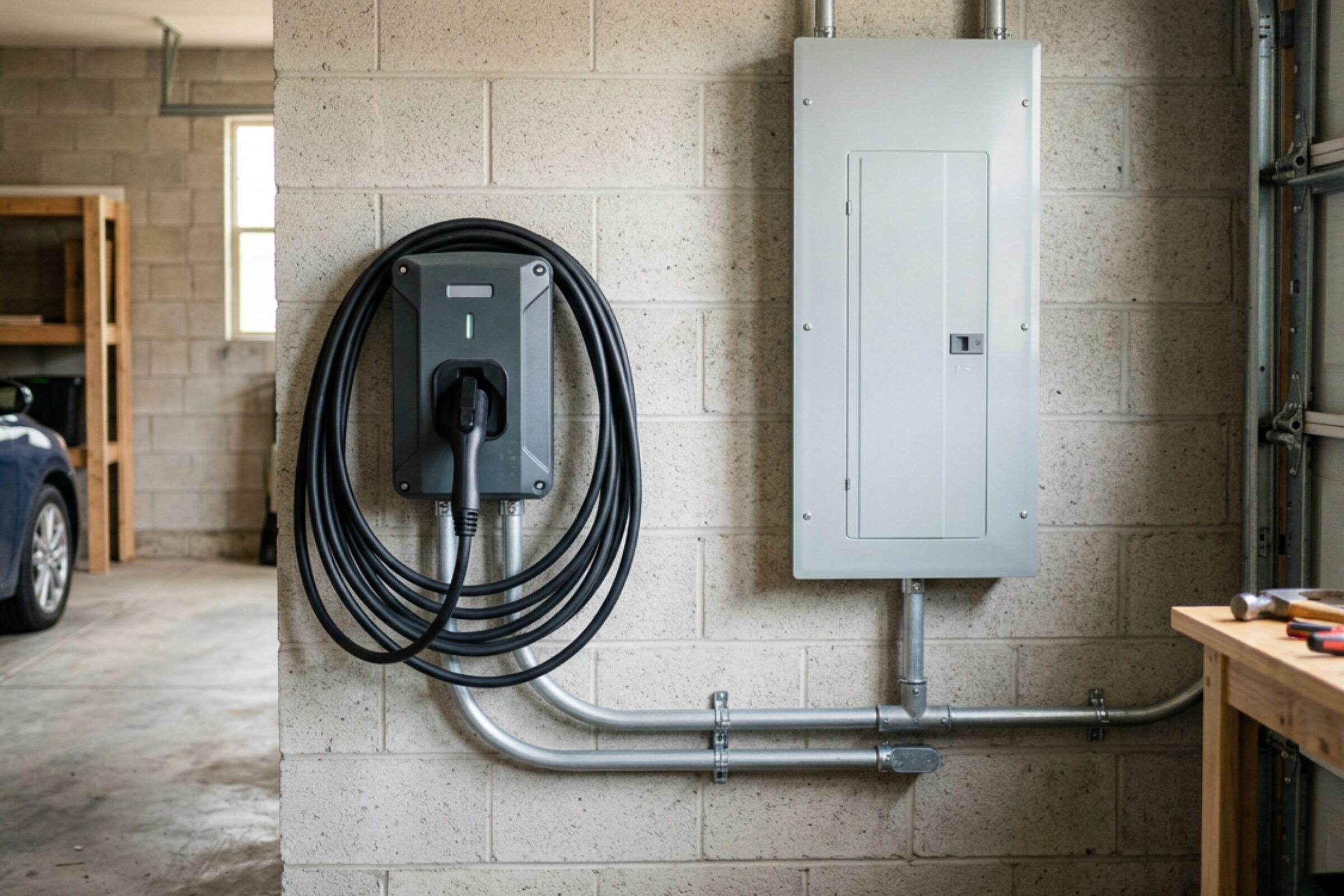
EV charger installation is a good example of why permits matter. A charger may look like a simple wall-mounted device, but it can place a substantial continuous load on the home’s electrical system. The installer may need to calculate the home’s electrical demand, confirm panel capacity, choose the correct circuit breaker and wire size, and coordinate with the utility if a service upgrade is required.
Wiring upgrades can raise similar issues. If a home has aluminum wiring, an aging panel, overloaded circuits, or an old fuse system, the work may require more than swapping a few parts. Once the scope expands, permit and inspection requirements become much more likely.
Small maintenance tasks can be treated differently. For example, replacing an existing switch, receptacle, or thermostat without changing wiring may not require a permit when a licensed electrical contractor performs the work. Still, do not treat that as a blanket exemption. The exact rules depend on the nature of the replacement and the authority with jurisdiction.
Can a Homeowner Pull an Electrical Permit?
In many cases, an eligible homeowner may apply for an electrical homeowner permit and carry out qualifying work in their own residence. This option is intended for owners working on a home they personally occupy, not for every kind of property or project.
Eligibility matters. A homeowner permit is not simply a cheaper version of a contractor permit. When you pull the permit yourself, you take responsibility for the application, the quality of the work, inspection requests, corrections, and compliance with electrical safety rules.
That responsibility continues even if a family member helps with the job. It also continues if the work seems straightforward.
Before applying, ask these questions:
-
Does this project require an electrical permit?
-
Is the property eligible for a homeowner permit?
-
Does the project include a service change, utility work, or specialized equipment?
-
Which authority issues permits at this address?
-
Can you meet the inspection and documentation requirements on time?
If any answer is unclear, pause before starting. A quick call or online review of the relevant authority’s requirements is far easier than correcting unpermitted work after the walls are closed.
When a Homeowner Is Not Eligible
Certain owners cannot obtain a homeowner electrical permit, even if the electrical work is limited to a unit they own.
Homeowner permits are generally not available for:
-
Owners of strata properties
-
Owners of non-strata duplexes
-
People operating a business from the home
These restrictions surprise people, especially condo owners who want to make a modest change inside their own unit. But electrical systems in strata buildings can affect common infrastructure, neighboring units, fire separation, building access, and insurance requirements. The same concern applies to certain duplex arrangements and home-based businesses.
In those cases, the work needs to be completed under a licensed electrical contractor’s permit.
There is also a practical point here. Even if a homeowner qualifies on paper, a project may still be too technical to approach as a do-it-yourself job. Service equipment, panel replacements, load calculations, solar connections, and heat-pump circuits can involve decisions that are hard to reverse once the work is installed.
If You Hire an Electrician, Who Pulls the Permit?
When you hire a licensed electrical contractor, the contractor should apply for the electrical permit on your behalf.
That is the normal and sensible arrangement. The contractor is responsible for describing the scope of work, scheduling inspections, responding to deficiencies, and completing permit-related steps. It also creates a clear line of accountability if the scope changes halfway through the project.
Before work starts, ask the contractor directly:
-
Will you pull the electrical permit?
-
Is the permit fee included in the quote?
-
What work is included under that permit?
-
Who will arrange inspections?
-
What happens if an inspector requires corrections?
-
Will the final permit documentation be provided after the work is complete?
These are normal questions. A licensed electrician should expect them.
Do not assume a permit has been issued because a contractor says one will be obtained. Ask for the permit number, and use the applicable permit lookup tool when one is available. Verification is particularly important when the job affects a panel, electrical service, solar installation, or EV charger installation.
Why Service Changes Are a Different Category
Electrical service work deserves extra caution. Your service is the equipment that brings power from the utility into the home, including components such as the meter base, service entrance conductors, main disconnect, and electrical panel.
A service upgrade can be necessary when a home adds major electrical loads. Common reasons include:
-
An EV charger
-
Electric heating or a heat pump
-
A hot tub
-
Induction cooking equipment
-
A suite conversion
-
A larger panel to support a renovation
-
Replacing obsolete or unsafe service equipment
These projects may involve the electrical inspection authority and the utility company, each with separate requirements. The utility may need to disconnect and reconnect power. Meter-related work can require specific equipment and approval. Final energization may not occur until the installation passes inspection.
This is one area where hiring licensed electricians is usually the right call. A service issue affects the whole property. An error can leave the home without power, damage equipment, or create a serious fire and shock risk.
The Permit Is Only the Start: Inspection Responsibilities
Pulling a homeowner permit does not mean the work is finished once the wiring is installed. The permit creates inspection obligations that must be followed.
A homeowner performing permitted electrical work must submit a declaration after each completed phase of work, or every 180 days, whichever comes first. An Electrical Homeowners Inspection Request form must also be completed within 180 days of the permit issue date.
That timeline can catch people off guard. Renovations often take longer than expected, especially when they involve drywall, other trades, supply delays, or changes to the design. If the electrical work has not moved forward, the homeowner may still need to communicate with the inspection authority rather than simply letting the permit sit.
Inspections should happen while important work remains visible. If new wiring is concealed behind insulation and drywall before the rough-in inspection, an inspector may require access to confirm the installation. That can mean opening finished walls. Nobody enjoys paying to repair drywall twice.
For a typical project, inspections may occur at stages such as rough-in and final completion. The specific timing depends on the job and the authority. Ask early, then schedule the inspection before moving to the next irreversible step.
Plans, Specifications, and Changes to the Scope
Some projects need more than a basic permit application. The authority may ask for plans, load calculations, equipment specifications, or a description of the installation.
This is more likely when the project involves solar equipment, service upgrades, large loads, a major remodel, or unusual electrical equipment. The purpose is straightforward: the inspector needs enough information to understand what is being installed and whether the electrical system can support it safely.
Scope changes also matter. A project that begins as a small kitchen wiring update can grow quickly. Perhaps you add more countertop outlets, install a new range hood, upgrade appliances, or decide to run a circuit for a future EV charger. Those changes may require an amendment to the permit.
Do not treat the original permit as permission for anything electrical that happens during the renovation. The permit should accurately match the work being performed.
Residential, Commercial, and Industrial Work Follow Different Rules
A homeowner permit applies to qualifying work at an eligible residence. It does not cover commercial electrical or industrial electrical work.
If the property contains a business operation, rental arrangement subject to different rules, shared building systems, or specialized machinery, the permitting path changes. Commercial and industrial work often involves higher loads, more detailed plans, additional safety systems, and more complex code requirements.
Even within residential electrical work, a detached home, a strata unit, a duplex, and a mixed-use property can have different eligibility rules. The property classification matters as much as the task itself.
This is why online advice can be misleading. A forum post about someone replacing wiring in a detached house may not apply to a condo owner in Vancouver, a duplex in the lower mainland, or someone converting part of a home into a business workspace.
A Practical Checklist Before Electrical Work Begins
Before starting an electrical project, work through these steps:
-
Define the work clearly. Write down every new circuit, device, fixture, and piece of permanently connected equipment.
-
Check whether a permit is required. Do this before demolition or purchasing equipment.
-
Confirm who has jurisdiction. The permit may come from a municipality or the provincial safety authority, depending on the property location.
-
Determine whether you qualify for a homeowner permit. Strata owners, certain duplex owners, and people operating businesses from home may need a licensed contractor.
-
Consider the complexity honestly. Panel work, service changes, solar installations, and EV charger installations deserve professional planning.
-
Confirm utility requirements separately when work affects the service connection, meter, capacity, or reconnection process.
-
Keep permit records and inspection documents. You may need them during a future sale, insurance review, renovation, or troubleshooting appointment.
-
Do not energize or use altered equipment until required approvals are complete.
The Bottom Line
Who can pull an electrical permit depends on the property, the job, and the local rules. An eligible homeowner may be able to apply for a homeowner permit for qualifying residential work. If the property is a strata unit, a non-strata duplex, or a home used for business, a licensed electrical contractor is generally required.
For larger residential electrical projects, contractor involvement is often the safer choice even when a homeowner permit might be available. Service upgrades, new panels, wiring upgrades, heat pumps, solar equipment, and EV charger installation all have details that reach beyond the visible device or circuit.
The best time to resolve permit questions is before work begins. Confirm the authority, verify eligibility, make sure the permit is active, and plan for inspections. It is less exciting than picking fixtures or planning a renovation, but it is the part that helps keep the finished work safe, legal, and ready to use.