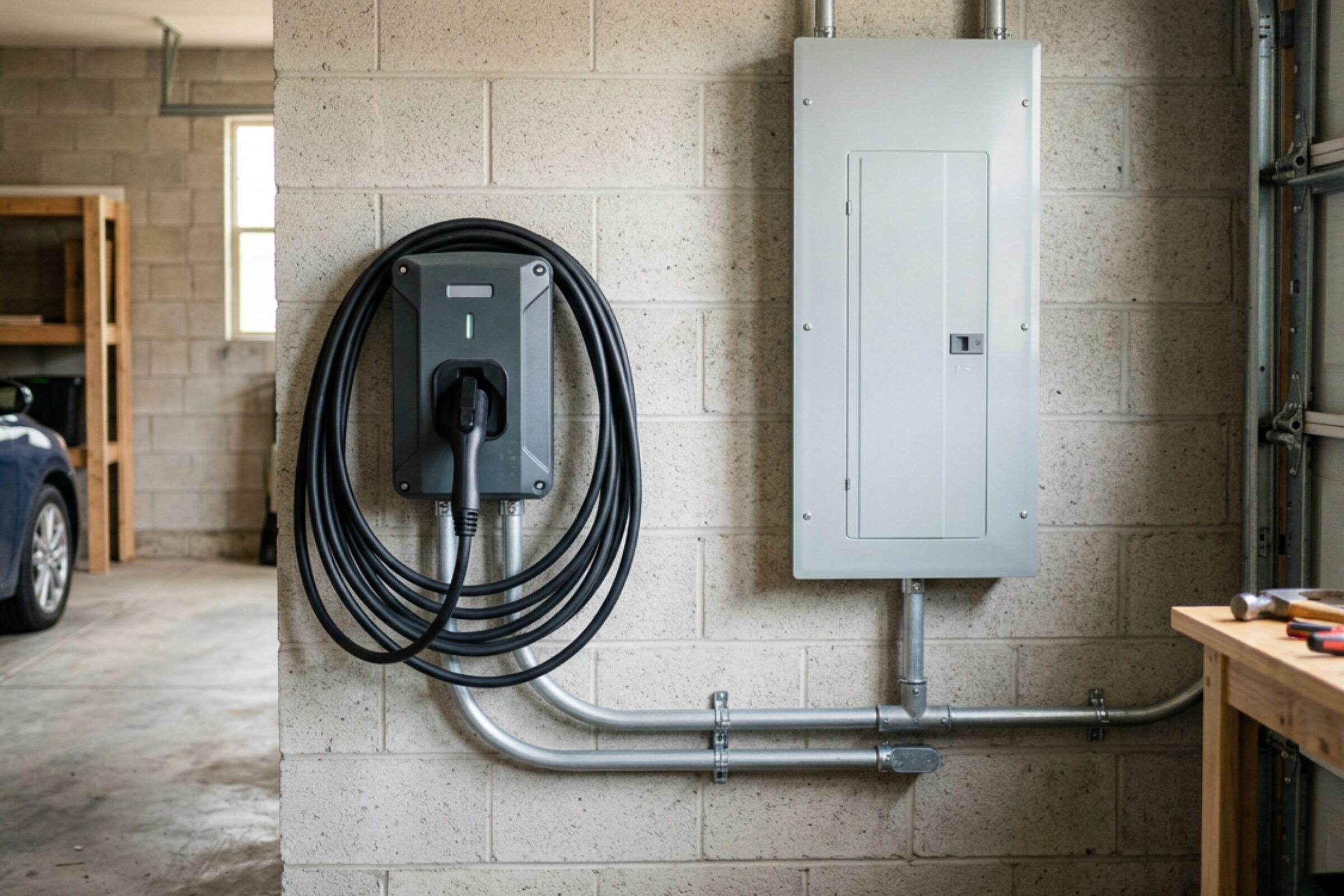


If you are thinking about a Level 2 EV charger, a heat pump, a hot tub, or a home addition, there is a question that comes up fast: can your home’s electrical service handle it?
A lot of people assume the answer is no, and jump straight to the idea of a panel upgrade. Sometimes that is the right call. Sometimes it is an expensive detour.
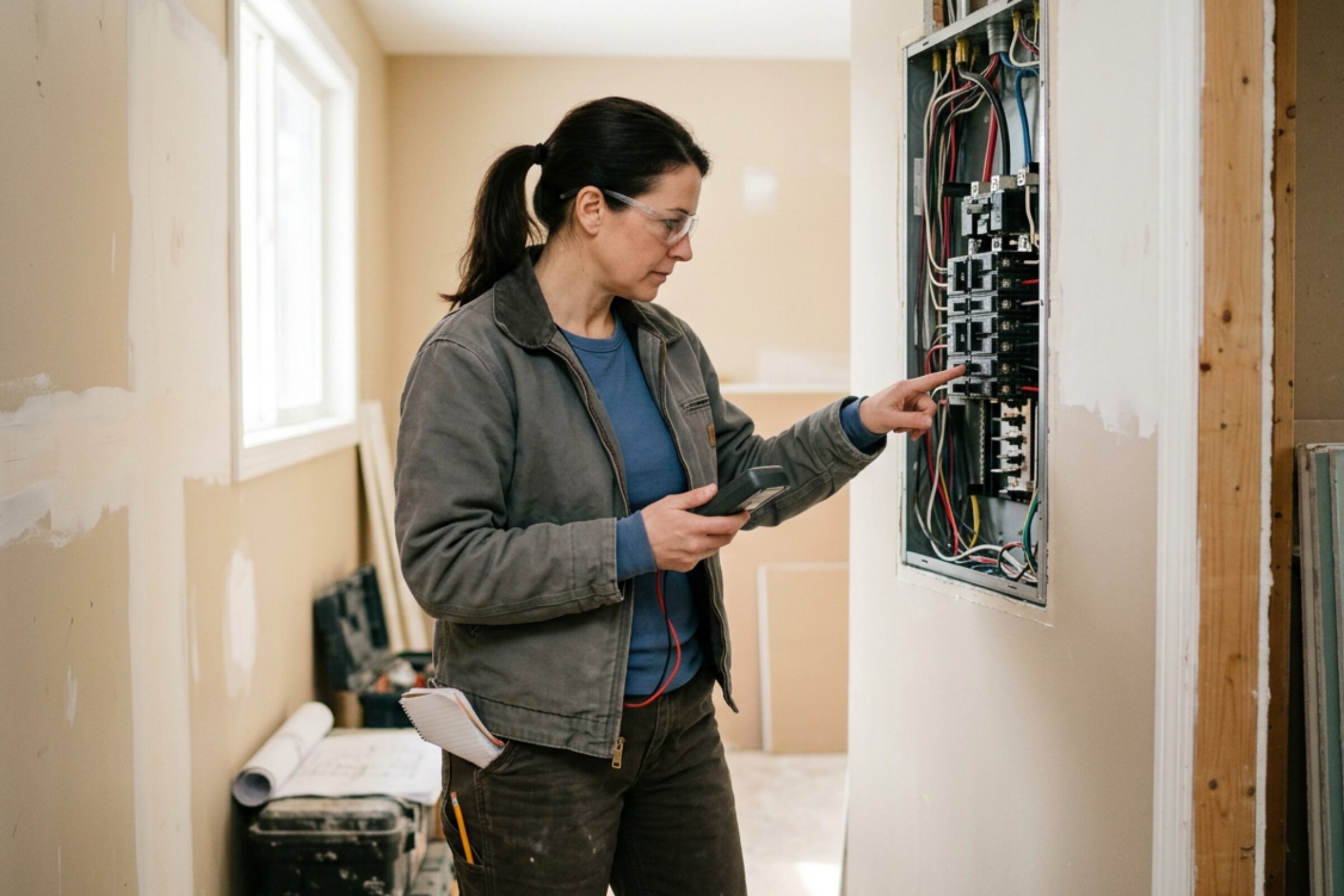
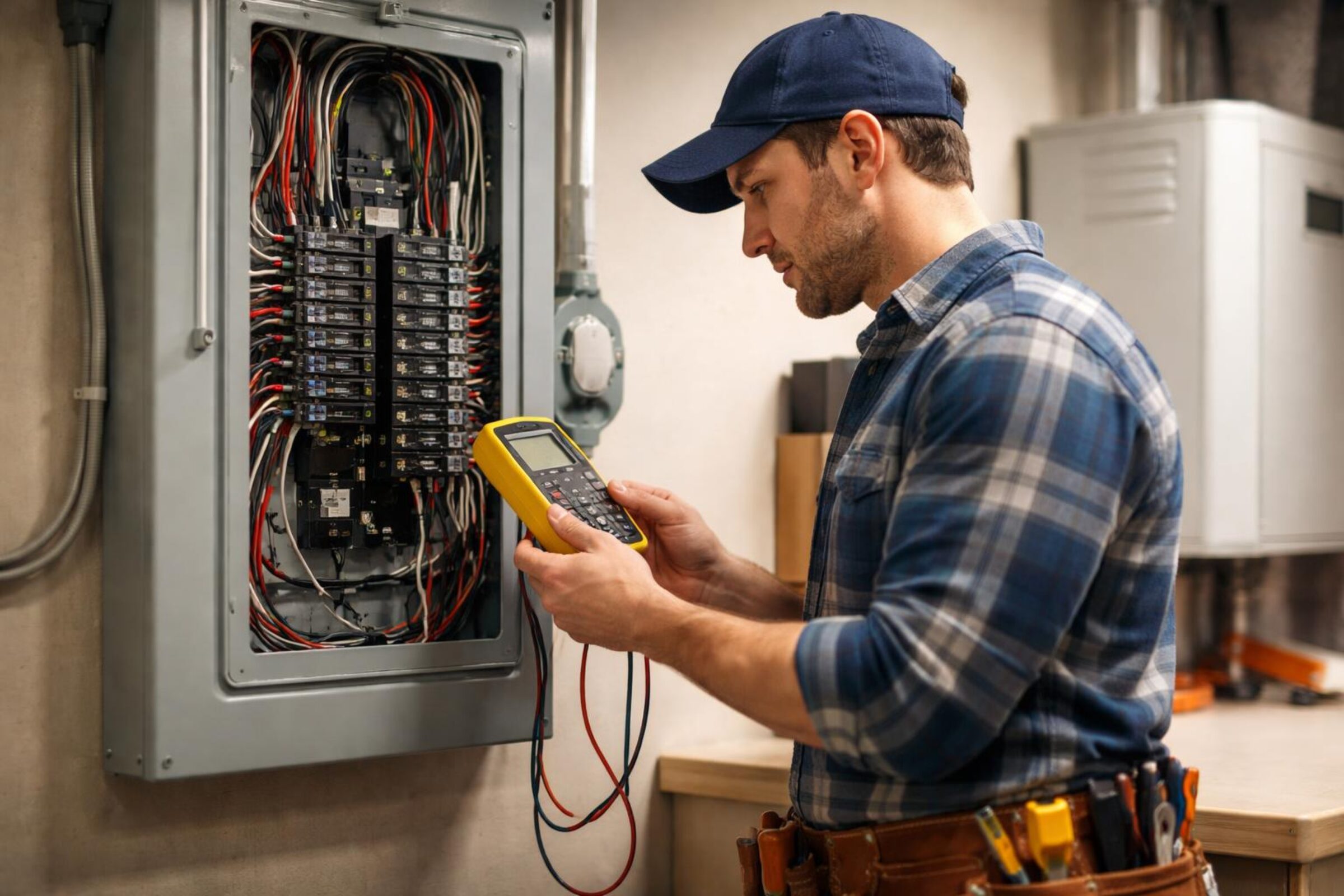
The better first step is a load calculation. That sounds technical, and it is, but the basic idea is simple. Your electrician needs to figure out how much power your home actually uses, how much room is left on your existing service, and whether the new equipment fits safely within that limit.
This matters across the lower mainland and the greater Vancouver area, where many homeowners are adding electric heating, EV charger installation, and other upgrades as older homes take on bigger electrical demands. The good news is that a service upgrade is not always required. In many cases, careful planning, real usage data, and a few smart adjustments can avoid a much larger project.
What “electrical capacity” actually means
Your home’s electrical capacity is the amount of power your service can safely supply at one time.
If your house has a 100 amp service, that does not mean every circuit is maxed out all day. It means the system was designed to support a certain total load. The real question is how close your home gets to that limit during peak use.
That is where things get interesting.
Most homes do not run every major appliance at full draw all at once. Your oven cycles on and off. Your dryer is not running 24 hours a day. Your car charger might only run overnight. A heat pump behaves differently than old electric baseboards. Real life is messy, and that is exactly why actual meter data can tell a much better story than rough assumptions alone.
The projects that usually trigger a capacity check
Some upgrades almost always call for a fresh look at your panel and service size. The common ones are:
-
Level 2 EV charger
-
Heat pump installation, especially when switching from gas or another fuel
-
Pool equipment or a hot tub
-
Home additions, basement suites, or other expanded living space
Each of these adds new demand. A Level 2 charger can be a big one. So can electric space heating. Even a smaller project can matter if your panel is already busy.
I think this is where homeowners get tripped up. The project itself may seem simple. “It’s just one charger” or “it’s just a hot tub.” But electrical systems do not care how casual the phrasing is. They care about load.
Why a load calculation should come before a panel upgrade
A panel upgrade has a way of sounding like the default solution. Bigger must be better, right?
Not necessarily.
A proper load calculation tells you whether the existing service has enough room, whether some kind of load management would solve the problem, or whether an upgrade is truly needed. Without that calculation, you are guessing, and guessing is not a great basis for residential electrical work.
For homeowners in Vancouver, especially in older neighbourhoods, this can save real money. Some houses can support more than people expect. Others need changes, but not the massive jump they first imagined. Going from 100 amps to 200 amps may make sense. Jumping far beyond that without evidence usually does not.
The two main ways electricians calculate capacity
There are two accepted ways to assess a home’s electrical capacity. One uses standardized assumptions. The other uses your home’s actual usage history.
1. The calculated-load method
This is the traditional method.
An electrician uses formulas based on the home’s square footage, major appliances, heating loads, and expected demand. It relies on code-based assumptions and industry averages rather than your lived usage.
This method is still necessary in some situations, including:
-
new construction
-
homes without 12 months of account history
-
situations where the current owner has moved in recently
-
cases where meter data is unavailable
It is useful, and sometimes it is the only option. But it is still a model. It estimates how a home might behave, not how it actually has behaved.
2. The meter-data method
This is usually the better option when it is available.
Under this approach, the contractor reviews 12 months of actual hourly meter data. That lets them see your home’s maximum demand and usage patterns over time. It is a much more grounded way to understand remaining capacity because it reflects what really happened through different seasons, not just what a formula predicts.
Technical Safety BC approved this method in 2023, which gave electricians in BC a more accurate path for many homes.
That approval matters because it gives homeowners a clearer answer to a very practical question: do I truly need a service upgrade, or do I just need better planning?
If you have the data, this method usually gives the cleanest answer.
Why meter data is often more accurate
A formula might assume a certain level of simultaneous use. Your meter data shows whether your household actually reached that level.
That difference can be huge.
For example, two homes with the same square footage might have totally different electrical habits. One family cooks at home every night, runs multiple loads of laundry on weekends, and charges an EV after dinner. Another barely uses the oven, has no electric heat, and charges a vehicle overnight at a lower rate. The homes look similar on paper, but the peak demand can be very different.
Meter data captures those habits. It also captures seasonal changes, which matter a lot in BC. Winter heating demand and summer cooling patterns do not hit the same way.
Of course, meter data is not perfect for every scenario. If the home is about to change dramatically, such as adding a suite or switching fuels, the electrician still has to account for the new load. But starting with actual usage is still a stronger foundation than starting with averages alone.
How to download your hourly meter data
If your utility account gives you access to consumption history, the process is usually straightforward. For many homeowners, it goes like this:
-
Log in to your utility account, such as MyHydro.
-
Open the data export centre or consumption history section.
-
Choose the last 12 months as the date range.
-
Select hourly interval data.
-
Submit the export request.
-
Download the file when it is ready, often within 24 hours.
-
Send it to your electrician or contractor.
That one file can make the assessment far more precise.
If you do not have 12 months of data yet, do not worry. The calculated-load method still exists for a reason. It just means the contractor will need to lean more on standard formulas.
What electricians do with the meter data
Homeowners do not need to do the math themselves, but it helps to know what happens next.
The electrician reviews the hourly data and identifies the home’s peak electricity demand. Using approved formulas, they convert that peak usage into amps. Then they compare that demand to the home’s service rating.
Let’s say the house has a 100 amp service. If the analysis shows the home’s actual peak demand leaves a reasonable amount of unused capacity, the new equipment may fit without a service upgrade. If the demand is already close to the service limit, the electrician will look at alternatives or recommend a larger service.
That recommendation should be based on evidence, not habit.
And yes, there is a safety angle here too. If your home has older equipment, a capacity check is often a good moment to think about overall condition, not just load numbers. A proper electrical safety inspection can help uncover issues that a simple “can this panel take more?” conversation might miss.
What happens if your home is near its limit
This is the part people dread, but “near the limit” does not automatically mean “full service replacement tomorrow.”
There are a few possible outcomes.
Your home has enough spare capacity
Best case. The electrician confirms the new load fits, permits and installation move ahead, and you avoid unnecessary electrical work.
Your home is close, but manageable
This is more common than people think.
Maybe the service is a bit tight for a new EV charger if everything else runs normally. But with a load management device, the charger can scale back when the home is drawing more power elsewhere. That can solve the problem without upsizing the whole service.
Your home needs a service upgrade
Sometimes the answer really is yes. If the calculations show the existing service does not safely support the current and planned load, upgrading becomes the sensible option.
The key is that you want to arrive at that decision after a real assessment, not before one.
Alternatives to a full service upgrade
This is where homeowners can save a lot of money and hassle.
Load management devices
These systems monitor power use and control when certain high-draw equipment can operate at full output. If another major load turns on, the device adjusts or pauses the secondary load to keep the overall demand within safe limits.
For EV charger installation, this can be especially helpful. Some EV power management devices let the charger share available capacity with the rest of the house. Your car still charges, but the charger behaves intelligently instead of assuming it always gets maximum power.
There are also power management devices that allow two end uses to share a circuit rather than run at full demand at the same time.
This is not a magic fix for every house, but it is a legitimate solution in many situations.
Reducing unnecessary electrical load
Sometimes the cheapest amp is the one you stop using.
If you install a heat pump and old electric baseboard heaters are no longer needed, removing or decommissioning those heaters can change the load picture. The same goes for that extra fridge in the garage or an old freezer that mostly stores ice packs and forgotten bread.
Small things add up.
Improving efficiency
Efficiency work can lower heating and cooling needs, which can reduce electrical demand over time. Better insulation, improved windows and doors, and efficient appliances all help.
If you are already planning wiring upgrades or other residential electrical improvements, this is a good time to think broadly. A home that wastes less energy may need a smaller upgrade than you first expected.
I would not oversell this point, because efficiency alone does not make a 100 amp service behave like a 200 amp service. But it can absolutely shift the math enough to matter.
Why oversizing is usually a mistake
There is a tendency to think bigger is safer. In some cases, it is just more expensive.
A larger service can involve panel work, utility coordination, permits, and sometimes major changes to conductors or other infrastructure. If your actual needs support a moderate upgrade, jumping to a much larger service without reason can mean paying for capacity you may never use.
A better approach is to size for real use plus realistic near-term plans.
If you know you are adding a heat pump this year and an EV next year, say that upfront. If you are considering a suite, mention it. Your electrician can factor those projects into the calculation so the final recommendation is based on what the home will likely need, not just what it used last winter.
That is much smarter than guessing high.
Questions to ask before approving any panel or service upgrade
If you are hiring licensed electricians for this kind of work, ask direct questions. You do not need to be an expert. You just need clear answers.
Here are a few good ones:
-
Are you using a traditional calculated load, meter data, or both?
-
If meter data is available, can you review my last 12 months of hourly usage?
-
How much capacity is left on my current service?
-
Could load management solve this instead of a full upgrade?
-
If an upgrade is needed, what size actually makes sense for my plans?
-
Are there old loads I can remove to create room?
These questions work whether you are dealing with home charging, heating changes, or larger wiring upgrades.
A quick note for commercial and industrial readers
This article is focused on homes. Commercial electrical and industrial electrical systems are a different animal. Their load profiles, equipment demands, and code considerations can be far more complex.
Still, the same basic principle holds: do not assume you need a larger service until someone does the math properly.
Practical next steps for homeowners
If you are planning a new electrical project in Vancouver or anywhere in the lower mainland, keep it simple.
Start with a load calculation. Ask whether meter data can be used. If you have at least 12 months of account history, export the hourly data and share it before decisions get locked in.
Then look at the result with a cool head. If the numbers say your service is fine, great. If the panel is tight, look at load management and efficiency options before committing to a major service change. If an upgrade is necessary, size it to your real needs and likely next projects, not to a vague fear of “running out later.”
That approach is safer, cheaper, and honestly just less stressful. In electrical services, especially residential electrical work, good decisions usually come from better information, not bigger assumptions.